
The Clements Bridge is a massive double-arch bridge in Chase County, and stands out as likely being the most famous stone arch bridge in Kansas. This is the final part of the well-researched account on this structure that was kindly prepared for us by Michelle Lindsey of homesteadontherange.com.
Repairs & Modifications
Despite its age, Clements Bridge displays a high degree of historic integrity. Very few modifications have been made since it was built. The first known repair job occurred in 1905, with the contract for completing the work being let to W.W. Wright for $60. In the 1920s, a cutwater was added to the west side of the pier to prevent debris from accumulating in the river against the bridge. Also of interest, the curbing was removed on at least one occasion to allow for the transportation of a building over the bridge.
The National Register of Historic Places nomination form of 1976 recorded the bridge as being in good but altered condition, the only modification listed being the application of asphalt to the surface of the roadway.
A New Era for Clements Bridge
In 1976, Clements Bridge was listed on the National Register of Historic Places. In the words of the nomination form:
The Clements Stone Arch Bridge is worthy of nomination to the National Register because it is such a fine example of craftsmanship and design. The bridge is more than a utilitarian structure; it reflects an understanding and sensitivity to the terrain and the local materials, and is one of the most handsome bridges in the state.
Further recognition came when the bridge celebrated its centennial (in 1986, in keeping with the plaque). Several newspaper articles were written in honor of the occasion.
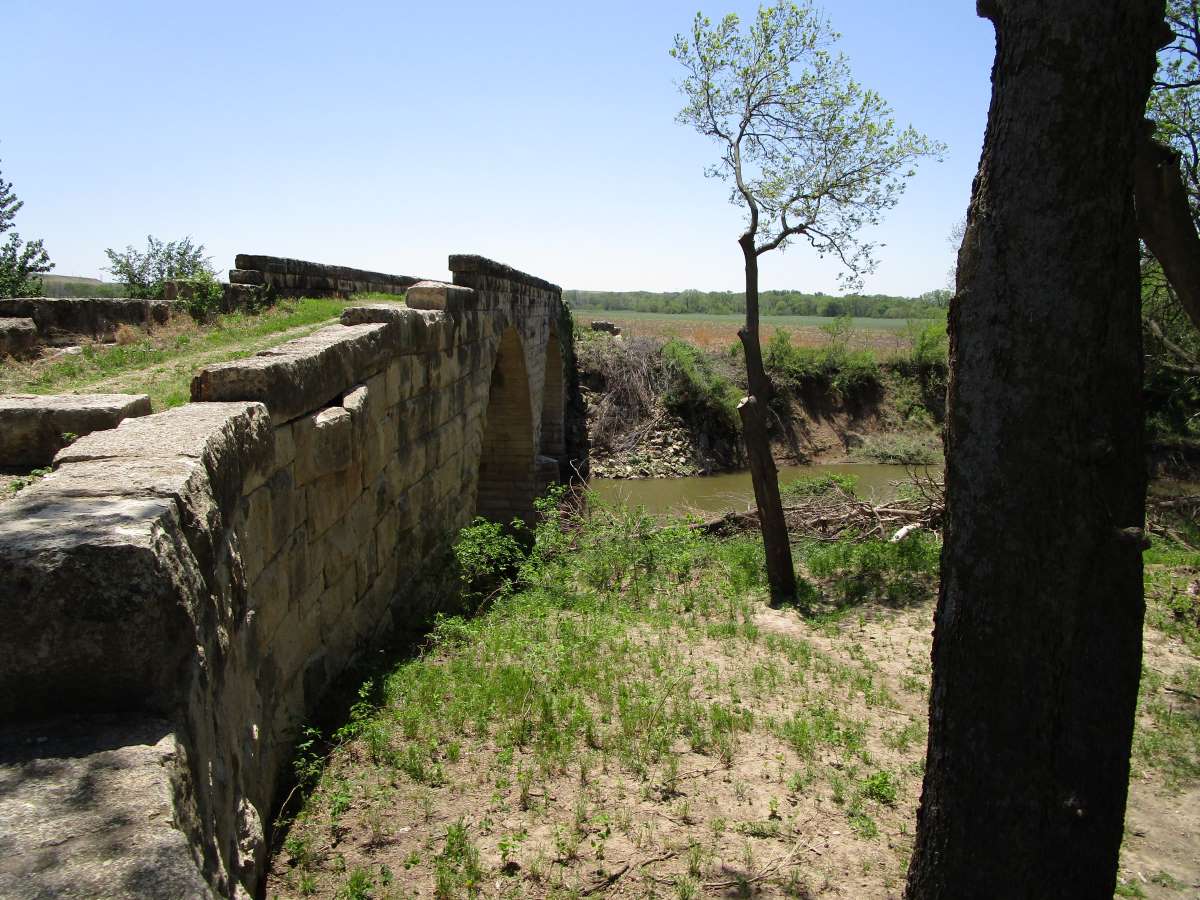
Unfortunately, these articles contained hints that the working days of Clements Bridge were quickly drawing to an end. The condition of the bridge had deteriorated after a century of continuous use. Furthermore, modern vehicles and farm equipment required a wider bridge with a straighter approach. While the only recorded death on the bridge had been that of a man struck by lightning while crossing, a number of minor accidents seemed to suggest that the bridge was somewhat outdated.
An Uncertain Future
At present, Clements Bridge is open to foot traffic only. The bridge is no longer a critical part of the local infrastructure, but rather a historic landmark and a pleasant place stop and stretch one’s legs.
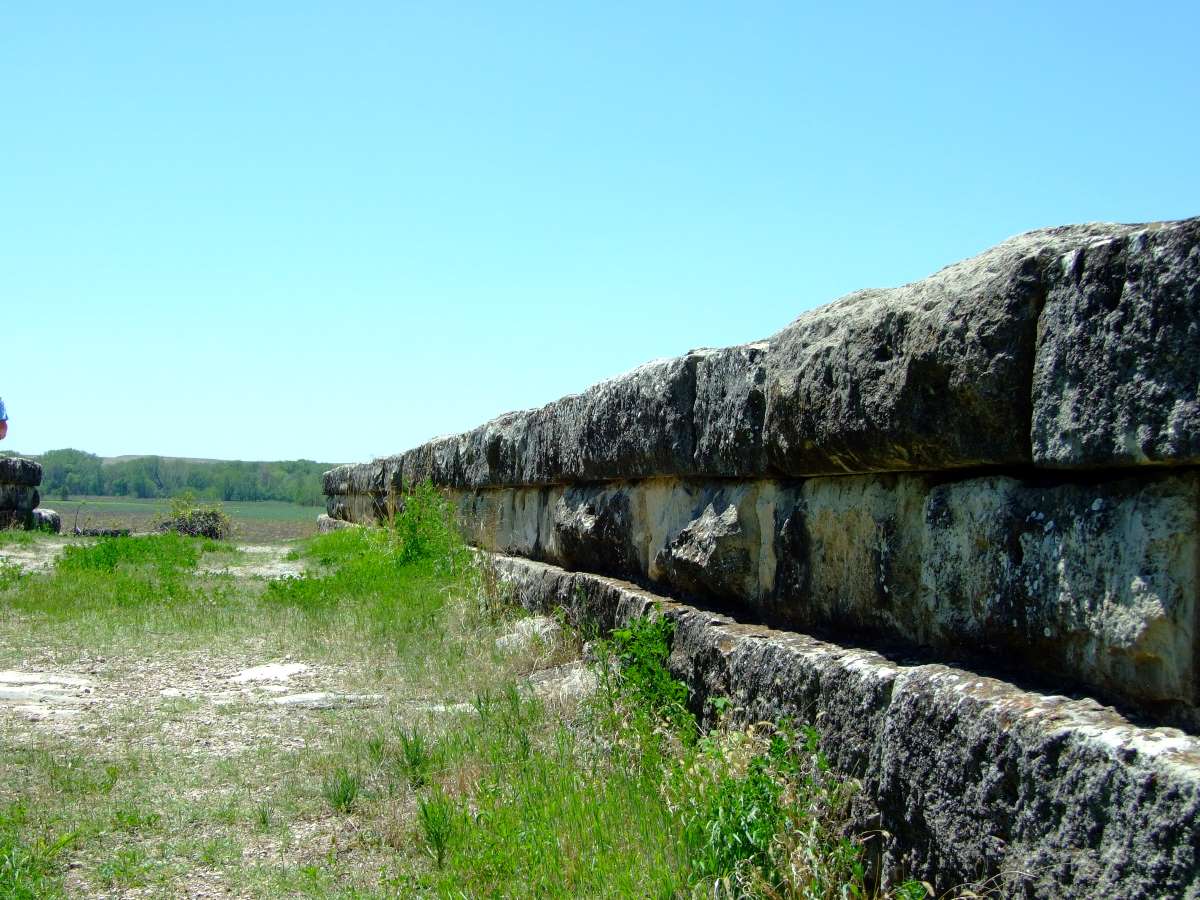
Unfortunately, retiring a bridge from regular use does not ensure that it will last for posterity. Once Clements Bridge was taken off the road system, maintenance was reduced. Some level of deterioration has been the result.
During flooding in summer 2009, substantial damage occurred to the upstream wing wall of the southern approach. Some writers have speculated that a floating tree hit the bridge, causing many of the stones at the site of the impact to fall into the river. However, an inspection of photos of the damage combined with some knowledge of common stone arch bridge failure modes suggests that waterlogged fill may have been the culprit. In any case, the county responded by filling in the damage with riprap, which may have sacrificed some aesthetic appeal but has certainly saved the bridge for the time being.

Raising funds for a complete restoration of the bridge has proved troublesome. It has been estimated that a complete restoration would cost a minimum of $200,000, perhaps more. While various state and federal programs exist that could fund a large portion of the work, most stipulate that private or local funds must cover a certain percentage of the cost. Local funding can be challenging to obtain, as the bridge is no longer in use. Project WeKan, a crowdfunding effort of the Kansas Sampler Foundation, collected $2,490 of pledges from private sources toward restoring the bridge, but the Kansas Department of Transportation did not select it for a grant.
Clements Bridge has been holding on. A casual visual appraisal reveals some bulging masonry high up on the sides of the structure (perhaps a relic from the building-moving project and subsequent rebuild?).

There is also some waterline deterioration, which could be corrected with the placement of concrete aprons.

And then there is the 2009 flood damage to the approach. But overall, there are no critical flaws that pose an imminent threat to the bridge.
However, Clements Bridge cannot last forever without maintenance. Time alone will tell what the future may bring to this scenic and historic structure.
Bibliography
Blinn, Bill. “Bill Blinn Babbles.” Strong City Derrick. December 24, 1887. Newspapers.com.
Chase County Courant (Cottonwood Falls). October 29, 1885. Page 5. Newspapers.com.
———. “Bills Allowed by the Board of County Commissioners.” May 17, 1888. Newspapers.com.
———. “Local Short Stops.” October 22, 1885. Newspapers.com.
Chase County Leader (Cottonwood Falls). October 29, 1885. Newspapers.com.
———. “Clements.” August 25, 1887. Newspapers.com.
———. “Clements Bridge.” September 9, 1886. Newspapers.com.
———. “Clements Items.” September 24, 1885. Newspapers.com.
———. “Commissioners Proceeding.” July 25, 1905. Newspapers.com.
———. “Commissioners’ Proceedings.” July 15, 1886. Newspapers.com.
———. “County Commissioners.” December 8, 1887. Newspapers.com.
———. “Notice to Contractors.” July 15, 1886. Newspapers.com.
———. “Returns of an Election Held in Chase County, Nov. 3, 1885.” November 5, 1885. Newspapers.com.
———. “Town and Country News.” July 21, 1887. Newspapers.com.
———. “Town and Country News.” January 5, 1888. Newspapers.com.
Evans, G.A. “Damage.” The Clements Stone Arch Bridge. https://web.archive.org/web/20161019232616/http://clementsbridge.org/045damage.html.
———. “Misplaced Stones.” The Clements Stone Arch Bridge. https://web.archive.org/web/20180831200105/http://clementsbridge.org/050misplaced_stones.html.
———. “A Plan for Restoring the Clements Stone Arch Bridge.” The Clements Stone Arch Bridge. https://web.archive.org/web/20121026142242/http://www.clementsbridge.org/090plan.html.
The News-Courant (Cottonwood Falls). December 9, 1886. Page 7. Newspapers.com.
———. “Clements Items.” January 19, 1888. Newspapers.com.
———. “Notice to Contractors.” December 1, 1887. Newspapers.com.
Pankratz, Richard, and Cornelia Wyma. Clements Stone Arch Bridge. National Park Service. July 29, 1976. NPGallery.
Patton, Vicki. “Clements, Kansas.” Symphony in the Flint Hills Field Journal. 2016. https://newprairiepress.org/sfh/2016/orientation/5/.
Project WeKan. “Clements Stone-Arch Bridge Restoration.” https://web.archive.org/web/20210115202705/https://projectwekan.com/projects-clements-stone-arch-bridge-restoration.
Rogers, Donita. “Grand old landmark hits century mark: Clements Stone Arched Bridge 1886–1986.” Chase County Leader-News. November 27, 1986. https://web.archive.org/web/20161019171842/http://clementsbridge.org/030history_of_bridge.html.
Scientific American. “An Improved Fire Escape.” Vol. 59, no. 22. December 1, 1888. https://archive.org/details/scientific-american-1888-12-01/.
Strong City Derrick. “Clements.” October 15, 1887. Newspapers.com.
Strong City Independent. “Bridge Election Notice.” October 23, 1885. Newspapers.com.
———. “Bridges.” March 25, 1886. Newspapers.com.
———. “Clements.” October 23, 1886. Newspapers.com.
———. “Clements.” December 4, 1886. Newspapers.com.
———. “Dissolution Notice.” January 8, 1887. Newspapers.com.
———. “John Emslie.” July 20, 1883. Newspapers.com.
———. “John Emslie.” August 21, 1883. Newspapers.com.
———. “Local Extracts.” November 25, 1887. Newspapers.com.
———. “Why?” October 23, 1885. Newspapers.com
Click here for the previous installment of this series.

