
In 1905, Walter Sharp, famous Kansas stone arch bridge builder, was interviewed, with the result thata fascinating article was published in The Kansas City Star with his comments on stone bridges.
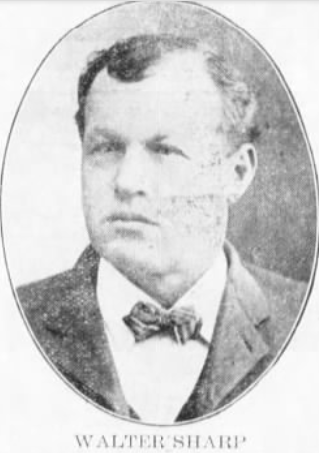
In this interview he captures so thoroughly and succinctly the spirit and advantages behind the building of Kansas’s stone bridges, we can do no better than to quote his own words:
“It is only a question of time — and not a very long time at that — until the tax payer is going to demand of the county commissioners that stone bridges be erected to the exclusion of all other kinds. Upon the part of county and city authorities there is a decided tendency to the stone bridge over steel and it is growing rapidly. This fact can not be better evidenced than by a remark made to me to-day by a manufacturer of bridge steel who said:
“‘If the successful agitation for stone bridges now going on is not side tracked our business will be ruined.’
HAS BUILT 200 STONE BRIDGES
“In the past twenty years I have built 200 stone bridges in the states of Kansas, Colorado, and New Mexico,” continued Mr. Sharp, “and I can assure you that in the counties of Butler, Greenwood and Cowley, Kansas, they will have nothing else. Butler county has thirty, Cowley twenty, and Greenwood fifteen stone bridges. I have now at work five gangs of bridge builders with twenty men to the gang and have at least six months’ work ahead of me. There was a time when my concern could not get enough to do but that was in the day when the stone bridge was not as well thought of as to-day. I have found it advantageous to employ the men and teams necessary to the construction of the bridge in the locality I am building it. This leaves the money — often as much as $4,000 or $5,000 — at home and men capable of doing the work are always to be found.
“Let me impress upon you in this connection that without a single exception in all of my Kansas contracts I have been able to secure the desired kind of natural stone for bridge work within five miles of the place of construction. We can haul stone five miles and still be within the cost limit that enables us to successfully compete with the builders of steel bridges.
KANSAS CITY HAS FINE STONE HANDY
“In the matter of stone certainly no locality is favored so much as Kansas City. At almost any point where it is desired that a bridge be built there is stone in sight. The specifications for the bridge to be built in Swope park call for stone specially cut and of course this adds to the cost. We are often able to take stone from the earth in such layers that it can be put into bridge construction after undergoing only a shaping up treatment. When such stone can be had the builder of this bridge can come down in his figures to those of the builder of the steel structure and at the same time put up a bridge just as substantial and as massive and solid in appearance as though it were built of cut stone.
“Of all the 200 stone bridges that I have built there is not one that has not withstood the floods, freezing and all other destructive conditions that were brought to bear upon them. Among these bridges are several built near Santa Fe, N. M., and they have been subjected to mountain floods that have tested their durability to the very limit. They are better to-day than when they were built, because they have become seasoned and settled.
BUTLER COUNTY, KANSAS’S, FINE EXAMPLE
“The county commissioners of Butler county, Kansas, estimate that they save from $500 to $700 yearly on the stone bridges erected over the steel structures, in repairs alone, and this is a very considerable item. To show you how well the stone bridge is thought of in that county, no wooden culverts are now put in, even on the country roads. They are all built of stone and the township boards have built almost 300 of them. Butler county, Kansas, is in the lead in stone bridges and culverts and in years to come in this respect its fame will go abroad. The county will have nothing else.”
From an interview with Walter Sharp, “For Stone Bridges Now,” The Kansas City Star, October 4, 1905.
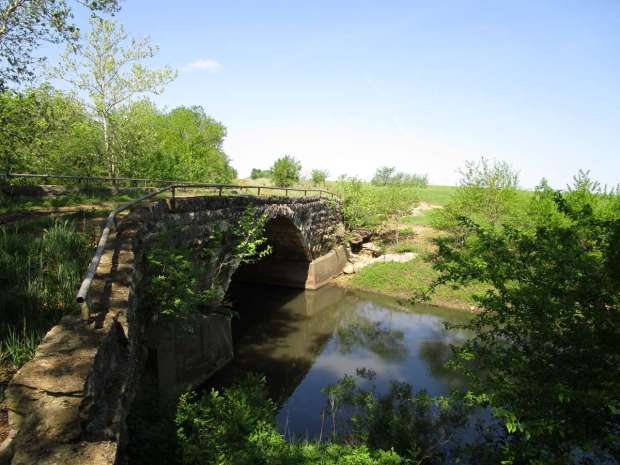
 Stone Arch Bridges