In Elk County, Kansas, in Oak Valley Township, we have found eleven little-known stone arch bridges. These structures are interesting in their own right, beyond a doubt, and it happens that a close examination of these structures reveals a consistent theme that appears to hold a clue to the history of Kansas stone arch bridge building, which aspect we will discuss in more detail in a later post.
The Bridges
The Oak Valley stone arch bridges are a varied and picturesque lot, and usually were built with a construction unlike that found in much of Kansas. They almost invariably feature Roman arches on massive abutments, and usually have plenty of waterway. Some of the bridges were quite massive, while a couple were remarkably tiny. Below is a gallery showing the bridges we found.


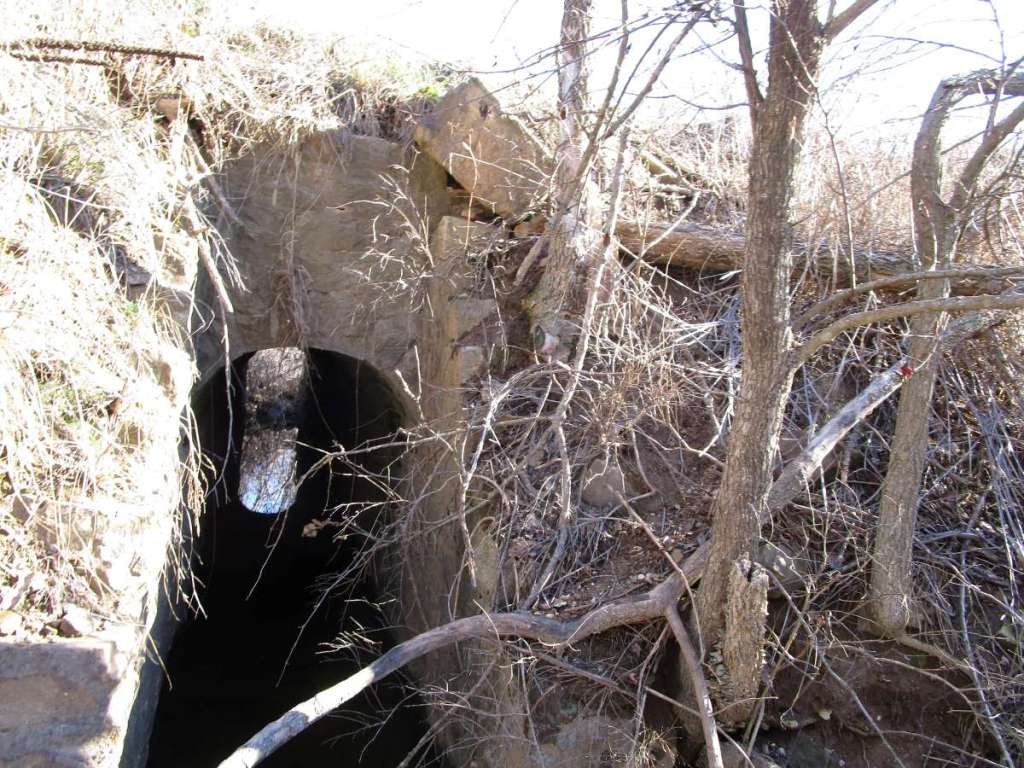


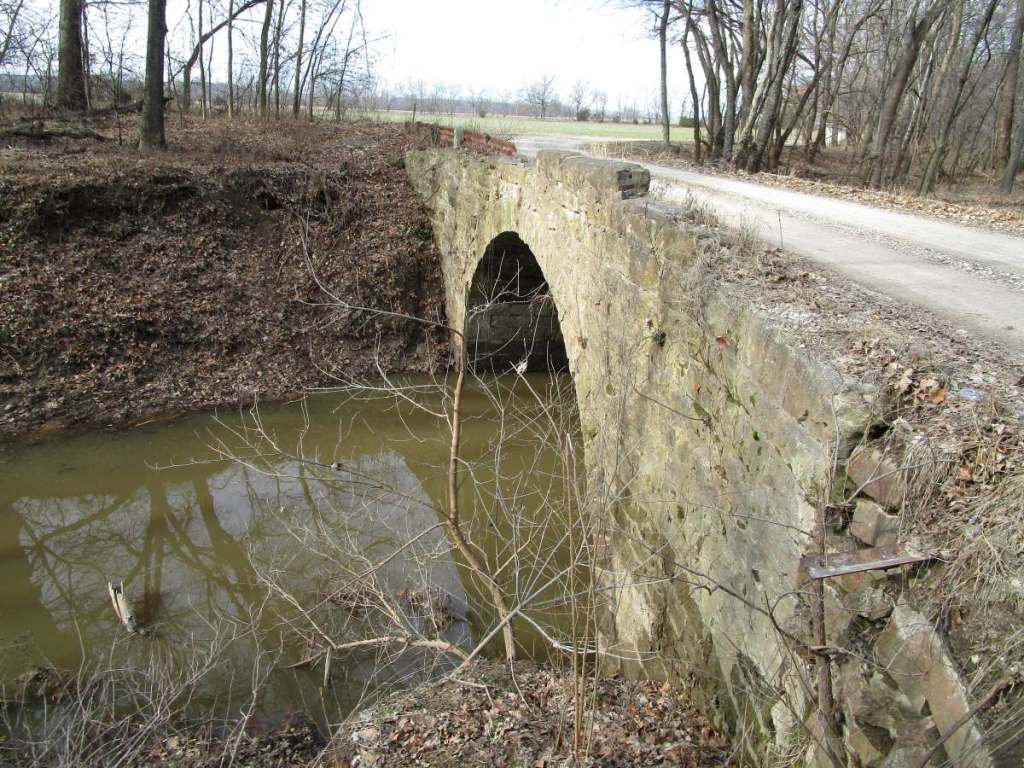
These bridges are scattered around the rolling hills of the Chautauqua Hills region Oak Valley Township is in. While most of these structures are culverts, one of the structures, which spans Blackjack Creek, appears to actually be a true stone arch bridge as opposed to a culvert; we estimated the span at 30′. This bridge looks like a county-built structure, but we were unable to find any evidence to support this theory.
The Widening
Most of the Oak Valley stone culverts appear to have had their width approximately doubled at some point with adjacent stone arches built similarly to the originals.

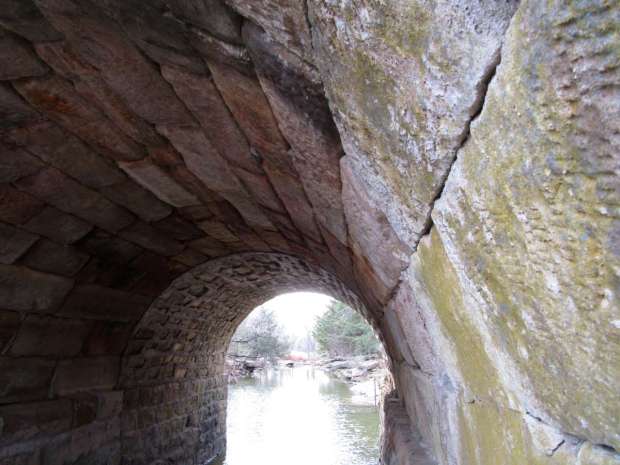
That said, the widenings are relatively new, for the mortar used is still largely intact and much harder. Generally, the widened parts of the bridges have a somewhat cruder build than the originals, with a higher reliance on mortar, and show little to no signs of stonecutting. However, the newer arch pieces used many small stones, making “turning the arch” easily accomplished.
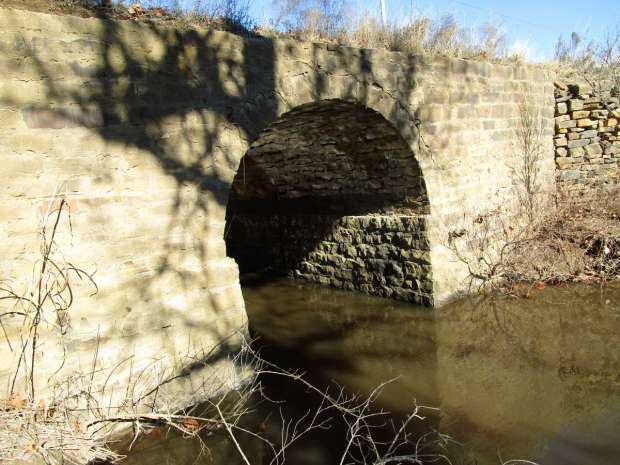
The original portion of the stone arch bridges is probably c. 1900, for newspapers show that Oak Valley Township was busily engaged in building stone culverts out of the superb sandstone available locally.
When Were They Widened?
The workmanship on all the extensions on all the bridges is similar, and it seems probable that all the stone bridges were widened at around the same time.

One notable feature of the new pieces of the bridges is how hard the mortar is; it clearly is a Portland cement–type mortar, and strongly suggests a notably more recent date than that of the old sections. The old sections, even where the mortar is still in good condition, seems to have been built with the softer more traditional mortars.

As it happens, the dating problem is not as much a matter of guesswork as one would expect. We fortunately were able to find a date set in the new part of one of the stone bridges we found.
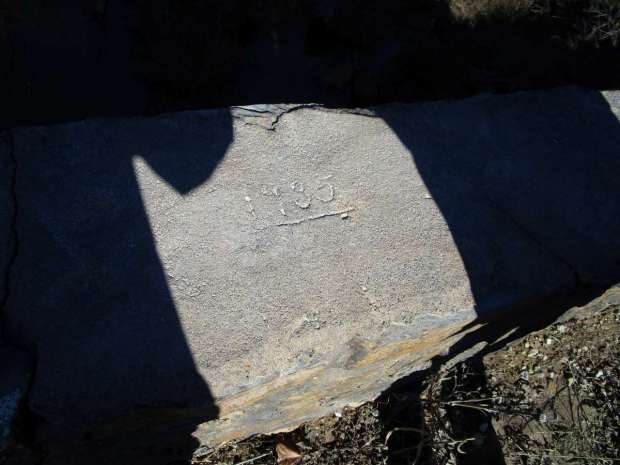
On a stone arch bridge spanning Hickory Creek in northern Oak Valley Township, we found the date 1935 clearly set in the hard mortar coating the top of the curbing.
A Clue to the Past
The 1935 date on the widening suggests a WPA-era bridge. Yet WPA bridges invariably feature significantly higher stone quality, and it seems improbable that the WPA would be spending time widening old, narrow stone culverts as opposed to replacing them with bigger and better bridges. Were there road schemes in the Depression era that were independent, at least partly so, from the WPA? In next week’s post we will look into the evidence more, for the new sections of the Oak Valley stone bridges bear a striking similarity to some of the stone culverts we found recently in Cowley County, Kansas, which is famous for stone bridges.
 Stone Arch Bridges