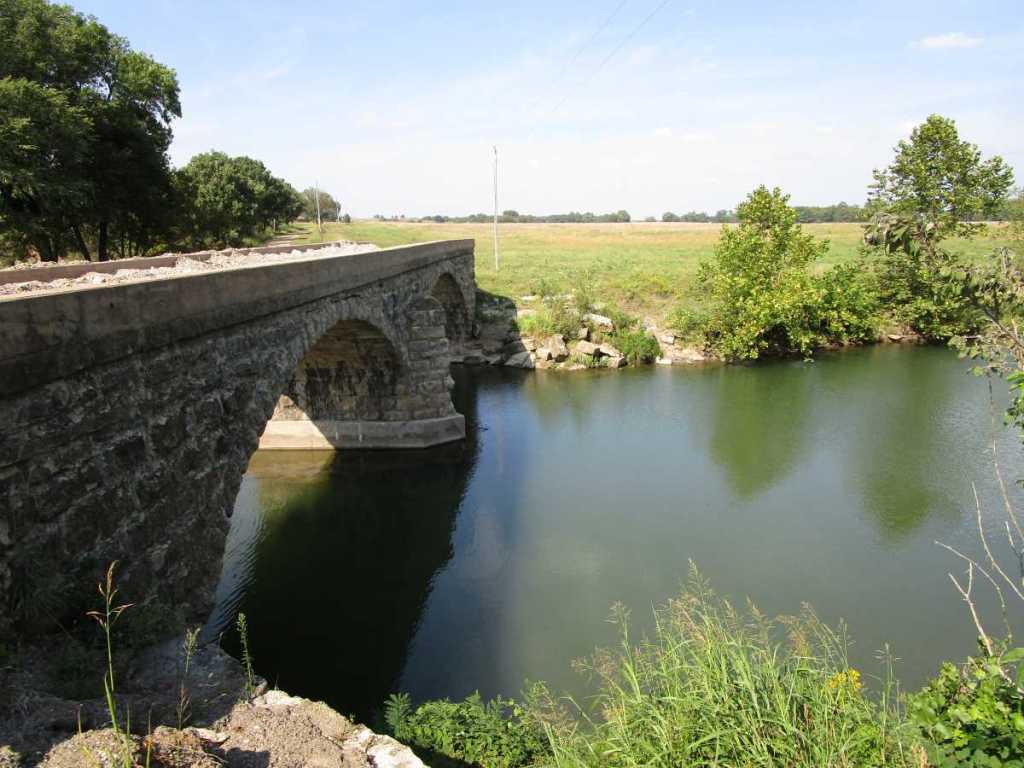
One aspect of rubble masonry in a stone arch bridge is that of aesthetics. Simply put, rubble masonry looks more natural.
Blending With Nature
Rubble masonry is stonework using variously shaped stones, all fitted with a minimum of shaping. Whereas ashlar masonry generally consists of massive stone bricks that neatly fit together, rubble masonry is much more variable in its characteristics. Since rubble masonry uses primarily uncut stones, if the stones are locally sourced it follows that the bridge will harmonize rather well with the locally found stoney landscape. Another aspect of rubble masonry is the general lack of uniformity of the stonework. To be sure, the faces can and should be leveled off at least reasonably well, but the stones are random sizes, not standardized blocks.

This also blends with nature, for where in nature do you find factory-quality uniformity?
The Strength of the Rubble Masonry
Rubble masonry is very adaptable, and hence can easily be built around existing geographical features. Furthermore, the very irregularity of the stones is a strength, as not only can the masonry be built in a flowing, intricately interweaving fashion, but the stones, being their natural shape, tend to be built in according to their inherent strengths. On the other hand, ashlar masonry tends to result in blocks cut into shape irrespective of the stone’s natural strengths and weaknesses.
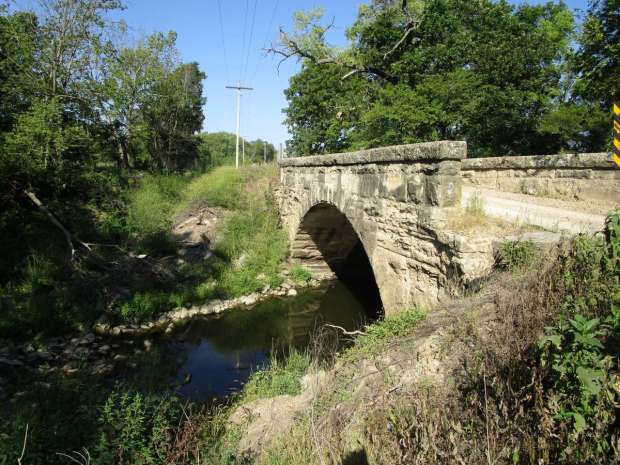
Rubble masonry has the unique property of working with nature.
In the Words of a Stone Bridge Contractor…
A stone bridge builder once commented on the aesthetics of a rubble arch bridge when writing about the idea of stone bridges for Jackson County, Missouri. He said:
“What is needed in Jackson county is the rubble stone arch bridge. It is a bridge that harmonizes with the trees along the streams, the hills, the houses and the fences on the roadway. The rubble stone bridge looks solid, substantial and rustic; more like the handiwork of nature than man. A rubble stone bridge can be built at the cost of a good steel bridge, and it will stand the ravages of time without repairing.”
Walter Sharp, “To Bid on Stone Bridges,” The Kansas City Star, March 25, 1906.

 Stone Arch Bridges