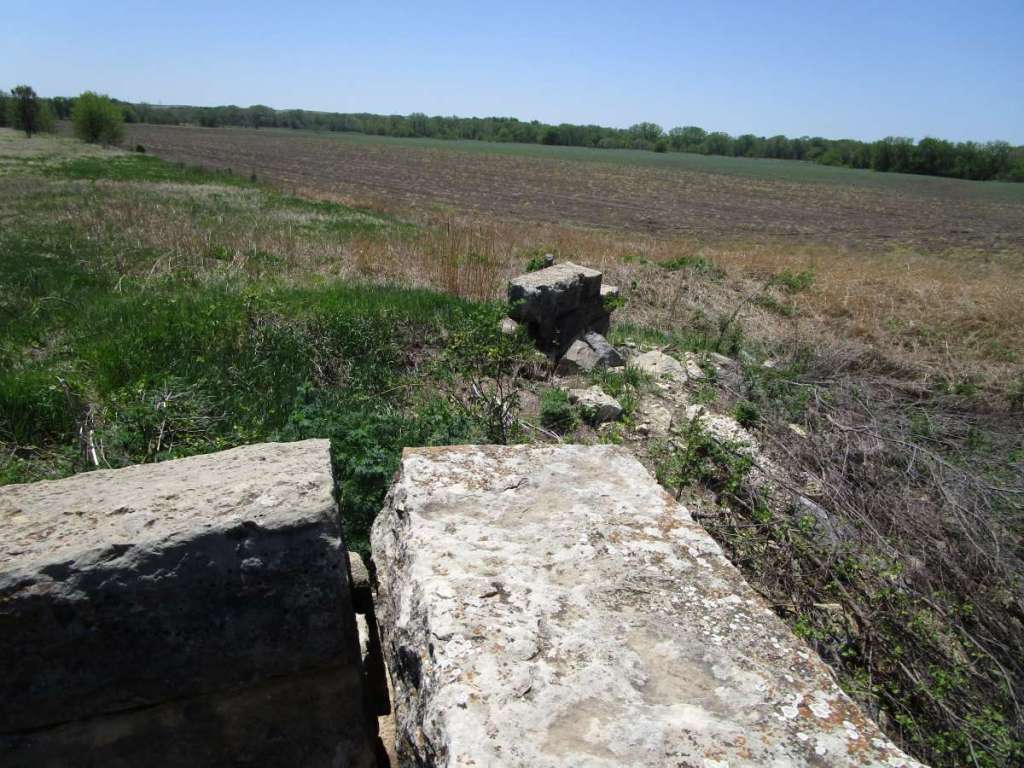
The retaining walls in a stone bridge consist of the spandrels and any approaches. These walls are often a weak point in the structure, due to their relatively thin width. In this post we investigate these common failures and how they can be remedied and prevented.
Typical Failures and Their Causes
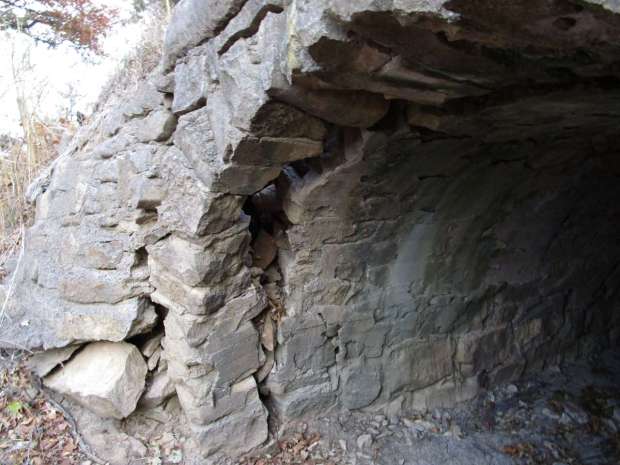
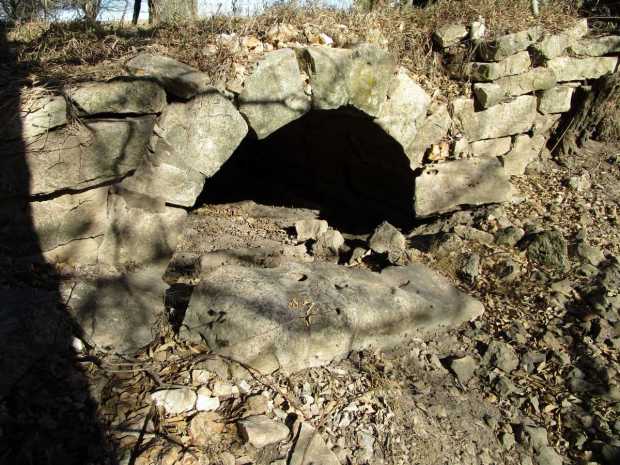
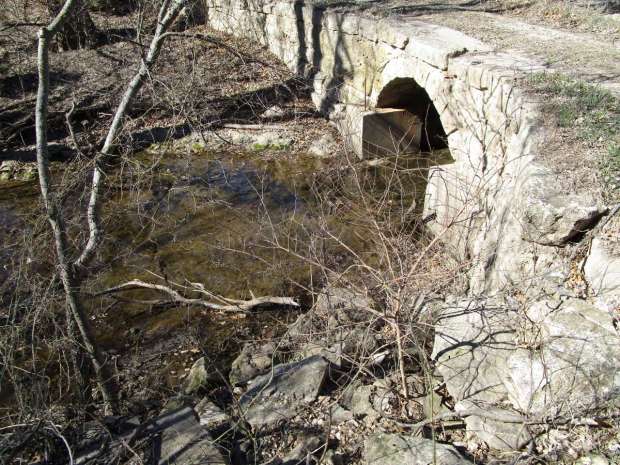
Spandrel walls and approaches are a rather common failure point in stone bridges. Usually freeze-thaw cycles eventually succeed in upsetting the equilibrium of these gravity walls, while in some instances saturation of the fill caused by flooding overloads and bursts the walls. One factor to keep in mind is that the walls tend to weaken over time if the mortar is not maintained. This weakening reduces the friction so critical for the strength of a masonry wall, and may be the cause of failure in some walls, as loss of friction means sliding is much easier. Other failures on newer stone bridges can be from inadequate wall thickness (a.k.a. poor initial design) and impacts from debris or (commonly) vehicles. Below are some examples of failed walls.


Strengthening the Walls
The best means of strengthening the walls is (where applicable) keeping the mortar in good condition. Regular maintenance can go a long way towards preserving a structure. Another method used to strengthen a wall is adding an additional wall, usually of concrete, behind the outside stone wall in order to effectively thicken it.
Tie rods can and have been used to strengthen the wall, typically by tying the two spandrel walls together thereby providing tensile strength. However, this method detracts from the appearance of the bridge, and if not done properly merely results in a small section of stable wall around which the rest of the structure is breaking up. For large-scale problems, the best solution is to arguably tackle the problem at the fill itself.
Strengthening the Fill
Strengthening the fill is usually easier to do and far more successful than strengthening the fill-retaining walls. One of the most common solutions is the removal of the fill altogether and the replacement of it with lightweight concrete. Concrete, being solid, should exert no force against the walls once it sets up (use caution while pouring to avoid collapsing the retaining walls). Be aware, however, that the outside skin walls can still collapse under the right conditions, unless they are bonded to the concrete.
Other solutions involve geotextiles and reinforced earth methods, all with the idea of reducing or eliminating the fill’s tendency to push over walls. All of these methods can and have been used with success.
 Stone Arch Bridges