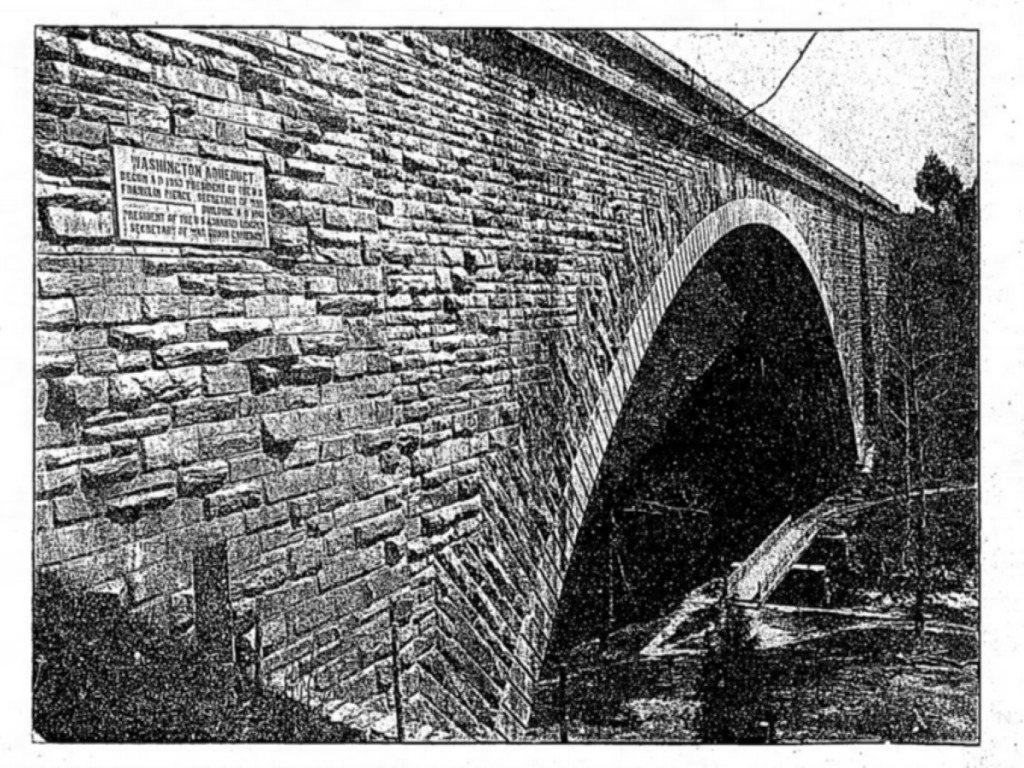
The typical stone arch bridge consists of a single layer of arch stones. On this simple arch is built walls to retain the roadway, and then the area between these walls is filled in, creating a level surface. Most stone arch bridges use only one layer of arch stones. However, it is possible to build an arch with two or more layers of arch stones. These layers are called rings.
Thickening the Arch
Multi-ringed arches are mostly seen in brickwork, where the size of the bricks is generally limited. However, multiple rings can be seen in stonework. The main purpose of this method of construction is to create a thick arch using relatively small stones.
There are several ways to go about building a multi-ringed arch. One method literally consists of adding another arch on top of the first arch ring, resulting in two independent arches, one resting on top of the other. Another method of increasing the arch width, though not technically a separate ring, is to build the arch like a thick wall; in other words, rather than two separate rings, the stones are interleaved with each other like a conventional masonry wall, resulting in a bonding of the layers of the arch.

A Change in Characteristics
It is worth mentioning that a multi-ringed arch behaves differently than an equivalent arch built with a single line of large stones. The multi-ringed arches are much more flexible than single-ringed arches. This particularly holds if the rings are completely separate from each other. Under loads much more sliding can happen in the arch. The multi-ringed arches also are prone to a unique set of problems such as delamination of the arch rings. Generally, it is best to build with one layer of stones, but there are times when a multi-ringed arch may be easier to build or even the only practical design to build; after all it is better to build a thick multi-ringed arch than a too-thin single-ringed arch.
 Stone Arch Bridges