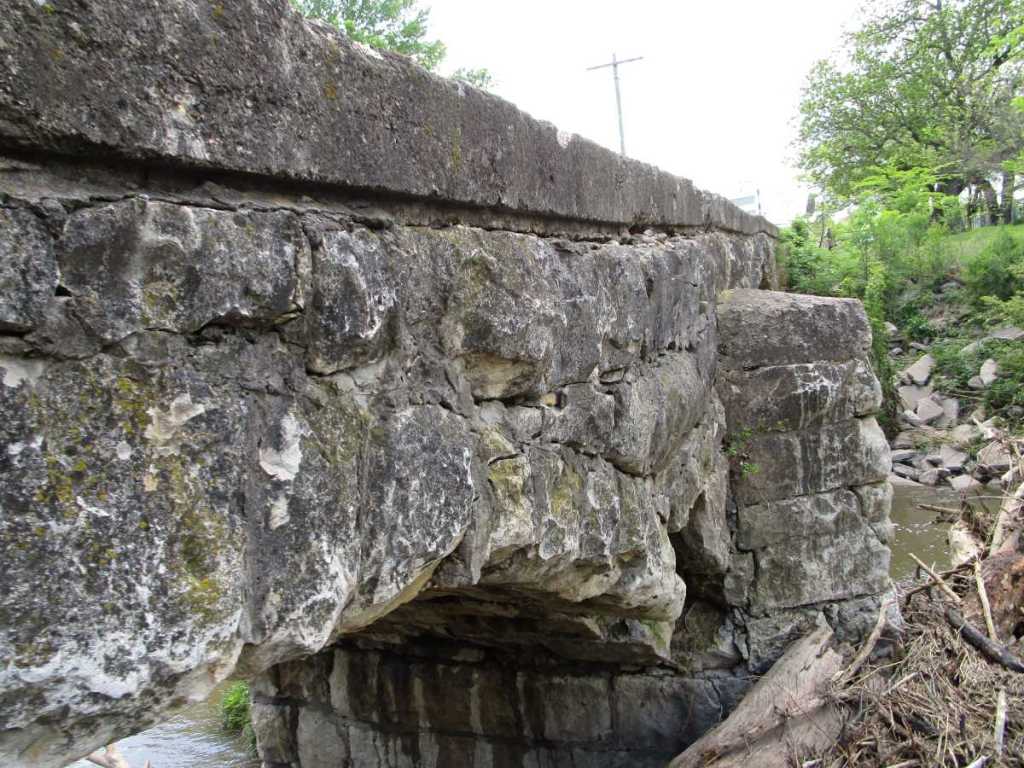
So what do you do with a stone bridge that is damaged somewhere near the base of the structure? Do you tear down a large portion of the structure to reach the damaged area, or is it possible to repair the structure without removing sound pieces? While the implementation is somewhat of a judgement call, the short answer is that it is entirely possible to patch a damaged section of masonry without tearing into the whole structure. Patching a masonry section in place is dangerous, unless the structure be quite small, so care is required for this work, and it is best left to professional hands.
Evaluating the Damage
First, the damage needs to be relatively local. If the entire structure is a mass of cracks and dislocated stones from top to bottom, a patch will hardly be adequate; everything will need to be rebuilt anyway. The next question is how to implement repairs. Dislodged stones will need to be relaid in most cases, and the fact is, of course, that we do not want to collapse something by removing loose stones. This leads up to the next point: What keeps the whole thing up in the first place when stones are missing from the lower parts of a masonry structure?
Corbeling and Flat Arches
Take the example of a brick wall. Bricks are almost always laid with every vertical joint broken by the brick above in a regular pattern. In these cases, you usually can remove a single brick and the rest of the bricks corbel around the gap.
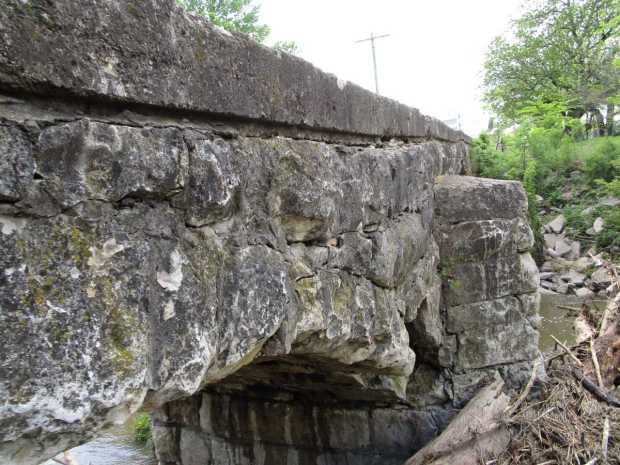
No problem; a repair would consist of replacing a brick into the hole. But what keeps a brick wall up where several bricks are missing? The answer is an arch. If several bricks are forming a long line over a gap, seemingly without any support, it is rarely the mortar “gluing” everything in place; rather a flat arch has formed. There may be a slight dip in the line of bricks, but compression at the top of the bricks is preventing anything from falling in.
Working With the Forces
To repair a broken-up structure of the kind described above, whether the material be brick or stone, stability is assured by making sure there is an adequate flat arch. Before removing a stone, make sure the ones above are firmly wedged in place. If not, wedges can be inserted into the joints, just as for building a stone arch bridge, to lock everything in place. And, of course, remove and replace only little sections at a time. Doing the repairs piecemeal helps to keeps the gaps relatively small, ensuring the stability of the masonry above the work area. You can wedge up pieces from below with triangular stones if you are careful, and it is entirely acceptable to carefully tap wedges into the joints to help create a stable flat arch above the work area for extra support. Some builders use wooden wedges for this, but to do so make sure you soak the wood first; otherwise moisture from the mortar work is liable to swell the wood and cause damage to the masonry.
 Stone Arch Bridges