Concrete is a material frequently used for patching stone masonry. Concrete is a strong material, but when used in conjunction with stone it can compromise the integrity of a structure rather than help it. The key to successfully using concrete around stone is to understand how concrete interacts with masonry. A well-done concrete repair can greatly lengthen the life of a stone structure, while a poor patch with concrete can rapidly bring about the demise of the masonry.
The Stiff and the Flexible
Concrete is very stiff, while masonry is relatively flexible. This difference in characteristics can cause problems. For example, imagine a stone wall with a hole in it. If this hole is filled with concrete, over time flexing of the wall will often result in the stone falling away around the hard concrete, leading to more damage. Also, stone can settle easily while concrete cannot, so it is possible for a masonry structure patched with concrete to collapse suddenly in response to heavy settlement. On the other hand, the same structure patched with stone could have adapted to the settlement, or, at the very least, shown signs of possible trouble ahead before a catastrophic collapse actually occurred.
The Moisture Problem
One other difficulty caused by poor repairs to masonry done with concrete is moisture retention.

The concrete tends to hold moisture against the stones, which, if the stones are inherently soft, can be quite disastrous. Moisture retention in a soft stone ultimately leads to stone disintegration thanks to freeze-thaw cycles. There is conclusive evidence that concrete or even hard mortar is a cause of this type of deterioration.
So How Do You Use Concrete?
As a broad rule of thumb, based on empirical evidence concrete should never be smeared over masonry. Besides being unsightly, this practice can lead to all kinds of moisture problems. Also, concrete rarely should be poured into a masonry hole to patch it. However, the use of prepoured concrete blocks is safe (though, obviously, not advisable if good appearance and authenticity are desired). Concrete can usually be poured around certain bridge elements, such as foundations, safely, unless the stone is extremely soft.
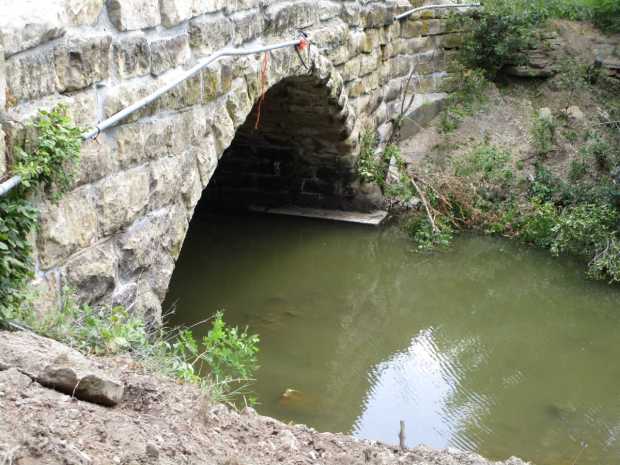
Large holes in foundations should preferably be patched with stone and mortar before the concrete is applied. Once the concrete has been poured its integrity should be monitored and maintained.
Conclusion
In the end, the key seems to be avoiding intermingling of the concrete with the stone. Concrete placed on the masonry is usually safe, while concrete poured into the masonry joints and crevices is usually risky long-term. Each specific case where concrete is to be used, of course, will have to be analyzed individually. In general, the softer the rock the more cautiously the repairs should be made.
 Stone Arch Bridges