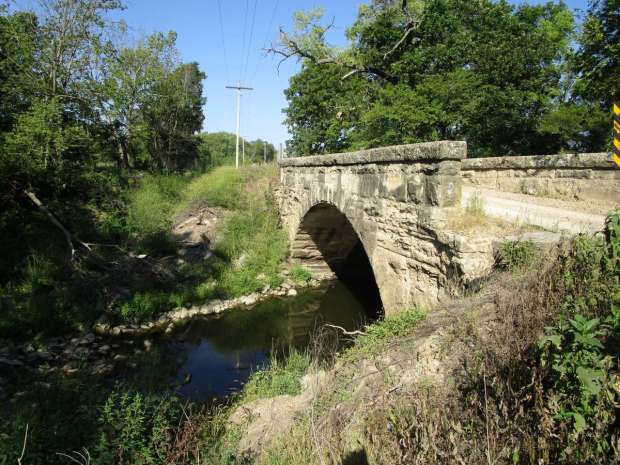
The modest single-arch Fox Creek Bridge connects the town of Strong City, Chase County, Kansas, to the well-known Tallgrass Prairie National Preserve nearby. This is the second installment of the well-researched account of this bridge that was kindly prepared for us by Michelle Lindsey of homesteadontherange.com.
Introducing B. Lantry Sons
In July 1897, the county clerk was authorized by the commissioners to advertise for bids on a “stone arch culvert” at Lantry Crossing. Evidently it was determined to make the third Fox Creek Bridge something that was both fireproof and sturdy enough to withstand some flooding.
The first round of bids for the bridge was rejected by the county commissioners in October 1897. In mid-November 1897, the county clerk again began accepting bids to replace the existing Fox Creek Bridge with a single-arch stone bridge. This bridge was to cost no more than $2,000. The contract was awarded to Lantry Sons.
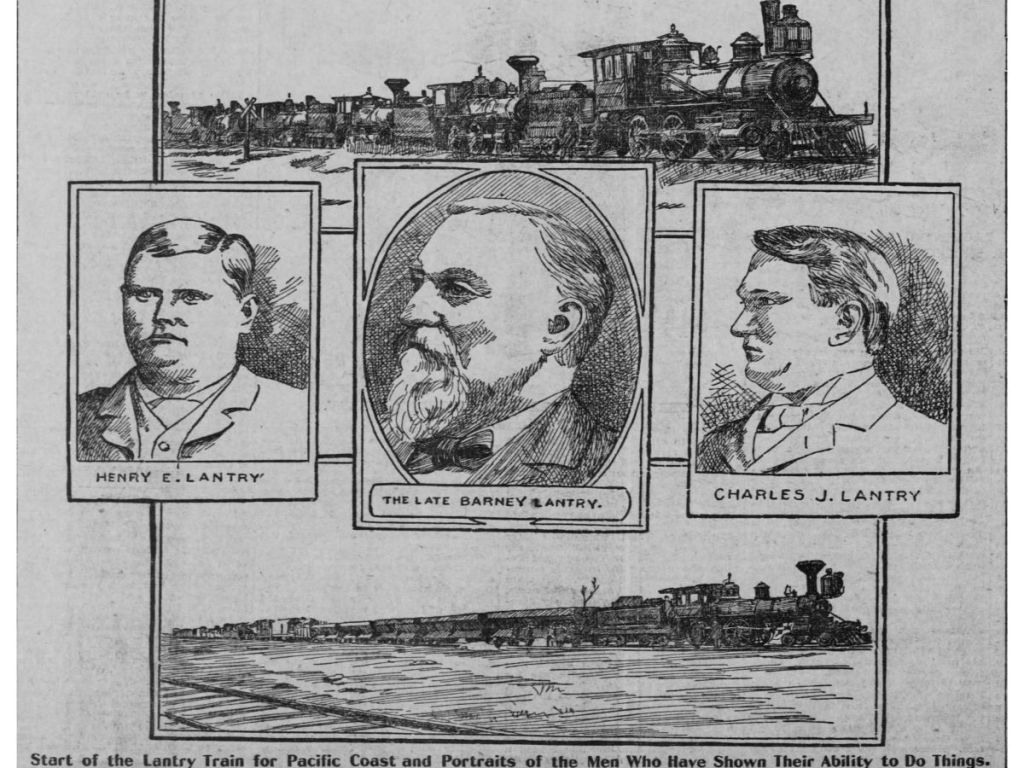
Who were these Lantry Sons? They were the two young men, Henry and Charles, who had arrived in Kansas in 1877 with their father Barney Lantry, along with their mother and two sisters.
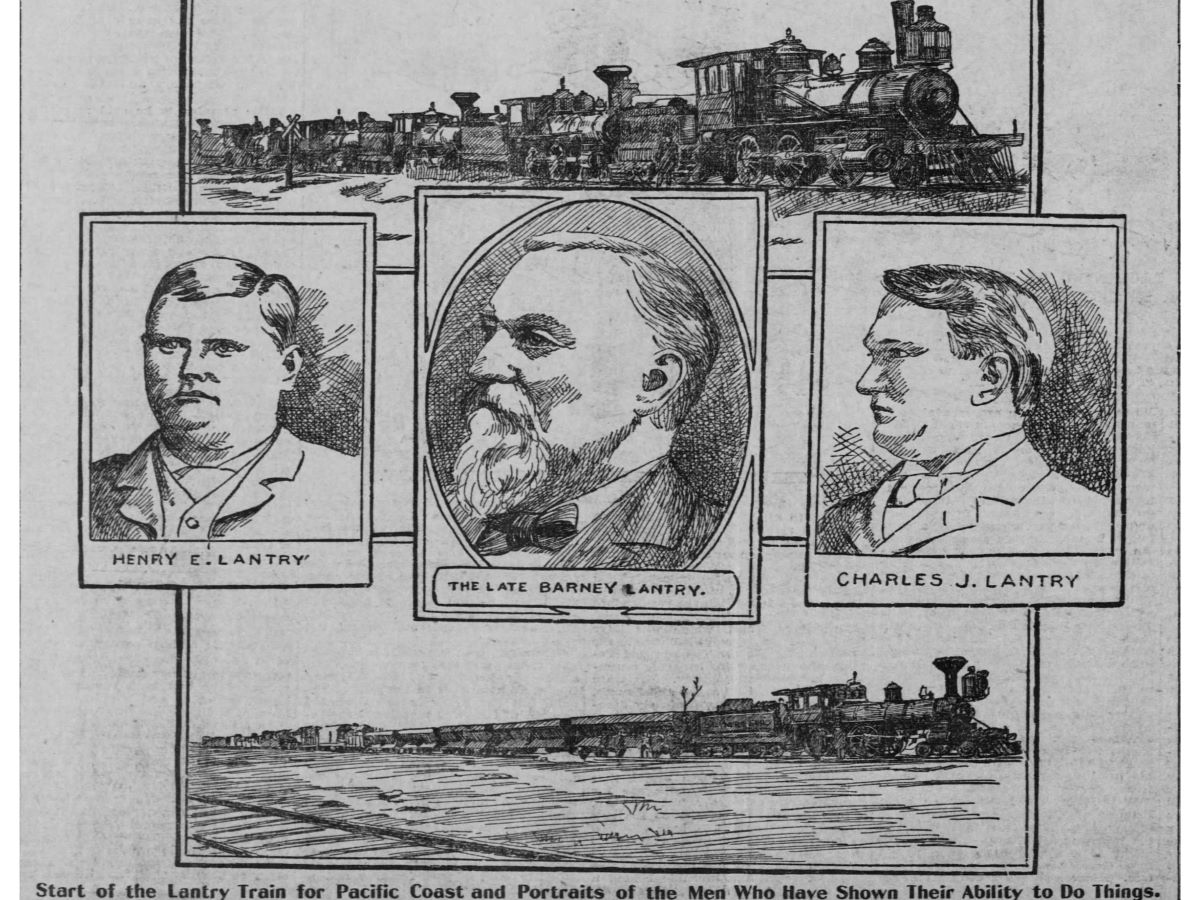
The elder Lantry was a railroad contractor, bridge builder, and stonemason from Wisconsin, where he had performed work for the Milwaukee and the Lake Superior & Mississippi railroads. It was the rapid construction of the Santa Fe Railroad that attracted Barney Lantry to Kansas. He settled near the line at Strong City, where rock for ballast and construction was plentiful, and so were contracts. Lantry became responsible for the construction of many of the stone bridges on the Santa Fe Railroad between Chicago and El Paso.
With the profits of his contracting business, Barney Lantry invested in 13,000 acres of ranchland for the purpose of breeding livestock. He was most noted for his herd of purebred Hereford cattle, but he also raised horses, mules, sheep, and hogs. The ranch itself was comprised of his own 5,800-acre Deer Park estate, named for the herd of deer he kept there, along with his neighbor Stephen F. Jones’s former Spring Hill Farm and Stock Ranch of about 7,000 acres.
Upon their father’s death, Henry and Charles became heirs to his businesses of contracting, quarrying, and ranching. They earned a solid reputation in their own right, building, among numerous other things, the cog railway to the top of Pike’s Peak.
Newspapers articles of the day suggest that Lantry’s Sons were highly regarded in their hometown of Strong City, perhaps due to the fact that, not only were they instrumental to the flourishing of the town due to the staggering number of people they hired, but they continued to support the community even while busy with railroad construction all across the American West, from Kansas to California. Their loyalty to their long list of employees was legendary in Strong City, and the Chase County Leader noted that in return these workers “are ever proud of the fact that they are on the books of B. Lantry’s Sons.”
Click here to see Part 3 of this series.
Click here to see Part 1 of this series.
 Stone Arch Bridges