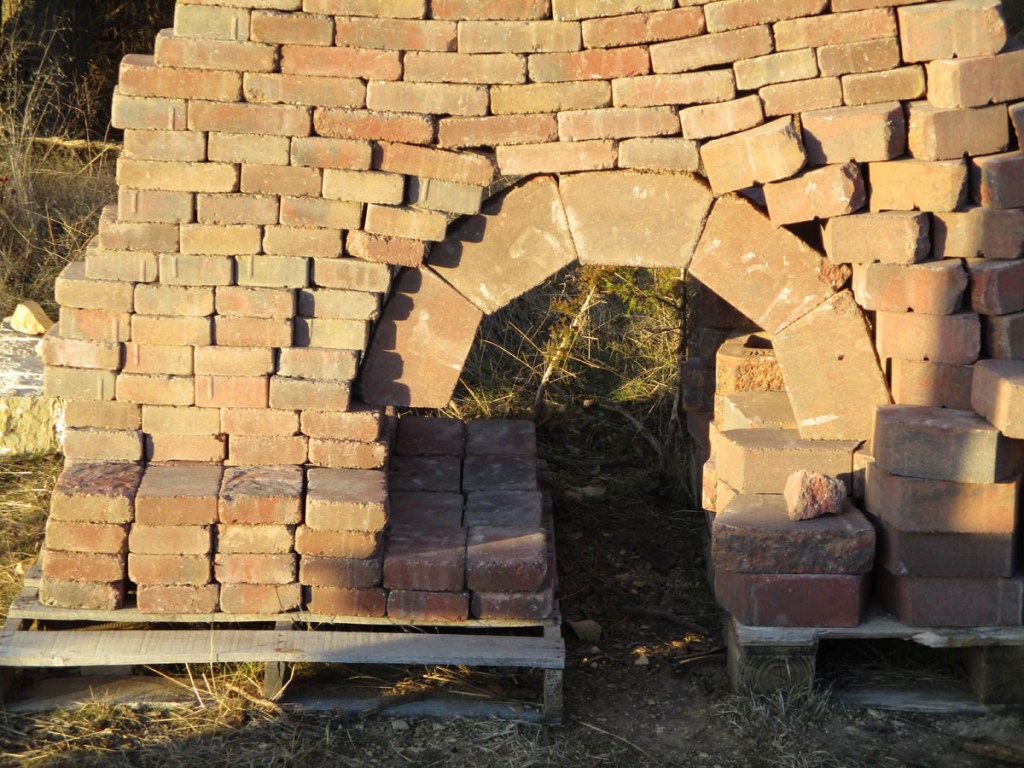
The Roman arch is one of the more interesting arch designs. Associated with strength and durability for a couple millennia now, this design has some unusual properties. We have often mentioned some of these quirks in passing in various posts in the past, but, in this post, we will delve in depth into the properties of this classic arch design.
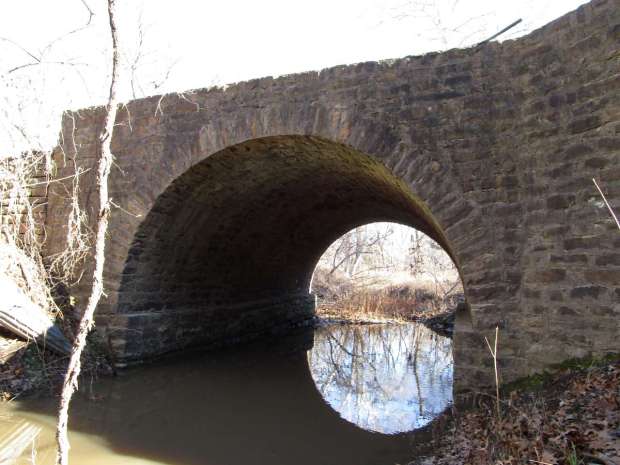
The Horizontal Thrust
Although a Roman arch lands neatly and flatly on the ground or abutment beneath, this does not mean the thrust follows the curve of the arch. As we have often stated, the thrust of an arch is a catenary. A catenary thrust always has a horizontal component to it. This means that a Roman arch must produce a horizontal component. This can be proved by placing a Roman arch on tall, thin columns. It will be found that the columns have a tendency to tilt outwards, showing that the arch on top is shoving them apart.
The Catenary
An even more striking aspect of a Roman arch is that, because of the catenary thrust line mentioned above, much of the inside thickness of the arch at the base is not suporting weight. The thrust line places much of the force on the outside ends of the arch. This can be rather strikingly demonstrated with a model arch.
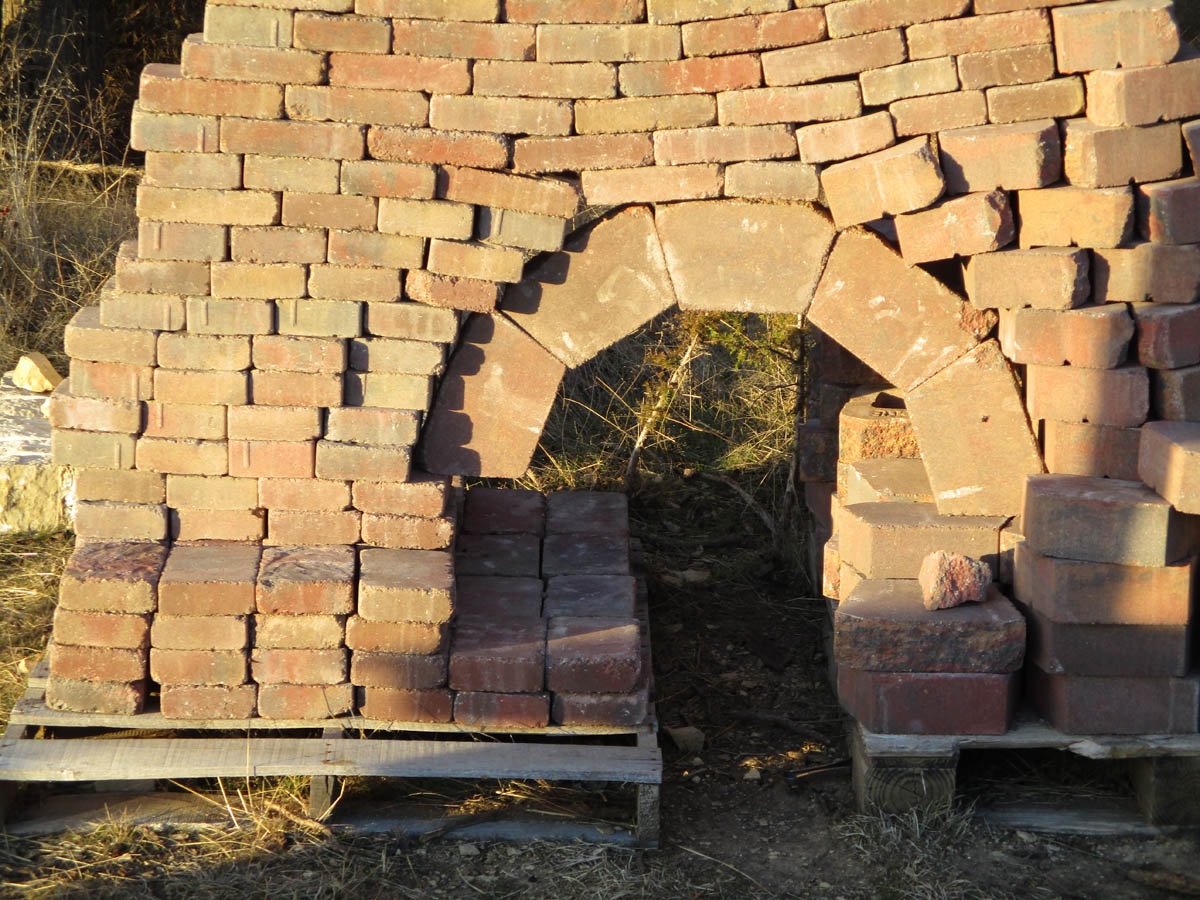
However, this also means that a freestanding Roman arch must be relatively thick for stability. To ensure the thrust line of the Roman arch remains within the middle third of the arch thickness, the arch thickness must be about one sixth of the span. This is easy enough for a culvert-sized structure, but, for a big bridge, this thickness will often be too great to be practical.
Holding the Arch Together
One of the more depressing aspects of all this is the fact that the weakest point of the Roman arch is right on top. This is because the line of thrust is already near the top of the arch. Add too much weight, and the top will buckle readily, while the haunches bulge out. Solid material placed against the haunches of the arch can be used to counteract this phenomenon, this extra weight tending to shift the thrust line of the Roman arch and also acting as an abutment for any spots where the thrust escapes the arch. However, this means of stabilizing the Roman arch may sound vaguely familiar: Little weight on top, with more material on the haunches. This type of loading is the typical dead load of a stone arch bridge, which means the Roman arch is actually very well suited for stone arch bridges!

This is also why the Roman arches in a stone arch bridge are often thinner than would be required for a freestanding arch: The fill of the bridge shifts the thrust line of the otherwise unstable arch to make a stable structure. Obviously, though, this means care is required when building or rehabbing bridges with Roman arches as the fill may be a crucial structural member.
The Bottom Curve: More Abutment or Arch?
Another peculiarity of the Roman arch is the fact that the bottom curve of the arch can stand independently of the rest of the structure. It is not uncommon for a collapsed Roman arch to have a prominent part of the bottom of the arch still curving out into space, even though the top has long since caved in.

This peculiarity has led to this lower section of the arch being described as a curved treatment of the abutment. Incidentally, where this self-stable piece of the arch meets the top of the arch is often where the haunches of the arch want to bulge out as described above.

Conclusion
Though the Roman arch has many peculiarities, these very oddities are what make the Roman arch so well suited for stone arch bridges. When built correctly, the Roman arch is an extremely adaptable structure capable of handling a wide variety of load changes. It is for this reason that the Roman arch has enjoyed popularity for so many years.
 Stone Arch Bridges