
There are several stream characteristics to look for when seeking a good place to build a stone bridge. Due to the bridge’s geometry, considerable time and expense on the approach can be saved by building the bridge in the right spot. Obviously, for strict applications, such as a public road where the top concern is keeping a straight (and safe!) alignment, the options are limited. But for many small-scale builders, there is a degree of flexibility available in the precise location.
Stream Geometry
Due to the curved shape of a stone bridge, and the height relative to the span, by far the easiest type of waterway to bridge is a narrow gorge. So if a stream runs through a gorge and then opens out into a wide, low area, the gorge is by far the better place to build.
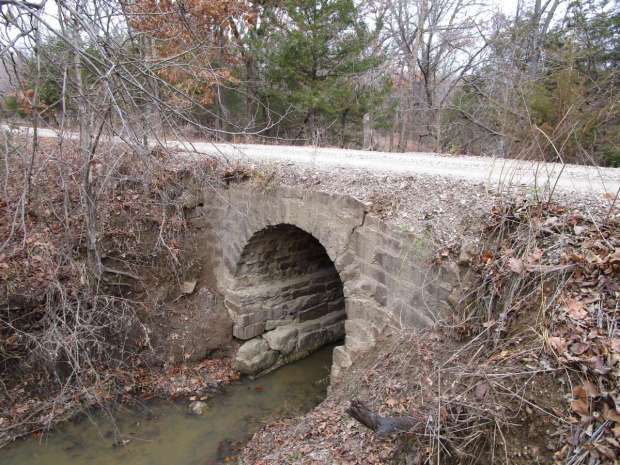
The biggest difficulty when designing a stone bridge is the hump in the road invariably left by a relatively tall arch over a shallow stream. While for some footbridges this feature of a steep hump may be considered a quaint addition, for any kind of bridge carrying vehicles, this hump can easily be a nuisance. Granted, by building a long, possibly sloping, approach the hump can be eliminated, but this requires much more work and material; in some historic bridges the approach required was found to cost as much to build as the bridge proper.

Foundations
A rock foundation is highly desirable. If the streambed is bedrock, so much the better. Happily, narrow gorges are also the more likely streams to have rock at the bottom.
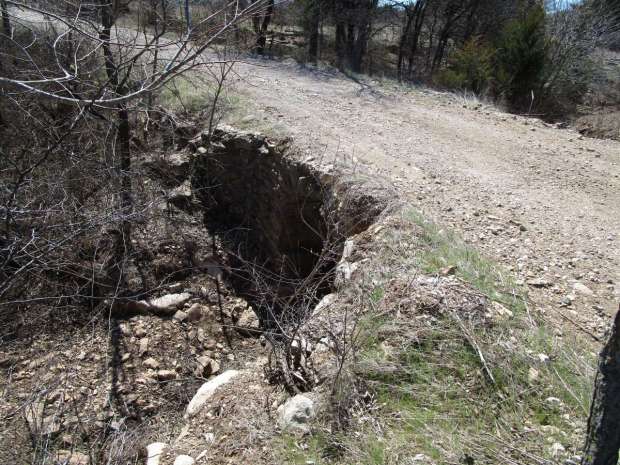
The rock bottom helps prevent settlement. If rock is not available, gravelly clay is a fair choice. Sediment should be avoided where possible, and sand foundations are simply asking for trouble. In short, the better foundation is the one that compresses the least and is not easily scoured.
Conclusion
In the end, it still is very likely that the range of stream geometry options is limited, but the work will be easier if:
- The stream is narrow relative to its width (within reason).
- The foundation is as firm as possible.
- A rock foundation is located at or near the streambed level.
Even if the above considerations can’t be addressed, a stone arch bridge can still be built over practically any type of waterway; it will just require more careful planning and possibly additional spans.
 Stone Arch Bridges