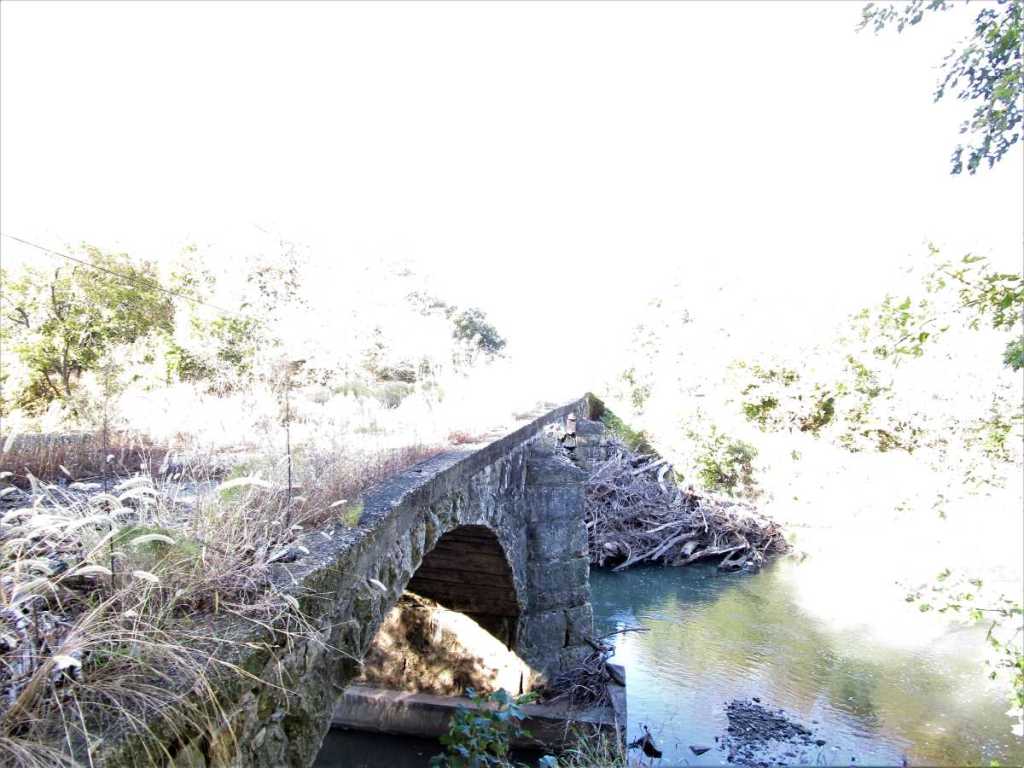
Few parts of a stone arch bridge take as much abuse as piers. The reason for this should be self-explanatory; after all, the piers are well in the way of the flow of water, regardless of how well-designed they are. This means that piers will represent a vulnerable point of a bridge, and should be maintained accordingly.
Cleaning Debris
One of the more depressing parts of pier maintenance is that piers easily collect debris such as logs borne by the water. Once debris begins to pile up, the amount of drift can easily grow until it reaches out-of-control proportions. For piers with a triangular cutwater, the pileups seem to often begin with a forked log that gets hooked neatly around the triangular cutwater. This done, more logs become stuck on the first log and so on till a regular mountain of driftwood is piled up on the bridge. If left in place, this driftwood can start plugging the stream, increasing water velocity and the likelihood of scour. A large pile, should it break loose, can damage badly some of the bridge, and, in very extreme cases, it has been said that a large accumulation of driftwood can actually push over the entire bridge!

In all these cases, the easiest form of maintenance is removal of a stubborn pile of driftwood before it becomes a major problem. For serious cases on historic bridges, it is sometimes advantageous to build an external, stand-alone cutwater upstream of the bridge to break the flow of debris.
Scour
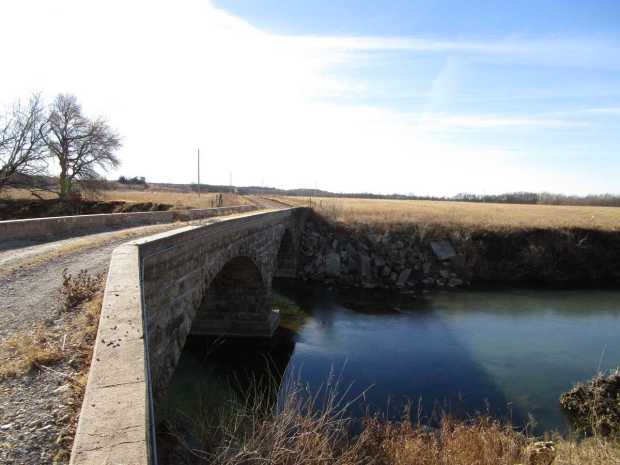
Nothing is as vulnerable as a pier to scour. Located in an area of current, the sweep of water around a pier can undermine the pier to the point of collapse. Concrete aprons and streambed paving are all acceptable methods of repair, and piers should be checked carefully for the first signs of scour. As mentioned above, debris piling up on a pier can lead to serious scour problems, so should be removed as needed. Also, new bridges or structures built upstream have been known to cause a sudden, rapid scour crisis on a bridge that has stood for ages without a problem. Thus, if anything that deflects the water off its original course is built near the bridge, it is advisable to inspect often for scour until it is determined what the long-term effects will be on the historic bridge.
Keep Joints Sound
Mortar joints are especially important on piers, as debris impacts can knock stones loose should the mortar be decayed. Even on otherwise solid bridges, severe impacts can still do damage, which is why many European stone bridges were built with metal clamps in the piers to hold the stones together. In these cases, the soundness of all visible clamps should be checked. On a related note, where a simple repairing of the masonry won’t cut it, there are various methods of reinforcing piers (and arches) with metal, to help bind all the masonry together as a more solid whole. These methods are viable options for repairing damaged bridges.
 Stone Arch Bridges