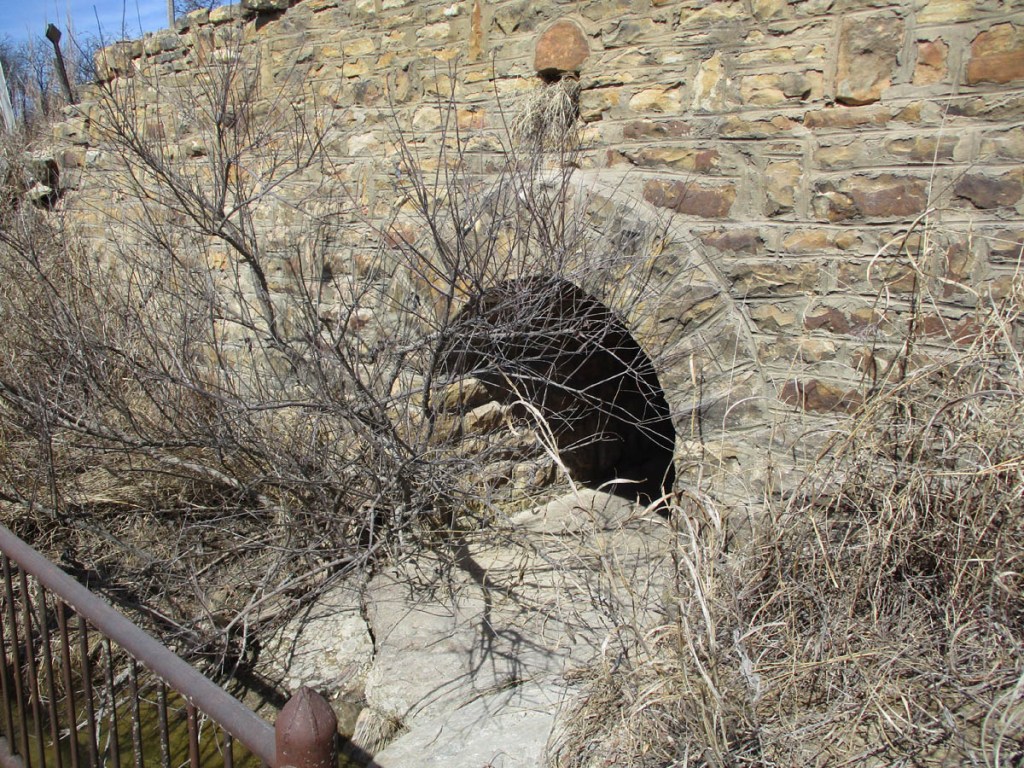
Chautauqua County, Kansas, has had a few stone bridges built over the years. Made of the easily worked sandstone of the Chautauqua Hills, the remaining bridges all appear to have been well built. The county also built several stone arch culverts.
The Chautauqua County Bridges
As a general rule, Chautauqua County was a latecomer when it came to stone bridge. While there were a few very early ones, Chautauqua County really didn’t do much with stone bridges, save for a couple of instances.

Culverts, however, were an exception. Apparently, Chautauqua County believed that big bridges were better done in steel, or, later, cement arches. Culverts for major road improvements were done in stone, and, interestingly, were often built wider than the typical southern Kansas stone culvert. Unfortunately, some of the stone culverts built in the county were very poorly built, for newspapers soon began to publish complaints about the tops of culverts being punched in by heavy loads.

The Culverts
Chautauqua County used stone arch culverts extensively on the major roads. Though the townships built a handful of stone culverts in out-of-the-way places, it would appear that many of the Chautauqua County culverts were built as an outgrowth of the Good Roads Movement, and as such were placed on important roads. Thus, it is a peculiarity that stone bridges are likely to be found on relatively major roads in Chautauqua County rather than minor ones.
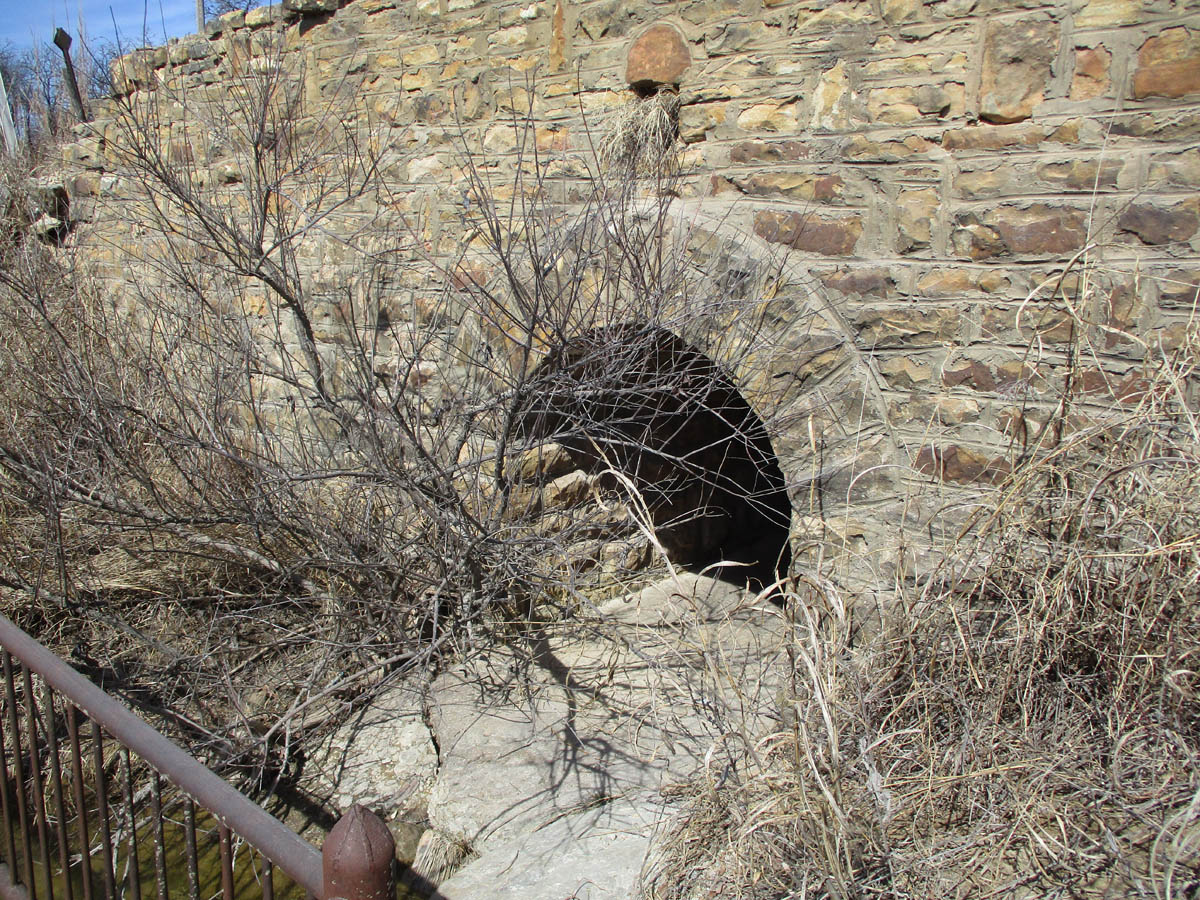
The most noteworthy stone bridge in Chautauqua County is the Chautauqua Springs culvert near the town of Chautauqua. This is a special place, and the spring was once the site of a major health resort. A set of stone steps leading down towards the spring is visible on private land near the culvert. The little stone culvert remains in very good condition and spans a small ditch near the spring. The culvert itself is noteworthy, not just from historic associations, but also because it is very distinctly built with a skew arch. The skew was achieved by corbelling the stones out. The mason rather cleverly cut most of the arch face stones such that the faces of the culvert still present a smooth appearance, rather than the stairstep look sometimes seen in roughly built skew arches.

Some of the narrower culverts in the county were widened at some point. The crude Hewins/Elgin Road culvert pictured above was widened with a concrete slab, while we found another instance of a stone arch bridge widened on both sides with sleek stone arches.
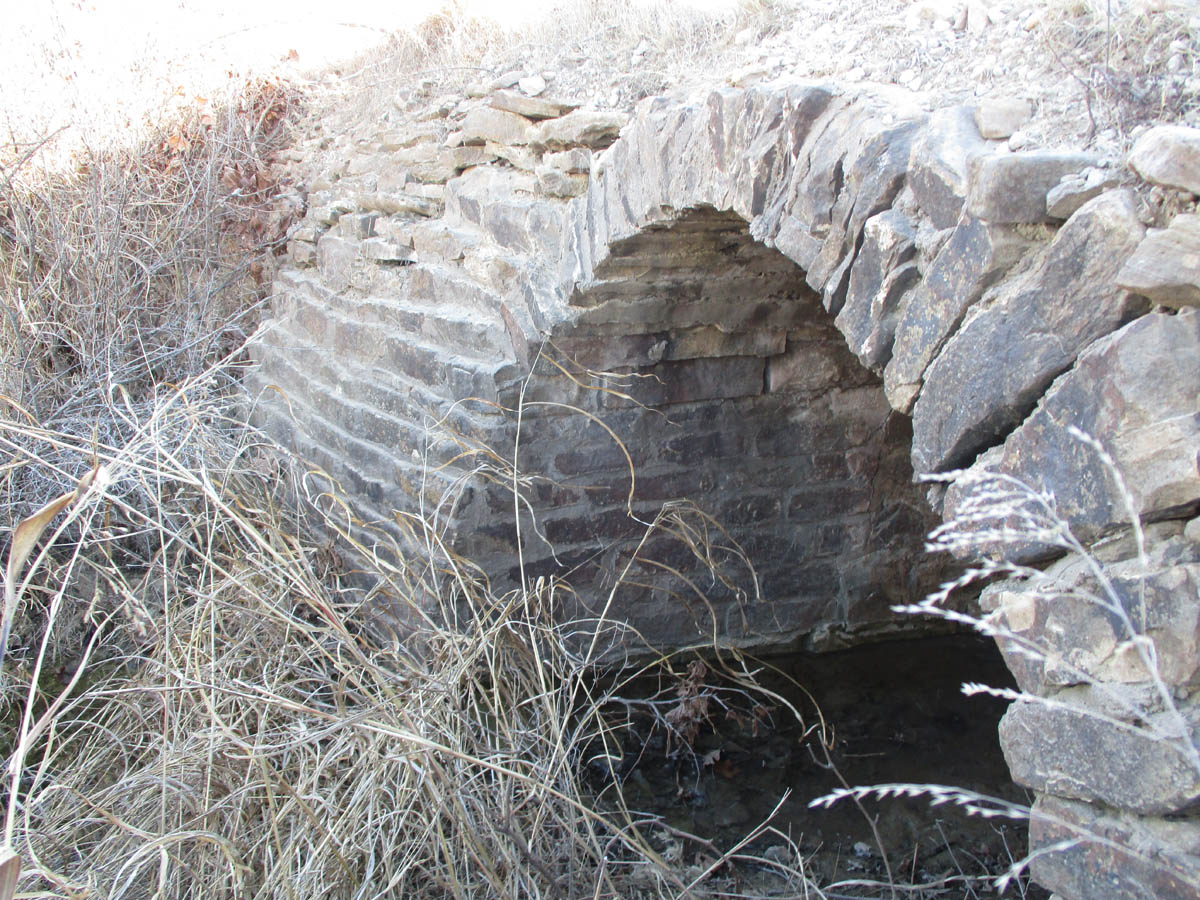
There are also abandoned stone arch culverts in the county, for many of Chautauqua County’s roads appear to have been relocated extensively over the years. Traces of old roads paralleling current ones are visible across the county.

There are also stone arch railroad bridges visible in places from abandoned lines.
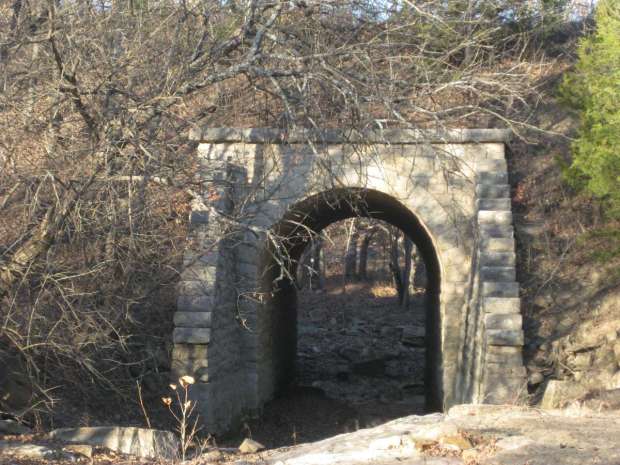
In conclusion, while Chautauqua County may not have many stone bridges, this county has several stone arch culverts, and beyond a doubt more remain to be found.
 Stone Arch Bridges