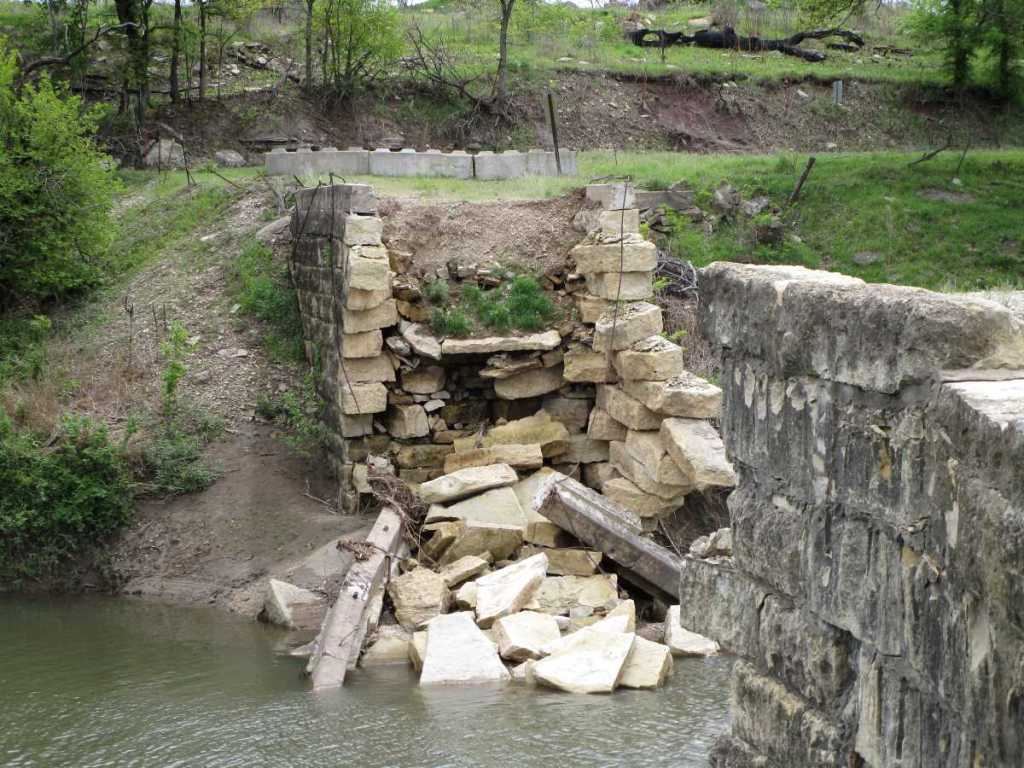
A rather common type of masonry encountered in stone arch bridges is so-called three-leaf masonry. Basically, three-leaf masonry consists of two facing walls made of good stone masonry with a middle core composed of poorer stone masonry or some other kind of infill, even soil in some cases.
Three-leaf masonry is very common as it is far cheaper to build a structure in this fashion than making it out of solid, first-class masonry. Despite the cost savings, the strength of the structure can still be very substantial, depending on how it was erected.
Three-Leaf Masonry and Stone Bridges
From the description above, one may notice that the typical stone arch bridge is built exactly like a thick, three-leaf masonry wall upon which vehicles drive. The typical stone bridge consists of two facing walls (spandrels) filled in sometimes with soil, sometimes with low-grade mortarless masonry, sometimes with low-grade grouted masonry. However, some stone bridges may go a step farther and feature piers and abutments that themselves are three-leaf; in Ireland, for instance, many medieval bridges feature arches on thick piers and abutments that are themselves merely a facing for an infill of some combination of loose stones, soil, and gravel.

The Weakness of Three-Leaf Masonry
The main weakness of three-leaf masonry is that once the facing walls are damaged, rapid deterioration can result unless the infill is of unusually high-quality masonry, which is improbable. Using the Irish bridge examples mentioned above, it was found that, if scour damaged the facing, the whole interior of piers and abutments would be rapidly washed away resulting in extreme damage to the bridge. After all, what the arches are resting on is essentially a stone box full of loose material. This means that maintaining any three-leaf-type structure is crucial, for once the facing is compromised, the interior is automatically compromised, leadin to very rapid deterioration of the whole structure.
The Concrete Controversy
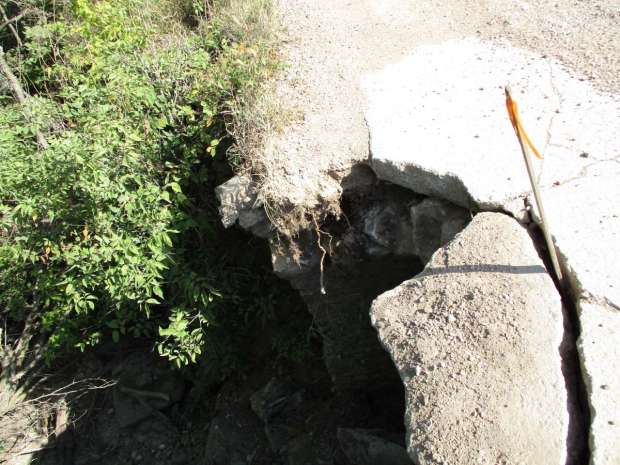
Some stone bridges, such as the famed railroad bridge known as the Rockville Bridge, which spans the Susquehanna River in Pennsylvania, represent a newer generation of three-leaf masonry. The piers on the Rockville Bridge, for instance, are stone boxes filled with concrete derived from Portland cement. The whole structure, then, is made of three-leaf masonry, but instead of soil or loose stones, the infill is concrete. The question arises: Is it a composite structure (stone and concrete) or is it a true stone arch bridge that is built with a modern kind of three-leaf masonry? The significance of this question is that the Rockville Bridge is considered the longest stone arch bridge in the world among some enthusiasts, while others contend it is really a composite structure, not a true stone arch bridge. It is worth mentioning here that replacing the fill with concrete is a common means of repairing a stone bridge, though, obviously, such a repair does not apply to interior sections of piers and abutments.
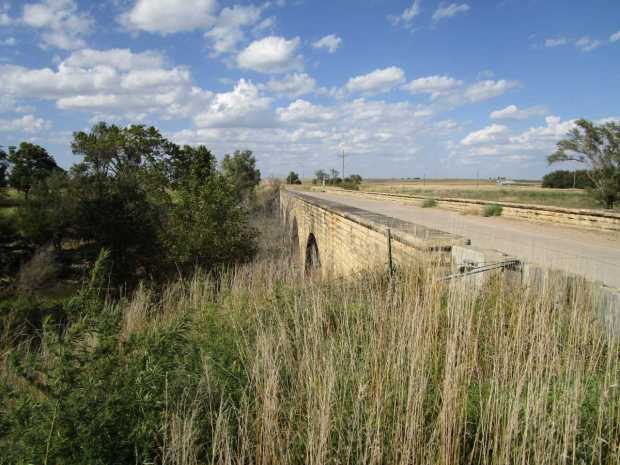
WPA stone bridges often are built along similar lines to the Rockville Bridge. In each of these cases the question is: Is it a true stone bridge? History may hold the answer, for many Gothic cathedrals were built of three-leaf masonry with a cement core, made of lime cement. This grout core is essentially an old form of concrete.
 Stone Arch Bridges