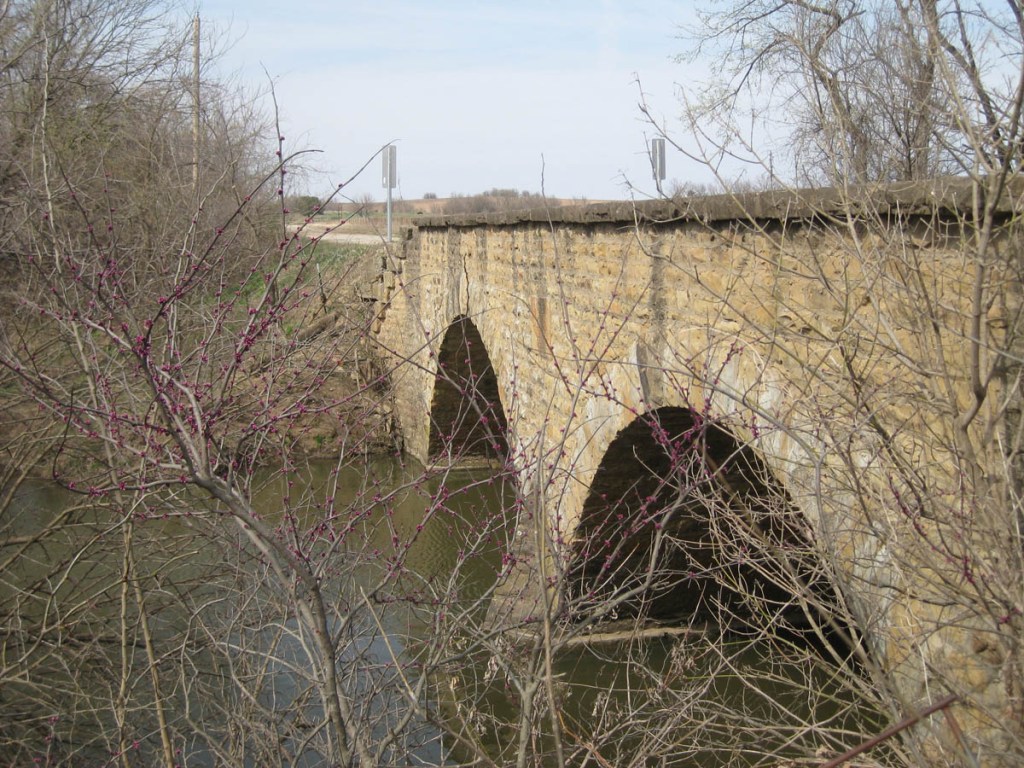
Elk County, Kansas, may never have had many stone arch bridges, but when it comes to stone arch culverts, this county seems to have been prolific. The truth is, only a handful of true stone bridges were ever built in Elk County. Be that as it may, the townships stepped in and bridged many smaller streams with stone arch culverts, at least partially inspired by the bridges of Cowley County, Kansas.
Unique Culverts
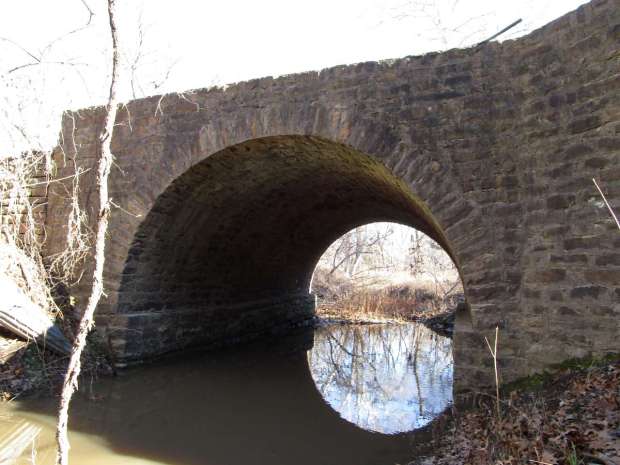
While one might justifiably wonder what it is about a stone arch culvert that is so especially inspiring, the fact is any stone arch bridge is unique, and, more to the point, Elk County’s stone arch culverts exhibit a wide array of peculiar designs and characteristics. And, for that matter, some of these culverts are very large; in the Oak Valley area, for instance, the culverts generally are Roman arches perched on top of massive abutments. So, while they may not be as long as one might be used to, they are certainly relatively tall for their size.
The Bridges
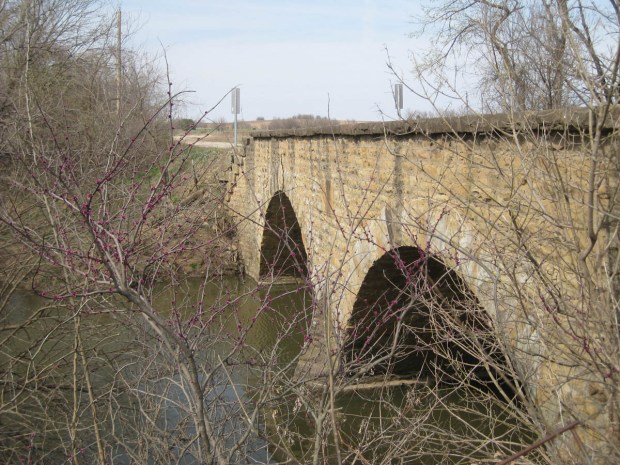
There are several true stone bridges in Elk worth mentioning. They include a bypassed stone arch bridge near Howard; this picturesque structure is visible from the road and was reportedly sold to a private land owner for $2.00 after being bypassed. A big stone bridge spans Blackjack Creek in the Oak Valley area; this bridge is in fantastic condition. Most inspiring of all is the double-arched Indian Creek Bridge in the northeast part of the county. This bridge looks almost new. It is a fabulously built structure composed of local sandstone, and is basically unaltered.
Exploring the County
The generally unique designs of Elk’s stone culverts make them well worth seeking out. And, as stone culverts are not required to be inspected like bridges are, the fact is there is a large potential for new finds in Elk County. For those who like to drive back roads and see a wild variety of scenery with an eye towards finding picturesque masonry under the road, Elk County is a veritable gold mine for finds.
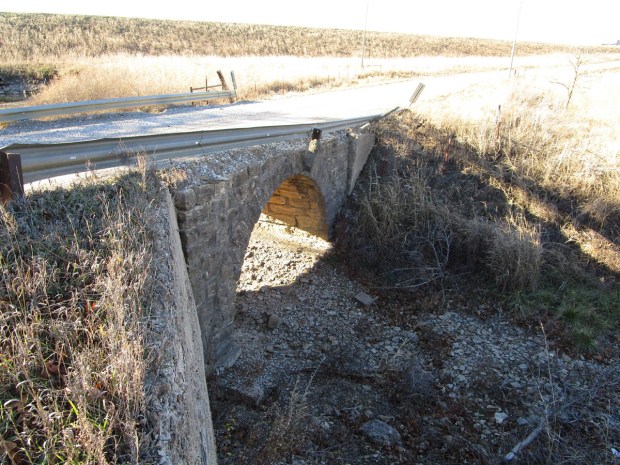
Stone arch culverts can be found in the most unlikely places; many of them have been widened significantly in stone, and we have found several instances of culverts showing three distinct sections on the underside of the arches.

