Stone arch bridge piers seem to generally be a highly vulnerable point in the structure. Besides the scour threat (which is a concern with the piers of any type of bridge) the design of stone bridges with piers is such that they often collect debris, sometimes even forming islands on the upstream side of the piers that are nothing but debris!
Why Do the Piers Collect Debris?
Any pier can collect debris, of course. However, stone bridges seem to be prone to this accumulation. Why?
The answer appears to consist of several parts. For one thing, stone bridges typically have relatively large piers compared to other types of bridges. The result is a large obstruction in the stream, which, naturally, means greater potential for debris accumulation.
Another concern is the fact that stone bridges often have relatively small spans relative to many more modern bridges. Generally the spans are smaller due to the rise/span ratio of an arch, which is not a problem for a, say, slab bridge. Small spans mean debris can easily jam the openings.
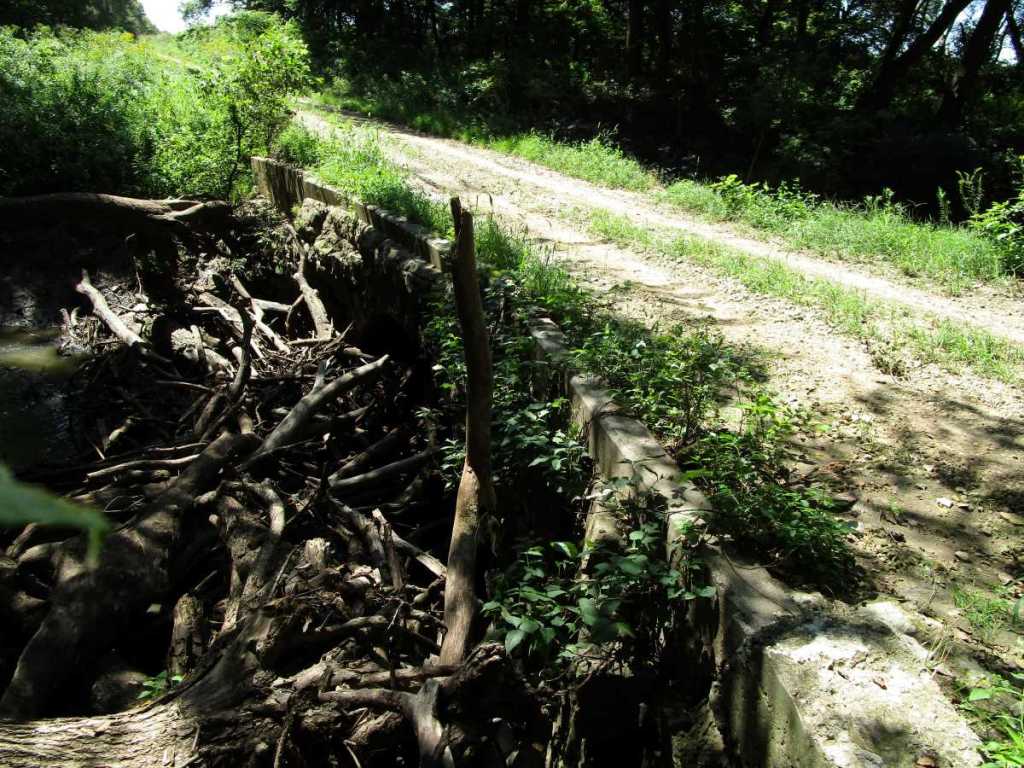
The other part of the equation is the shape of the piers. Modern bridges have piers basically consisting of some form of rounded columns; most stone bridges have triangular cutwaters to try to divert the debris. In fact, some stone bridges have no cutwaters whatsoever!
The Scour Threat
Debris accumulation usually leads to a scour threat, thanks to greater water velocities due to the constricted waterway. In extreme (albeit rare) cases, the whole bridge can be toppled by too much debris! (See “The Story of the Neer Bridge in Cowley County, Kansas” for a strange case of this kind.) Even if the bridge isn’t scoured, heavy debris accumulation can cause damage to a structure when it breaks free all at once. But again, scour is the biggest threat, for it is not immediately obvious, but can decimate the whole bridge.
Improved Designs
Rounded piers are what are now used almost exclusively. These piers are much less likely to catch debris, as it is the sharp angles that typically allow things to jam against the bridge. Some of the most modern stone bridges utilize this design. Longer spans also help to prevent a debris problem, for then long logs, etc., are able to swing around and go under the bridge without hitting the next pier and jamming.
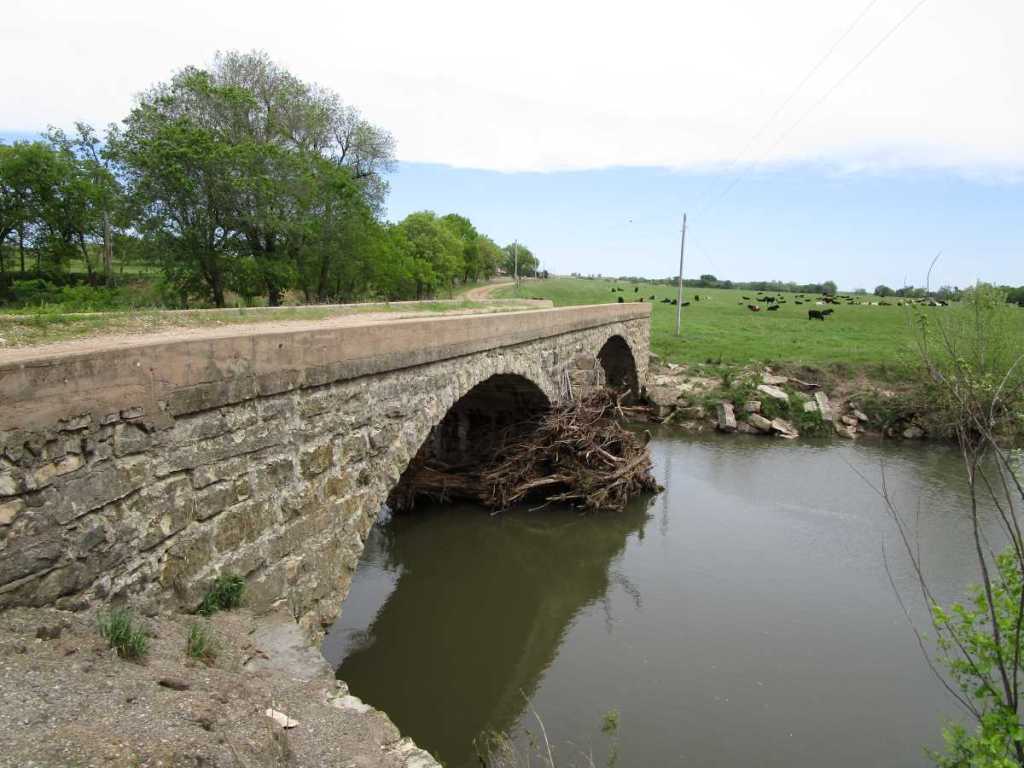
The ideal approach to design, however, is to avoid piers where possible. Arches can be built with quite long spans; where the rise of a long arch is tolerable, a single long span is to be preferred. Where piers are required, an odd number of spans is generally preferable, as this design prevents putting a pier smack in the center of the stream.
To conclude, a pier is always a weak point in a bridge, as by nature the pier presents a definite obstacle to the progress of the stream. However, with the right design, a bridge with piers can be built to last centuries or even millennia.
 Stone Arch Bridges