The middle-third rule is a masonry classic that is usually applied to arches, though it can also be applied to other parts of a masonry structure such as piers. In a nutshell, the idea is that, for a masonry structure to be completely stable, the thrust lines should pass through the middle third of the structure’s thickness.
Why the Middle-Third Rule?
What the middle-third rule is trying to accomplish is to allow the designer (or, for that matter, the person load-rating a bridge) to determine if the structure is safe under a given loading condition, whether static or dynamic. If the force is too close to the edge of the masonry structure, hinges form. An example of this is to take a stack of toy blocks. Pinch them right in the middle and squeeze between your thumb and pointer finger in one hand. The blocks are not going anywhere. Now pinch them at the edge and squeeze them hard. Snap! The blocks go flying!
How the Middle Third was Reached
For masonry to form hinges (or for the blocks to go flying, for that matter), there must be tension in the part of the structure opposite where the majority of force is applied; this is where the gap characteristic of a hinge has formed. Using force vectors, the suggestion is that, as long as the pressure is applied in the middle third of the masonry structure, all the thickness will be under some degree of compression. If the force is outside the middle third, part of the structure is not under compression. If not under compression the implication is that there is now tension in that part of the structure. If we assume that masonry can only handle compression, the conclusion is that, if the forces are outside the middle third, the structure has tension and hence is unstable.
Problems
It has long been thought that the middle-third rule is highly conservative. However, it has stood the test of time to a degree; it is commonly acknowledged, that if a structure is built and/or used such that the forces are within the middle third, the structure is almost certainly safe. Evidence, however, would suggest that structures can be safe even if they don’t apparently comply with the middle-third rule.
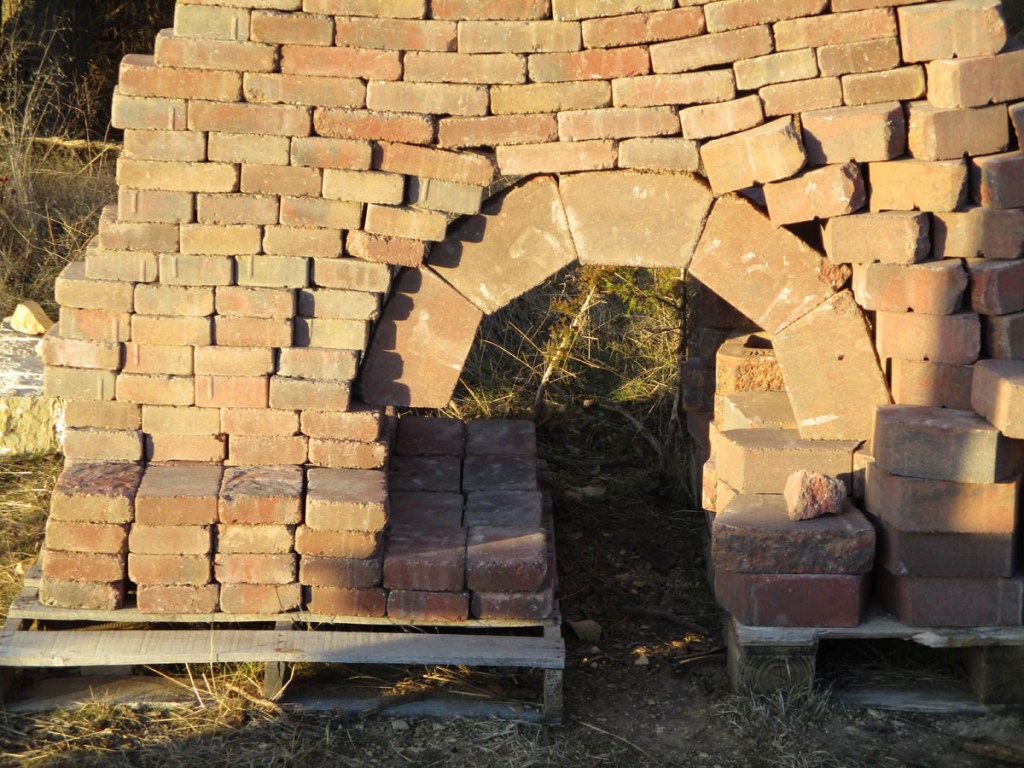
Another problem — and this is probably the basic problem with the middle third rule as well as many other masonry rules and models — is that we don’t actually have a terribly clear understanding of where the lines of thrust actually pass through a structure. Our understanding of forces in masonry is basic at best, for the forces are many and complicated. And even if we did have a perfect understanding of the basic forces, the final tally for a structure depends heavily on obscure variables like how the joints are composed between every stone. There are also factors like whether the arch is the same thickness in the center portion of a bridge as it looks at the outside, which cannot be found out without removing all the fill from the bridge. The bottom line is that masonry is a giant balancing act, fantastically strong when done correctly, but we still only have a rudimentary understanding of how it works. For years empirical observations have been the rules by which masonry was built.
 Stone Arch Bridges