Mortarless masonry presents several distinct advantages and disadvantages as compared to mortared work. The most obvious advantage of mortarless work is, of course, aesthetics. Nothing looks quite as picturesque as a drystack structure with no mortar on the face. But there are other considerations as well.
The Construction
The construction of a mortarless structure is harder in some ways and easier in others as compared to a mortared structure. For one thing, foundations need not be dug below the frost line, as the structure will shift and adjust with frost anyway. All that is needed is that the foundations are on solid ground. For another thing, the stones do not have to be cleaned and kept clean, as there is no concern about mortar taking to the stones. All of this makes subgrade work vastly easier!
Mortarless masonry, however, requires more careful fitting and shimming of stones. Depending on the quality of the stones used, this can make the work become vastly more difficult. In general, larger, more rectangular blocks will be easier to set.

Durability Factors
Mortarless masonry has a reputation for not being as durable as mortared work. And there is some truth to this, depending largely on the quality of the work and the size of the stones. However, keep in mind that there are a fair number of mortarless bridges and aqueducts built by the ancient Romans still in use.
For mortarless masonry to stand, it is important that the forces be understood, and the masonry be built accordingly. This means that the durability of the work is very dependent on the skill of the builder; if built wrong stone fracture will occur and, worse, the whole structure can collapse under frost action. Furthermore, mortarless masonry is vulnerable to being knocked apart piecemeal. Hence, capping the walls is very critical to ensure everything is held into place; also the use of larger stones is preferred to make it much more difficult for stones to be dislodged.
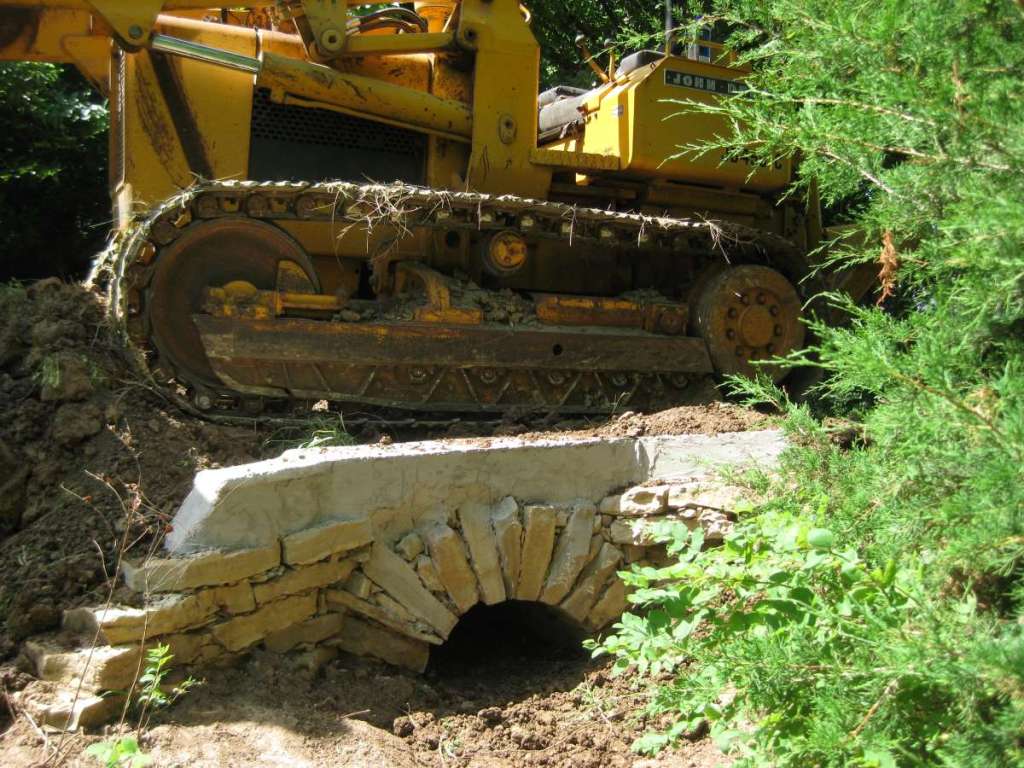
On the positive side, if well built, mortarless masonry may not require as much maintenance as mortared masonry simply because there is not mortar to decay, hence no repointing is ever required.
 Stone Arch Bridges