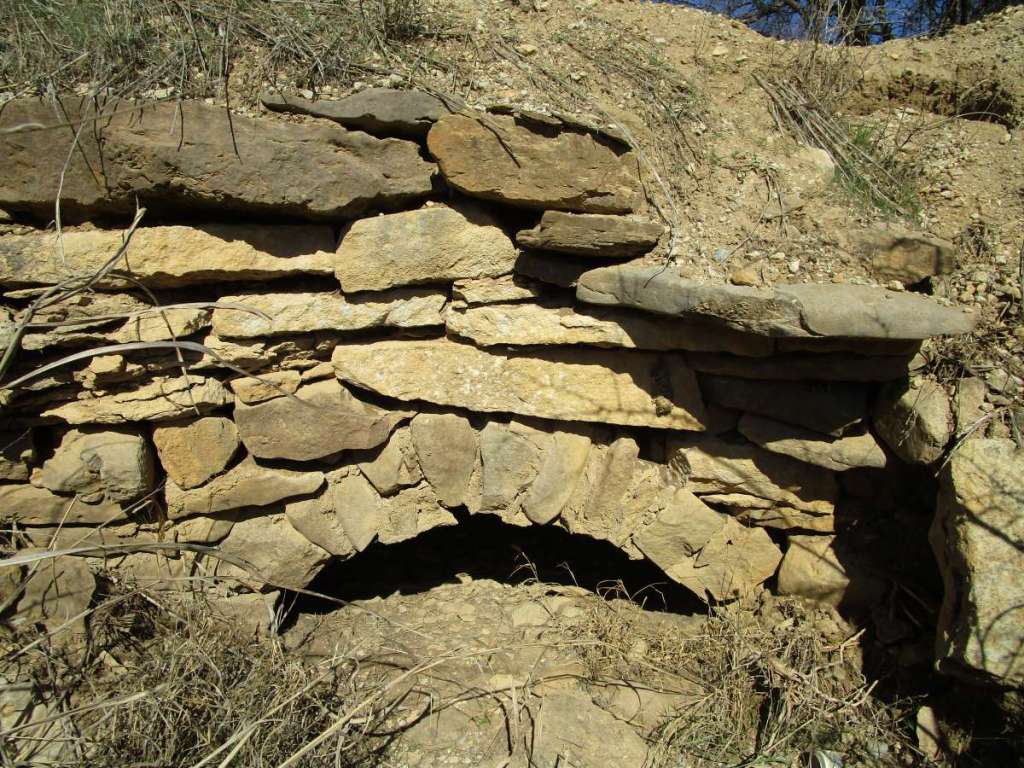
Stone bridge builders have been fascinated with low-rise arches for centuries. The primary appeal of low-rise arches is that they allow long spans with a minimal “hump” in the road. Historically, when shipping lanes in inland waterways were opened up, many medieval bridges were modified with low-rise arches to allow a better passage for boats under the bridge. Usually, a low-rise arch could be built that would replace two arches and a pier out of the medieval bridge, showing how these different arch shapes could allow for a much wider opening without altering the existing grade.
It has been generally been considered that low-rise arches look more daring (perhaps with good reason!) than their taller cousins. Many builders also thought that low-rise arches look more graceful than the more imposing Roman arches. The French bridge builder Perronet heavily popularized the use of low-rise arches, creating a distinctive design where a chain of low-rise arches was supported on slender piers. His work was considered quite daring and novel in its day.
The Horizontal Thrust
Of course, low-rise arches have a high horizontal thrust; that is a given. This thrust must be resisted, hence good abutments are a requirement; where practical some of the best designs simply end the arch in bedrock, creating a rather immovable place for the arch to spring from. Piers, however, can be made slender with care. The secret behind Perronet’s daring designs was that he understood how the horizontal thrust of two identical arches cancel out. Thus, as long as he built all the arches at once, he could use thin piers, provided the abutments at the ends of the chain of arches could cope with the horizontal thrust. Note, however, that with this design, if one arch were to ever fail, the entire chain would collapse like a string of dominoes.
The Loading Problem
The curve of a low-rise arch does indeed approach the shape of the catenary describing its thrust. That does not mean, however, that a low-rise arch is strong. On the contrary, a low-rise arch is actually quite vulnerable to excessive loads. A low-rise arch is easily shifted by heavy loads on the haunches, leading to hinges and collapse. Heavy loads can also lead to snapping through of some of the stones, causing catastrophic failure. This snapping through becomes easier as the rise of the arch drops, as the low rise leads to almost nonexistent angles in the arch stones; basically instead of wedges you are left with almost rectangular blocks. A slight crushing of the stones is enough to make the arch completely unsafe.
Limited Ability to Adjust
Probably the most serious fault of a low-rise arch is its limited ability to adjust to settlement. A Roman arch, for instance, is remarkably tolerant of settlement, as the stones can safely shift to adjust. A low-rise arch is in a sense rather precarious, as it requires a good deal of precision to remain safe. Heavy settlement or, worse, horizontal sliding of the abutments can quickly lead to a compromised structure. The stones need to be high-quality as well, as it does not take much crushing or deterioration to make the arch shaky.
Best Applications
Obviously, the main advantage of a low-rise arch is it allows large spans without an excessive grade. However, unless the horizontal thrust can be contained safely, it is best to use a low-rise arch where it can be firmly wedged into bedrock, as horizontal shifts can be devastating. Wide, rocky channels are an ideal fit. It is worth adding that for many bridges with low-rise arches a slight dip in the top of the arch is visible, suggesting these bridges are relatively unstable and will not have the longevity seen in the bridges of the ancient Romans.
 Stone Arch Bridges