Historically, it would seem that many stone bridges and especially stone culverts were built as small as possible for cost reasons. This leads to all kinds of problems from a maintenance standpoint. In this post, we address some of these concerns.
The Threat of Overtopping
Pretty much any type of bridge structure can be threatened by overtopping, which simply refers to water flowing up and over the top of the bridge. Overtopping poses a large threat to masonry structures, as the water can knock over retaining walls and wash out the fill. Loss of fill can destabilize an arch in a stone bridge. Even more concerning, a submerged stone arch is subjected to pressure from the water; and if this pressure is high enough it can actually blow the arch out by pushing the stones up and out.
Maintenance Items of Too Small Bridges
There are many threats to stone bridges with insufficient waterway. Here are some things to look for:
- Scour. Due to very high water velocity through a small opening, scour is a very serious threat. Regular inspections are recommended, with additional inspections after major floods. Scour barriers such as paving the streambed and/or adding concrete scour aprons are strongly recommended.
- Spandrel Wall Failure. The high stress on all retaining walls from the water means the walls can shift. Look for loose and shifted stones and repair as needed.
- Debris Buildup. Small openings tend to catch debris, which can plug the opening leading to scour problems and other damage, as the bridge will then act more like a dam than a bridge. Clean debris as needed.
- Roadway Washout. If water overtops a structure, the roadway will usually wash out to some degree. Besides being a nuisance to traffic, washed-out roadways means loss of fill which can lead to other structural problems.
Rectifying the Problem
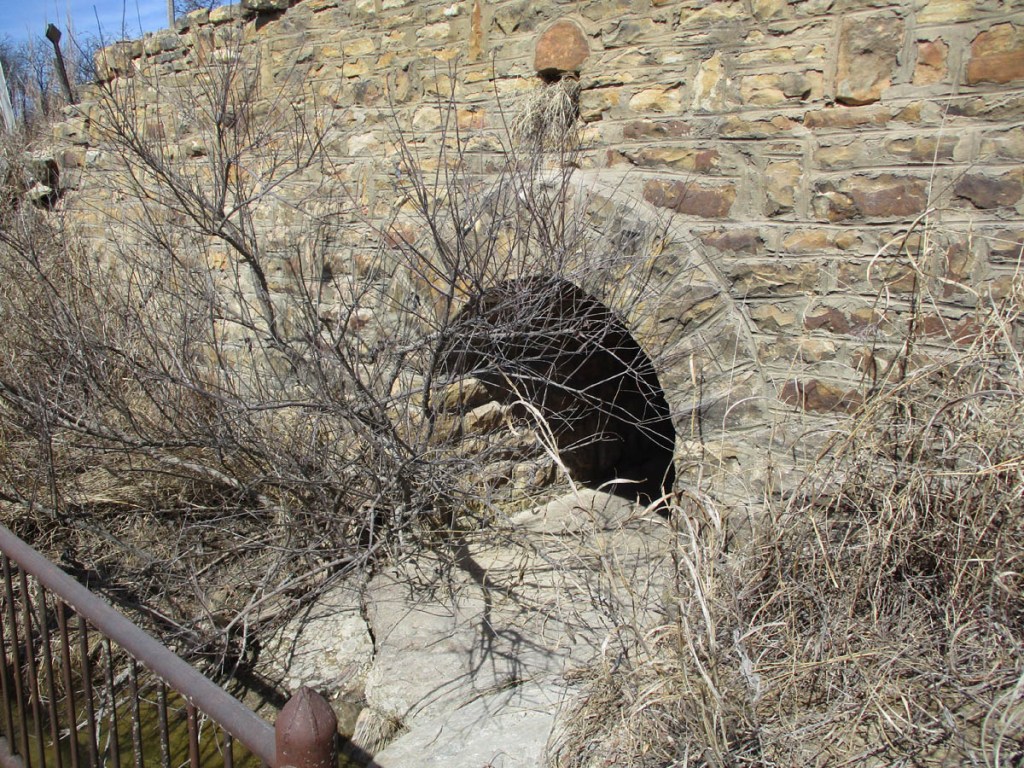
The best solution to an inadequate stone bridge is to rectify the waterway problem. There are several approaches possible. The most effective is to add another opening for water. For a stone arch culvert, this can look like adding a culvert pipe at the end of the stone bridge.
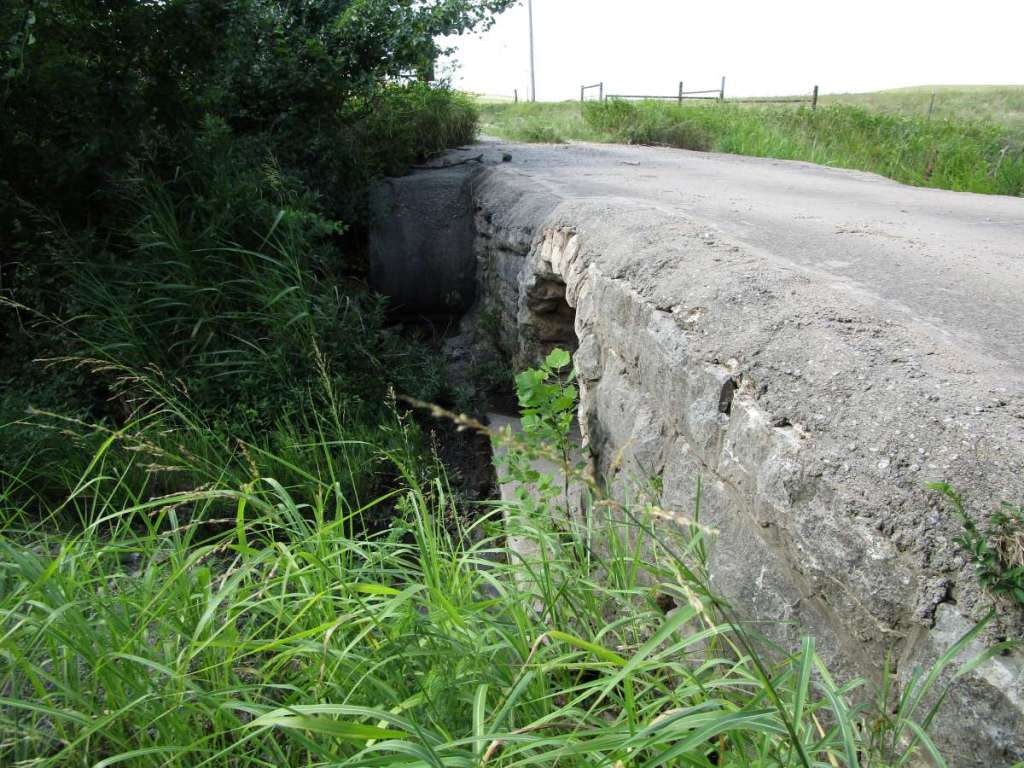
For a larger bridge, this may involve digging a channel around the bridge and spanning this auxiliary waterway.

For very inadequate bridges, consider pouring an appropriate concrete deck on top to convert the bridge into a true low-water crossing. This will prevent loss of fill and the solid weight of the concrete will help hold the arch together when it is submerged.

In all cases, scour must be taken very seriously, so it is mandatory that some form of protection be implemented at the first sign of trouble. An ounce of prevention is worth a pound of cure, so it is preferable to add scour protection sooner rather than later. For culverts streambed paving is strongly recommended. For bridges, concrete aprons are a good start for a long-term protection plan.
 Stone Arch Bridges