Historic stone bridges are highly vulnerable to impacts from road traffic. The nut of the problem lies in the fact that individual stones are much more easily dislodged than, say, the cohesive concrete curb of historic concrete bridges.
Maintenance
Dislodged stones are best replaced as they are knocked off, and maintenance of the mortar (when used) helps hold the stones in place. Unfortunately, this maintenance does not make a stone bridge immune to damage from vehicular impacts. This means, for highly traveled structures, some modification may be required to prevent repeated damage.

Concrete Curbs
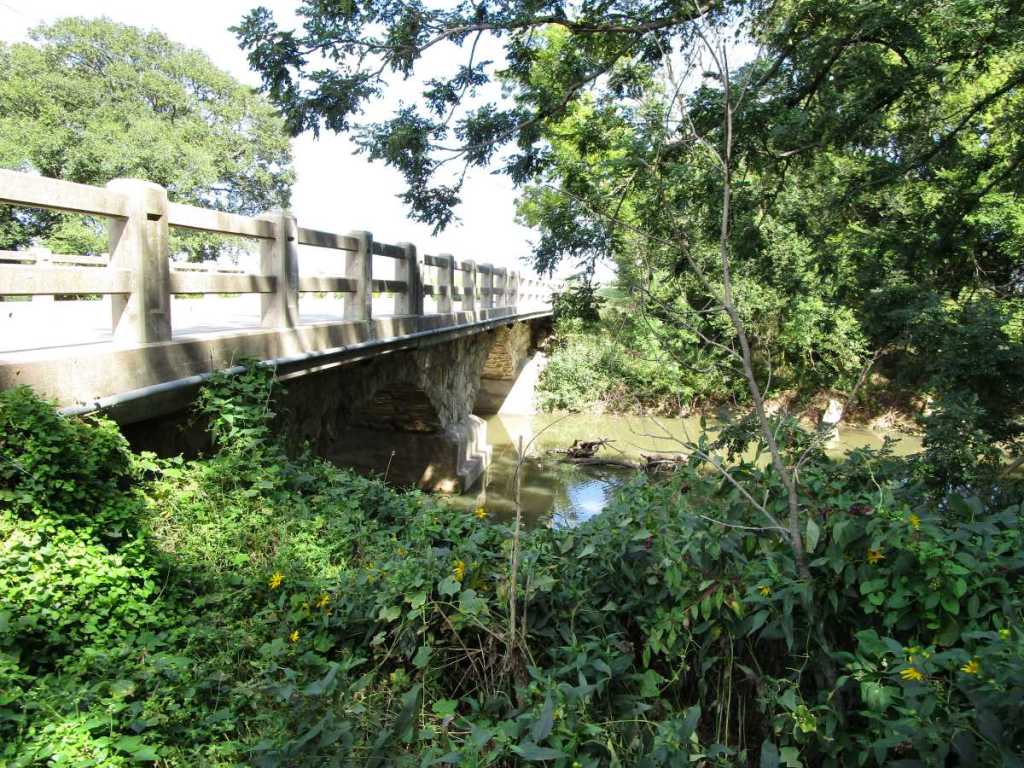
Concrete curbs are the best bet for long-term stability, as the solid weight of the concrete curb is much harder to move than individual stones. Furthermore, the curb can be used as an anchorage point for traffic barriers as required; traffic barriers should not be bolted directly to stones, so if a traffic barrier is in order a concrete curb is pretty much a requirement.

Concrete Decks
Concrete curbs can still be dislodged, especially on small structures where the curb is by necessity short. Probably the single most durable answer is a concrete slab deck poured on top of the stone bridge, with the concrete curbs built in. This type of structure is almost impossible to dislodge, and has the added advantage of substantially increasing the durability of the stone bridge by distributing the weight of loads. All in all, pouring a concrete deck where acceptable will result in a great improvement to a stone bridge.
 Stone Arch Bridges