One trick often used in stone bridges is to make all the faces of the bridge out of high-quality ashlar, while the interior masonry is made of rubble work. Probably the most common place this is seen is in the arches themselves. In these instances the outside faces of the arch are made of massive, precision blocks, while underneath the arch the facing quickly gives way to a somewhat looser-fitting rubble arch that interleaves with the ashlar facing.
The Advantages
Really the only advantages of this type of construction are cost-related; ashlar is expensive to produce, requiring extensive, precise stonecutting. Rubble masonry, on the other hand, is relatively easy to build. By making only the front faces a facade of high-quality stonework, the end result is a top-notch appearing structure at a lower cost. And there is one structural advantage here over a structure made entirely of rubble masonry: The faces of any masonry structure are naturally vulnerable to impacts. By making these faces of ashlar, the tendency is a greater durability, as these faces fit tightly and are harder to move than the center rubble portion. The end result is the ashlar faces protect the rubble interior, resulting in a better resistance to impacts without the full cost of a structure composed completely of ashlar.
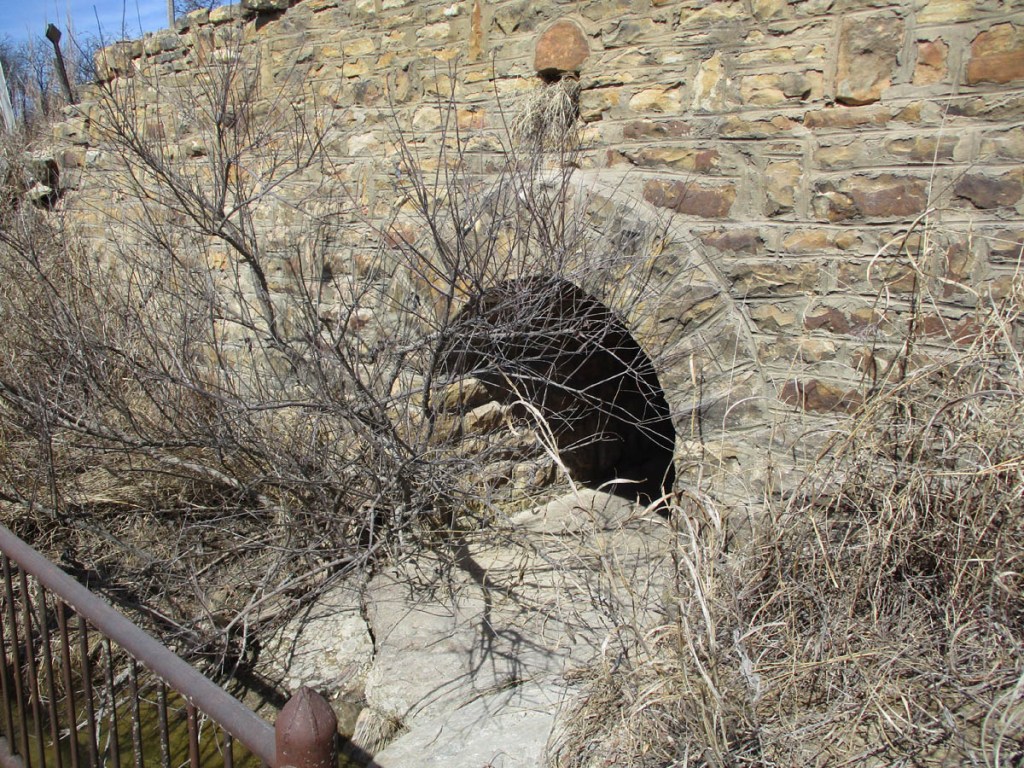
Dissimilar Types of Masonry
There is one serious problem with ashlar-faced rubble masonry, and that is the fact that the tight-fitting ashlar does not flex as much as the rubble interior. On arches this is especially a problem, as arches will flex under loads. The result? The rubble tends to separate from the ashlar face, often splitting various stones to do so. This is the problem with using dissimilar types of construction; they respond differently to different loads, which can easily cause problems. That said, some builders, by clever stonecutting, have built structures with a more gradual transition between the ashlar and rubble masonry. These structures are less prone to cracks in the arches.
 Stone Arch Bridges