An interesting tool that is a good addition to the mason’s tool chest is the bushing hammer. This hammer has a head made of a rectangular block of steel. But instead of smooth ends on the head, the head includes an orderly arrangement of steel points. How many points are on the head vary depending on the size of the hammer.
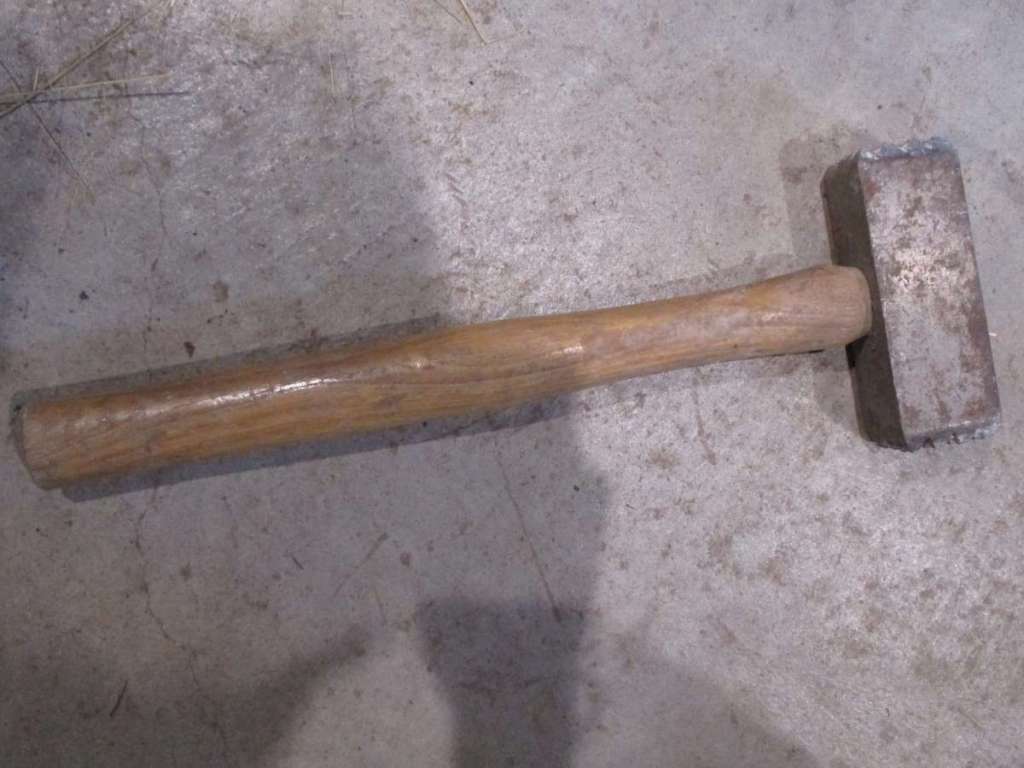
The bushing hammer is one of the more specialized masonry tools, and is used almost exclusively on limestone; on other types of stones it may not work well and if used on sandstone it can completely compromise the structural integrity of the stone. However, that said, for the builder who works with limestone, the bushing hammer will prove to be a very useful tool.
What the Bushing Hammer Does
The bushing hammer is very easy to use: The user simply pounds the desired section of a stone with the hammer. What the hammer does is smooth out imperfections in a stone. The points chip away at the protruding sections of the stone, eating away at bulges, etc., all without breaking up the stone. With this ingenious tool, flat surfaces are readily obtained, even with peculiarly domed rocks. Thus, it can be brought in to smooth out a bulge that is keeping a stone from sitting flat. This makes this tool quite useful during construction.
A Finishing Treatment
Historically, the bushing hammer was used to create the final finished surface on ashlar blocks, making a nice, flat, yet textured surface. Another possibility, if done with care, is to use the hammer to blend mortar joints and remove mortar stains and spills from the surface of the stones on a finished structure. This is a versatile tool; just be aware it is ideal for limestone more than any other type of stone, and becomes less effective the harder the stone.
 Stone Arch Bridges