One major advantage of stone arch bridges is how they provide a seamless transition between the ground and bridge. Have you ever driven on a long bridge and bumped heavily over the bridge where it starts and stops? Long bridges of the usual types require expansion joints to keep them from self-destructing. Furthermore, even a small slab bridge is frequently somewhat separate from the rest of the road; a sort of concrete platform placed in a causeway of soil. A stone bridge, however, is essentially a continuation of the ground itself by virtue of the type of construction.
Continuing the Ground
A typical stone arch bridge is essentially a retaining system for fill material, allowing a continuation of the highway. The average stone bridge at its core consists of two parallel retaining walls, creating a long causeway. The arches allow this causeway to carry fill over a gap, and the arch acts as the bottom to the causeway, thereby holding the fill in.
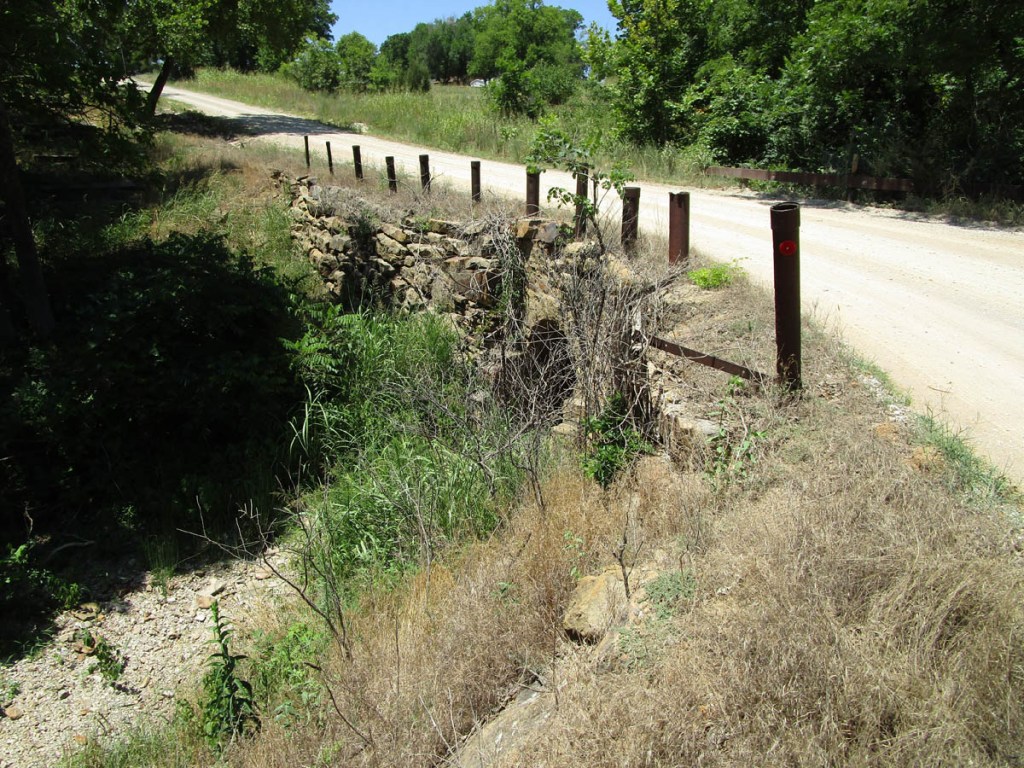
Whereas the typical slab or truss bridge is weakened by the weight of fill placed on it (hence why it is preferable to not place extra dirt or pavement on the typical concrete bridge), the arch is strengthened by it. After all, if a slab can hold 10 tons, it can hold 10 tons — regardless of whether that 10 tons consists of a heavy truck or a pile of wet dirt on top of the bridge! An arch, however, by virtue of operating in compression is held together more tightly by the weight of the fill. And, as an added bonus, the deeper the fill, the better the loads are distributed over the arch, making the arch that much more capable of carrying heavy vehicles.
Does the Arch Shift?
It is interesting to note that the arch does indeed expand and contract with temperature changes. Unlike long slab bridges, however, this thermal expansion is very slight, and is almost never noticeable. In the end, the arch is a very durable, natural means of spanning a gap. It can and will shift with loads and weather, but its ability to flex and adjust without collapsing makes this type of structure very strong.
 Stone Arch Bridges