Near Andover, in Butler County, Kansas, stands a simple 36-foot-span stone arch bridge over Four Mile Creek. This 1899 bridge was built by Abe Matheney, and is among the oldest of the county’s stone arch bridges. This bridge has suffered somewhat from flood damage over the years, and the upstream face is now heavily obscured with concrete. The county had, at one point, scheduled this bridge for “reconstruction” in 2025, but the bridge still remains, and has seen some repairs instead.
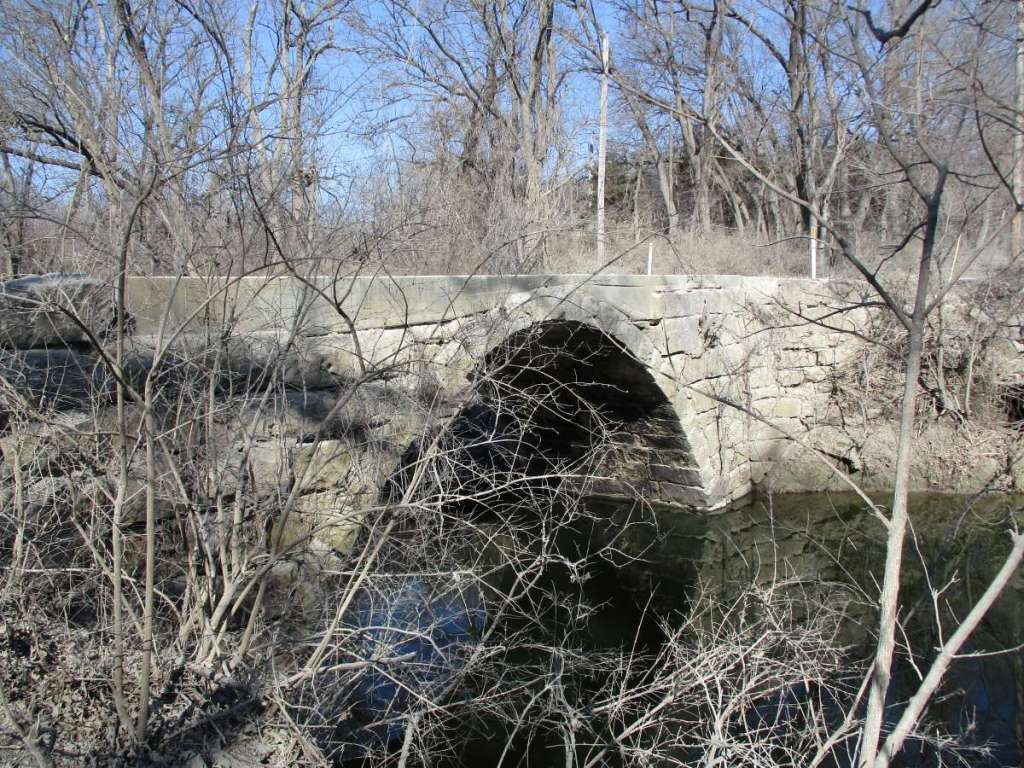
Old Damage to the Bridge
We found a reference to the Four Mile Creek Bridge suggesting that some 50 years ago it was reported as collapsed. Based on the concrete work done to the upstream side of the bridge, it appears that the arch had partially collapsed, taking out some of the spandrel wall, probably as a result of debris impacts. This failure appears to have been nearly identical to the damage done to the middle arch of Cowley’s Pudden/Esch’s Spur Bridge, but whereas the Esch’s Spur Bridge was ultimately demolished, Butler repaired the Four Mile Creek Bridge with concrete.
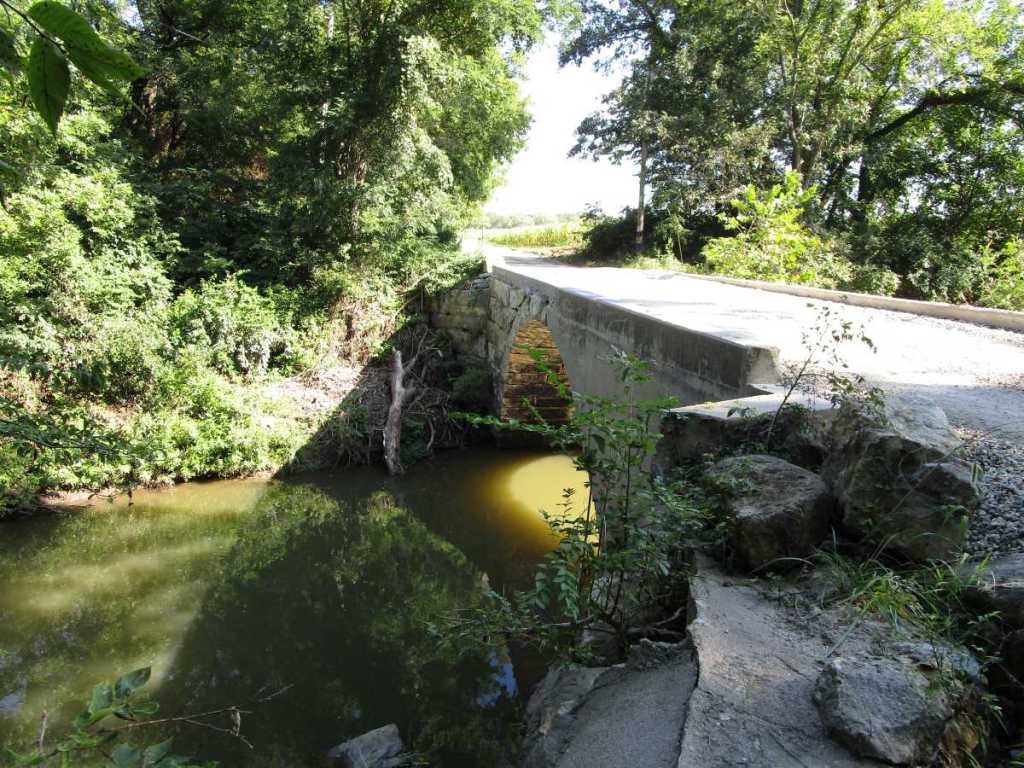
Butler’s Recent Work on the Bridge
We first noticed work had been done on the bridge in 2024. New stones were brought in to repair and add on to the downstream approach on the south end of the bridge. As of our most recent visit in 2026, more work has been done, obviously to prevent the washing out of the south end of the bridge.
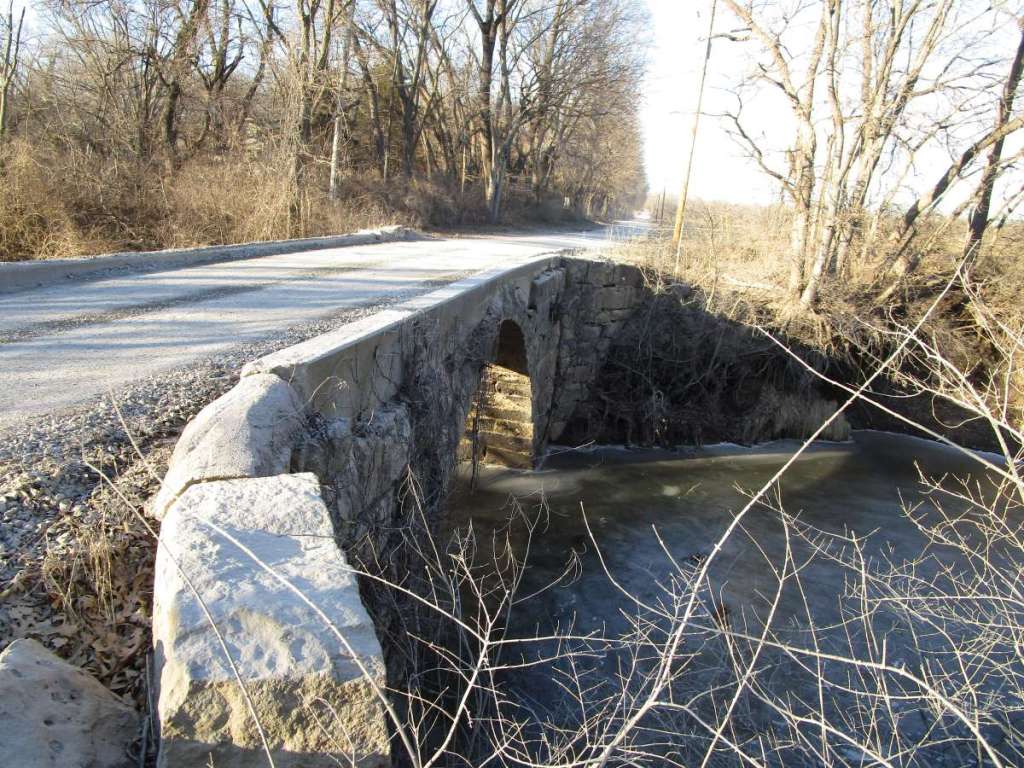
As a whole, the structure looks to be in pretty good shape. New stones have been used in various parts of the approaches to build them up, some concrete has been replaced with stones, and extensive work has also been done on the downstream side of the south end of the bridge to stabilize the creek’s bank. This also has opened up a rather good overlook for photographing. The Four Mile Creek Bridge has also seen some work that improves its functionality. The road seems to be straighter than it used to be, and the old bridge is well marked with reflectors. The old stone bridge looks far less like a patched-up, battered relic from a bygone era and now looks serviceable for years to come. Butler County seems to be spending more and more effort in restoring its stone bridges, and it is always a welcome sight to see the county work on a stone bridge in such a way that the bridge is preserved and its appearance improved all while keeping the structure serviceable for modern road use. Other examples of the county carrying out such work on stone bridges can be seen in the 1899 Wilson Bridge near Augusta, the 1901 Polecat Creek Bridge near Douglass, and the 1908 Diller Bridge near Cassoday, which also happens to have the longest span of any single-arch bridge in the county.
 Stone Arch Bridges