Scour aprons, paved streambeds, etc. are all useful for protecting historic structures, but they are only a part of the whole picture. The stream itself can erode away leaving a culvert standing precariously at the edge of a sizable drop, despite having a good pavement under it.
Long-Term Streambed Scouring
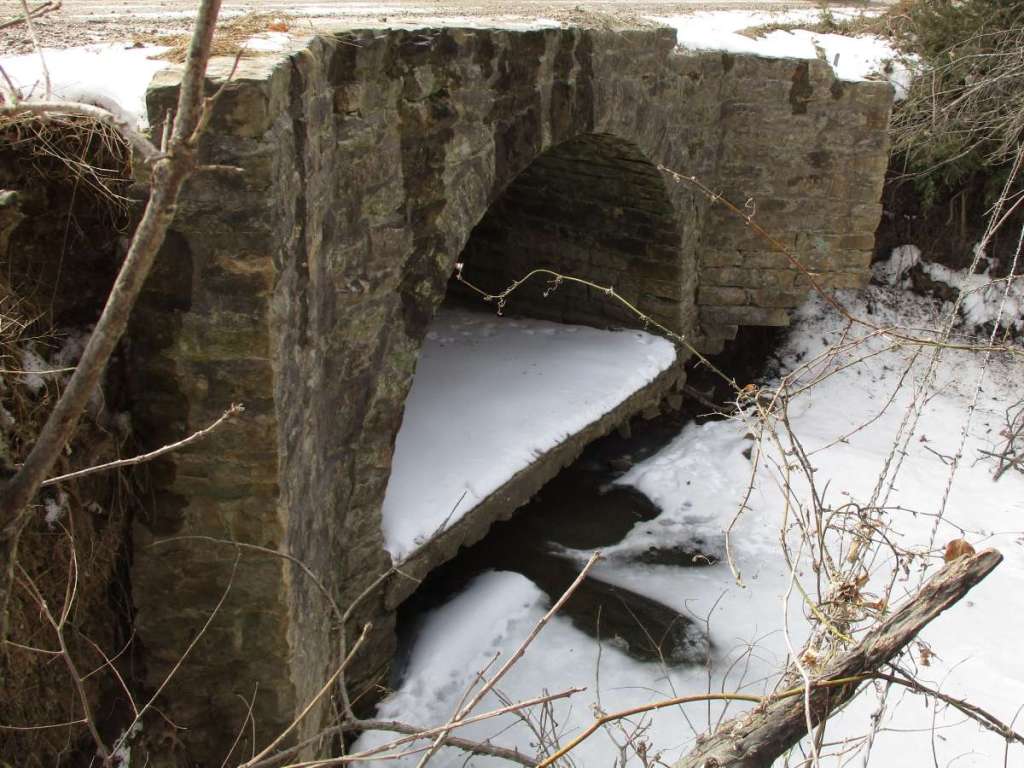
One sight we have seen over and over again, for small concrete culverts and stone culverts is a structure with a paved streambed standing precariously at the edge of a waterfall. While the streambed paving has done its part to protect the structure, the waterway downstream has continued eroding away until the culvert is hanging slightly over the brink of a rather sizable drop. Clearly this is not a stable situation, and requires a remedy.
Slowing the Erosion
Many episodes of extremely heavy streambed erosion are a direct result of high water velocity thanks to inadequate waterway under the culvert in question. Simply adding another culvert next to the existing one may be enough to prevent this erosion.
But even sufficiently large culverts can still see heavy downstream erosion. While a concrete curtain wall can (and, for extreme cases, should) be poured at the outlet of the culvert in question to protect the soil under the structure and its protective scour pavement from being undercut, it is probably a good idea to fill in the streambed and slow the water down. This is a case where rip-rap can help. Adding rip-rap into the waterway not only builds the streambed back up, but will tend to slow the water down. The rip-rap should be built up to but no higher than the floor of the culvert, then allowed to slope gradually down to the current level of the streambed.

