Unfortunately, stone bridges are often built such that they will be submerged periodically. While some minor cases can be rectified, usually by adding an extra bypass channel under the road (see Care of Stone Arch Bridges With Insufficient Waterway), the fact is even otherwise adequate stone bridges may be completely submerged in severe floods.
The Threats
Scour is, and always will be, the largest threat to any bridge that is submerged. Scour must be taken seriously, and must be addressed as needed. However, there is another possible danger to stone bridges: voids in the structure. The water pressure in a massive flood is enormous, and can permeate the structure causing hollows and voids in the fill and even the mortar joints. These voids result in a subtle weakening of the structure. It is possible for a submerged arch to fail by literally exploding, as the pressure of the water in the arch (which, if submerged, acts more like a pipe than a channel) can push the stones out if there are hollows behind the arch.
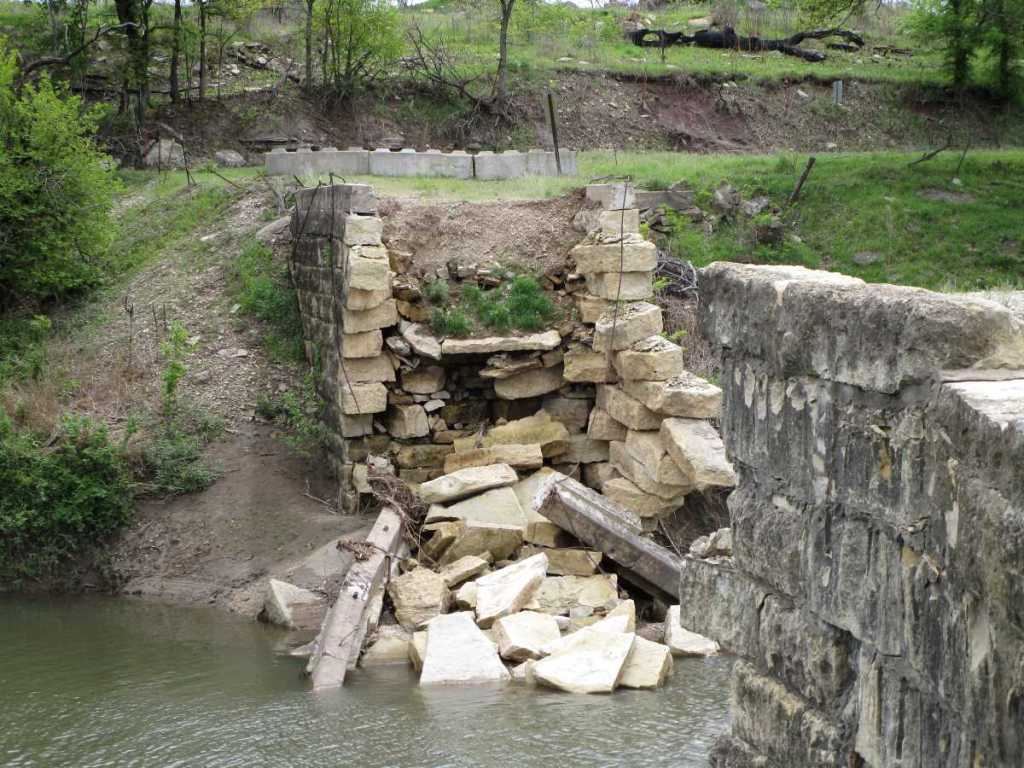
Then there is the debris problem. Debris has an uncanny knack of toppling parts of the structure that are below the surface of the water but high enough to catch a wayward log or something. Toppling guard walls rarely neatly fall off by themselves, but usually take at least part of the spandrel walls with them, which, in turn, can make the bridge vulnerable to still more damage.
Preparing for Floods
The fill is the weak point for a submerged stone bridge, as the water can wash away the fill, weakening spandrel walls and even the arch itself. To prevent this, use of an alternative fill material, such as lightweight concrete, can be a vast improvement. Historically, some bridges were built with drystack stone backing to help cope with floods. But even this type of backing can be improved by replacement with concrete, or at least grouting. Even making the roadway itself a simple concrete slab on top of the existing fill can vastly improve the resilience of a stone bridge to flooding.
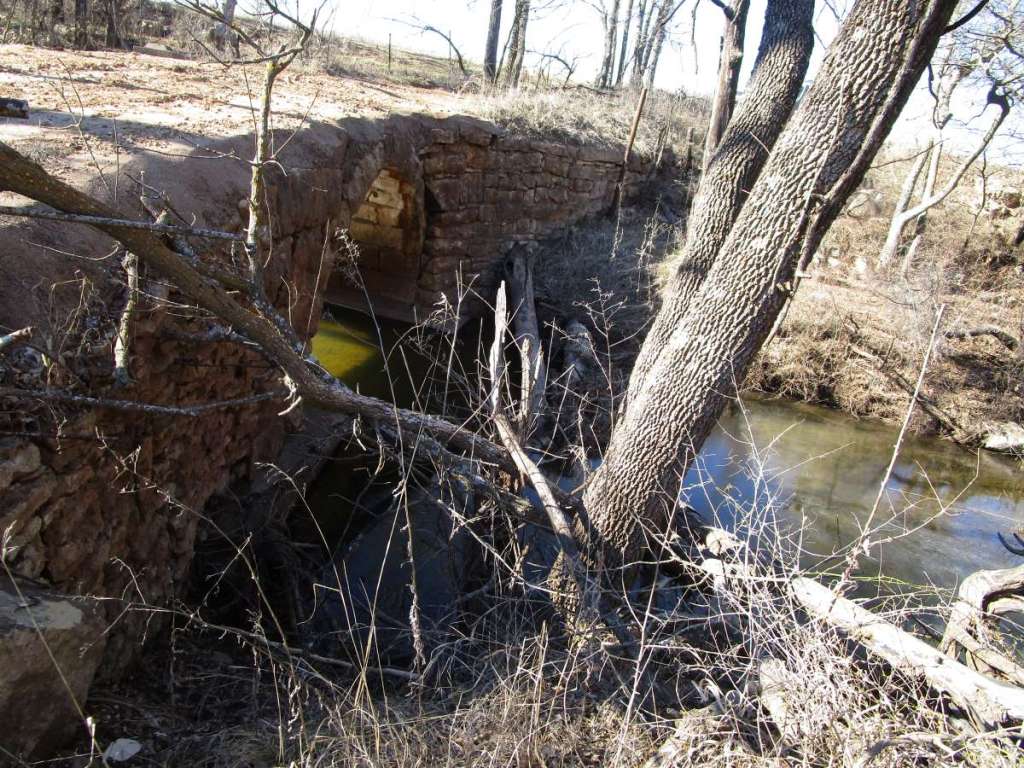
In any case, mortar joints should be religiously maintained, the waterway kept clear, and scour prevention implemented as needed.
The toppling of vulnerable parts of a bridge, such as guard walls, is another issue that, unfortunately, is hard to prevent. Low concrete curbs are an option, but, historical authenticity troubles aside, provide little protection for drivers. Adding a railing to a concrete curb for safety does nothing to help prevent flood damages. And let’s face it: even concrete curbs can be damaged by floods. Again, a concrete slab on top of the bridge, perhaps with curbs and guardrails mounted on top, is one option that is very rugged, though it may be objectionable, depending on how the project is implemented, for historical reasons.
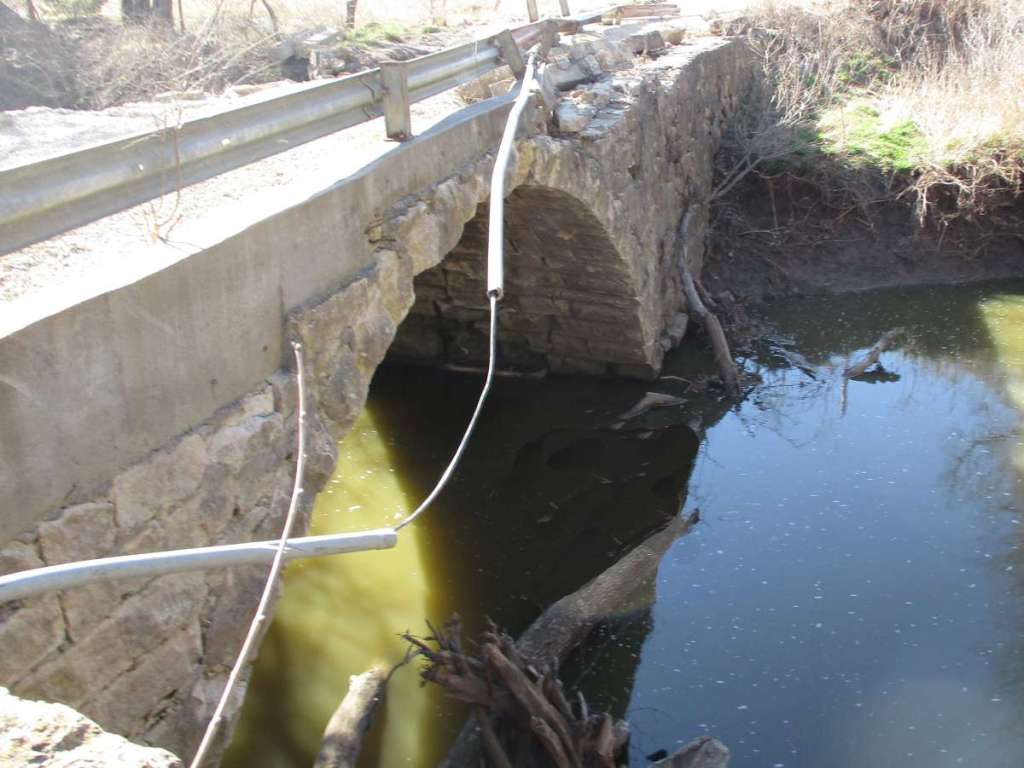
When all else fails, on some bridges in Europe, when large floods are anticipated, guard walls, statues, and, in short, anything protruding above the top of the bridge are sometimes removed ahead of time to prevent damage.

