As we have often stated, arches rely entirely on compressive forces to stand. However, there is another aspect of this puzzle. Arches will, at least to some slight degree, compress and settle after they are built.
Arch Joints
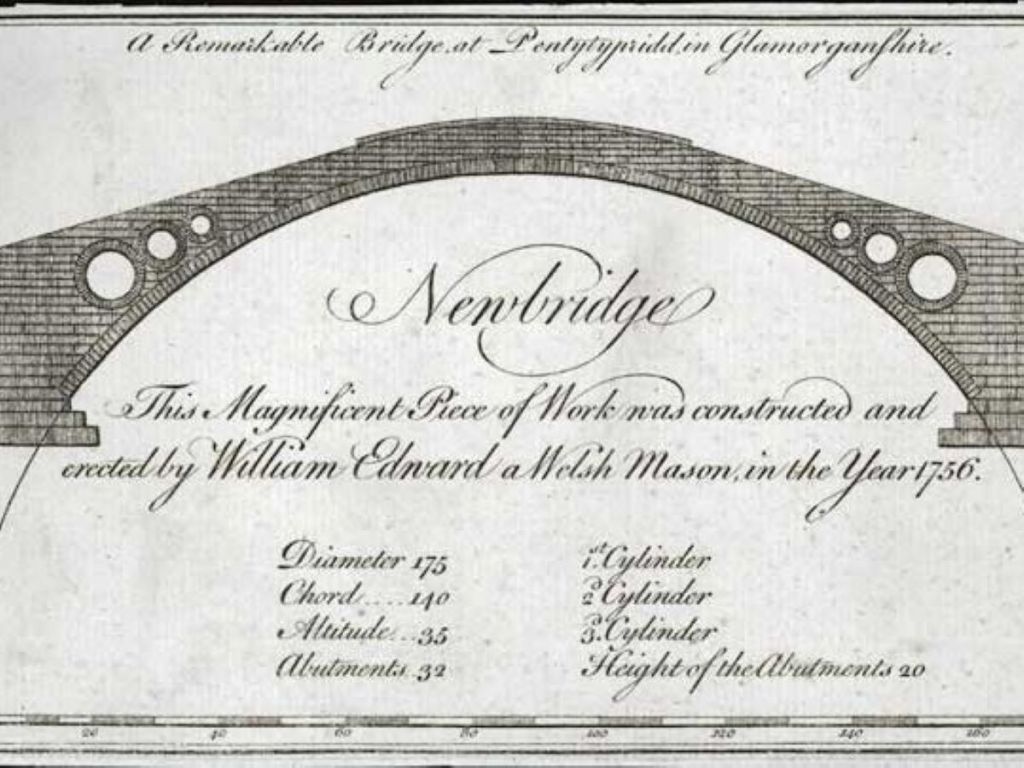
Mortar tends to compress more than most stones. This means that large mortar joints are a possible place for an arch to compress with resultant settling. For small arches, this is unlikely to be an issue, but as the length of the span increases, the mortar joints pose bigger and bigger problems. That is one reason why very large stone arches are rarely built with anything but ashlar masonry. However, as in the case of the Pontypridd Bridge in Wales, thin stones can be used in rubble masonry to turn the arch, allowing tight fits without extensive trimming. Also, for grouted arch rings of smaller sizes, adding stone shims when grouting will vastly improve the durability of the arch.
The Inevitable Flattening
Unfortunately, large arches still will very likely compress and flatten, especially if the arches are relatively flat. All arches will settle somewhat after the forms are removed. Long, low-rise arches tend to steadily droop over the years, albeit very slowly. If all the stones are precisely fitted in ashlar style, after the settling of the arch, they will no longer be tight, unless they crush slightly. This will result in gaps in the arch.
Minimizing Arch Flattening
In the end, flattening is inevitable for most sizable arch bridges. To avoid this as much as possible, however, quality work goes a long way. Thicker arches tend to reduce the pressure levels in the arch as well, making the flattening less of a problem for these thicker arches. Solid abutments and quality arch-laying are important for success, as well as sourcing quality stones. Softer stones like shale are notorious for compressing, and should never be used. While low-rise arches are useful, designers should be aware how prone they are to settlement. Longer span low-rise arches are best avoided unless abutments of exceptional quality can be built.
For old structures, regular maintenance, especially keeping up with the mortar joints, can prevent undue settlement. The key is to remember that the arch is held together, in effect, by the stones all falling down, and being pressed together. Any “give” will allow them to settle more. In the words of an old proverb: “The arch never sleeps.”


