One aspect of stone arch bridge design often overlooked is how the use of local material available at hand will ultimately affect the best way to build the bridge. For example, if only relatively small stones are available, spanning a large gap is better done with multiple small arches than the single big arch that may be preferable were large stones to be had. This type of adaptation seems to have been more common in medieval times when the use of so-called “fieldstones” (literally stones gathered out of fields) were more readily available than quarried stones.
Fieldstones
Fieldstones generally are randomly shaped and sized rocks that are gathered from fields. These rocks typically consist of small sizes and are rather irregular. They can, in fact, make rather good material for rubble masonry, but are typically far from flat, which can be annoying for arch building, unless small spans that require sharply angled stones are used. A bridge built with these will typically have relatively small spans (typically less than 20 feet), possibly several if a large gap is being spanned. The best-shaped stones should be used in the arch. Curiously, a Gothic arch is probably the easiest design to build, as its pointed top makes it easier to build, and, invariably, triangular fieldstones are common.
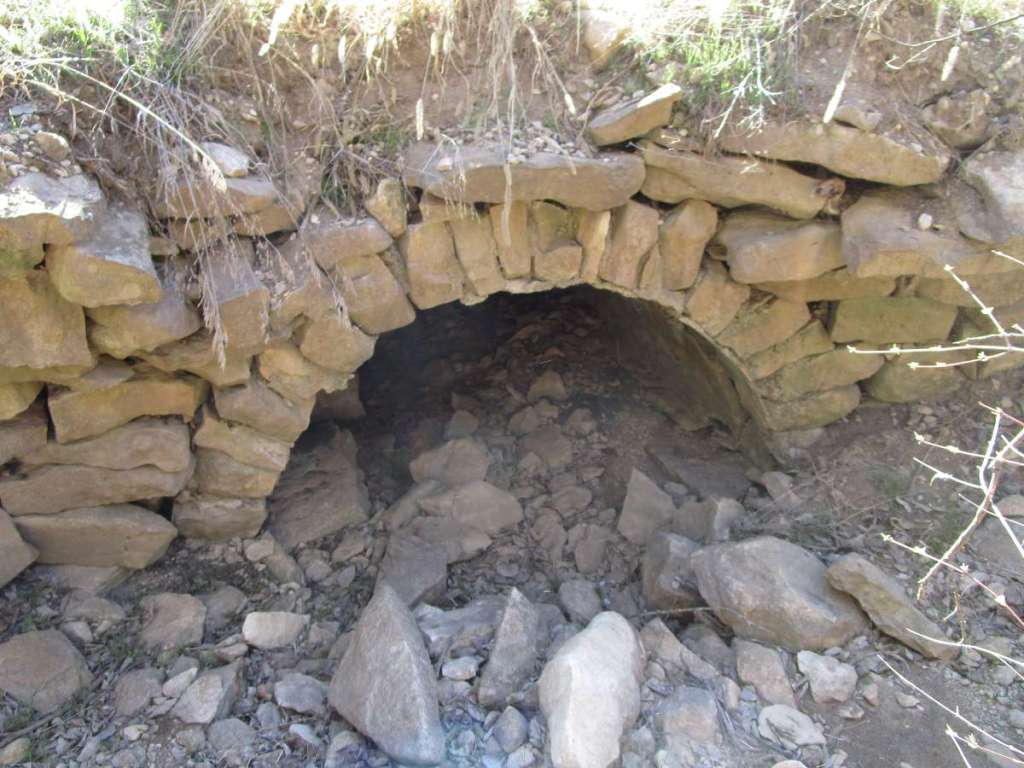
Ledge Rock
Ledge rock is one of the finest building materials. Cut from hillsides where rock outcrops (usually sedimentary rock), ledge rock is inherently well shaped. Easily quarried into massive rectangular blocks, ledge stone rather naturally lends itself to squared-stone-type construction, and even ashlar with some trimming. Massive structures are easily built of this material. Ledge stone can be used for structures of all sizes, but small arches will require extensive shimming or trimming to make the angles.

Boulders
Boulders can be used to make a curious form of rubble masonry with little trimming, but are often a poor choice for arches. Splitting the larger boulders into halfway regular slabs is a must for use in arches. While building with boulders requires some talent, a boulder structure can be made surprisingly strong. Unless the boulders can be split very cleanly, smaller spans are easier to build with this type of stone, as the broken-off pieces required for the arch will typically be quite angular.

Quarry Stone
Quarry stone comes in two basic types of interest to builders: large blocky pieces, outstanding for ashlar and other massive, quality structures, and rip-rap, which is a very low grade of blasted stone typically used for bank stabilization, but able to be built with. The use of rip-rap is possible, but the hairline fractures left in the stone can cause havoc in the winter as these cracks will tend to fill with water, which then freezes and breaks the stone. The best bet is to let the stone sit over a winter, then use it to build a rubble structure of small size. Rip-rap also tends to fair better in drystack structures, where drainage is much better than that for a mortared structure.

Massive quarry blocks should also ideally be left out for a season to allow them to dry; quarry stone is very high in moisture fresh out of the quarry. These stones, when cured, are an outstanding, if expensive, choice for a builder of any premium quality structure.
Saw-Cut Stone
Saw-cut stone is rather uncommon, except for masonry veneers. In general, it is best saved only for walls of a structure, though even this may be difficult depending on the size of the pieces. Small sizes such as used for facades will be of but limited usefulness to the average bridge builder. Large pieces are very excellent, but be aware that heavy cutting will likely be needed for arch use, unless the span is reasonably large. The use of a low-rise arch will help obviate difficulties in “turning the arch.”
Recycled Stone
Stone from an old building, wall, or some other unwanted stone structure is a good candidate for the builder. Unfortunately, where the stone came from is crucial for determining its use. A close examination of the structure and the sizes and shapes of the stone will determine where it originally came from. Be aware that old ashlar masonry will require trimming to allow it to be usable in an arch.

