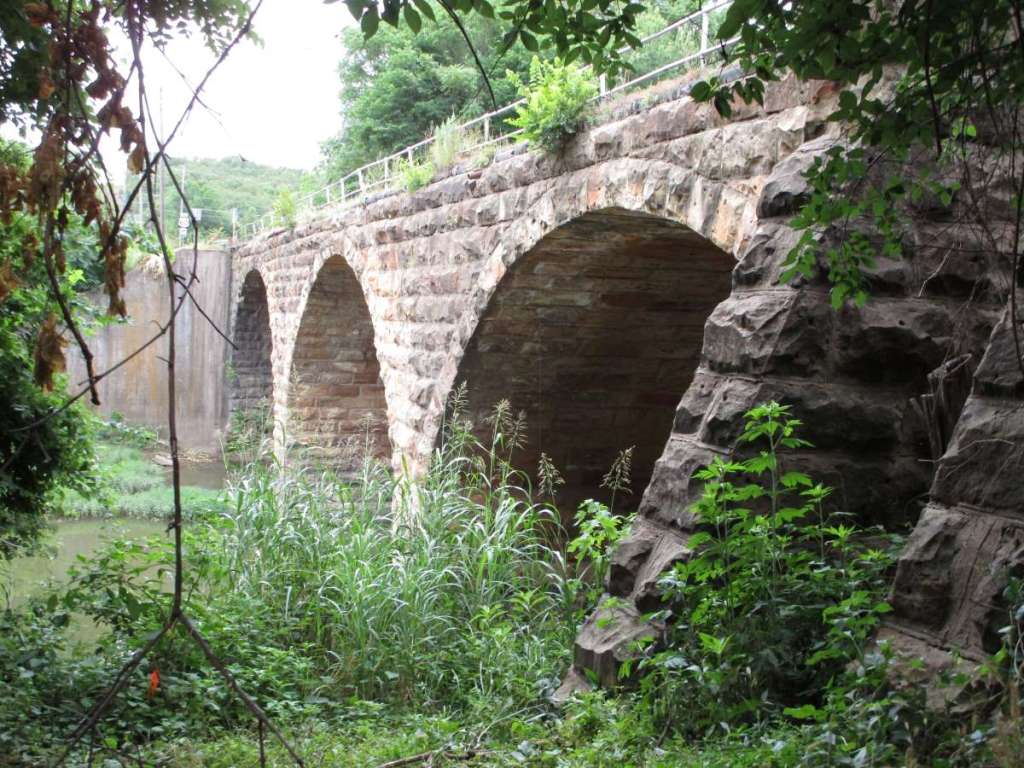
Many stone bridges have been built that only lasted a few decades before failing or being replaced due to severe deterioration. Others have been built which have stood centuries and even millennia and are still used. What makes the difference? Yes, maintenance is important of course, but even more crucial is the initial design. Builders like the Romans focused primarily on durability, which is why there are many Roman bridges which are around 2000 years old and still used. Cost was a major concern in more modern stone bridges built in America, hence why they tend to need more repairs to stay serviceable.
The Foundation
The foundation is the single most important consideration when building a stone bridge. The most perfectly constructed stone arch bridge is but weak and vulnerable if the foundation is shallow and insecure. Bedrock is preferred for foundations, but even that isn’t the whole story. You don’t just slap a bridge up on crumbly rock and hope it stays, you excavate the bedrock until a solid, firm stone is found. Where bedrock cannot be reached, scour protection is important. The Romans sometimes used a system of spread foundations that stepped out until the two foundations met underneath the arch below the riverbed. A system like this is extremely hard to undermine, but even a simpler design with two stepped foundations and a streambed paving is very durable.

Waterway
Inadequate waterway is a huge cause of damage to stone bridges, while a large, generous opening results in minimal wear over time. In fact, a bridge with a generous waterway can in many cases last for years and years without undermining, even with a simple, shallow foundation.

The Romans took the waterway concept further and often added extra arches buried under the approaches in the streambanks. That way, should the river meander or widen, the increased flow will expose the extra arches, and the bridge (now with increased waterway) will still stand without damage to the approaches.
Masonry
Relying on mortar alone is a poor idea. Mortar can compensate for imperfections, but should not be relied on. Even with rubble masonry, the stones should be laid such that they can stay in place even should all the mortar to erode out over the years. Furthermore, the structure as a whole should be solid; no hollows or voids filled with gravel or dirt. Except for the smallest of structures, solid backing is recommended to prevent the spandrel wall failure which is so common in bridges filled with loose soil. The stones themselves should be chosen for durability. Crumbly soft stones are easier to work, but will not hold up over the years.

The Arch
For durability, arches should be thick, allowing for greater tolerance of ever-increasing loads and giving plenty of buffer against masonry defects and, as the years progress, deteriorating stones. Even the arch shape is important. It will be found that many low, long, segmental arches tend to dip and sink over the years unless built into rocky outcroppings, so rises no lower than a 90 degree segment of a circle are recommended; shapes 120 degrees and higher are ideal. The stones should be laid with care, and special attention paid to the trueness of the curve.