Small sections of stonework are often relatively easy to repair. They likely will not present an imminent threat to the stability of the structure, but often need to be repaired before more serious damage occurs.
Determining the Scope of the Work
Typically, most small stonework repairs can be simply patched by setting stones in the gap. Bigger jobs may require small amounts of the surrounding stonework to be removed to achieve a solid bond between the old and the new.

Matching the New with the Old
One of the keys to making small stonework repairs blend in is to match the average size shape and type of stones used, then to match the mortar as needed. Many old structures have lost all their mortar over the years, so a thorough repointing is needed to blend in the repairs as well as ensure the solidarity of the rest of the stonework. In these cases, matching the mortar color to the original is not important, unless historical documentation shows the original mortar was unique for some reason; for example, some historic bridges and buildings were built with colored mortar.
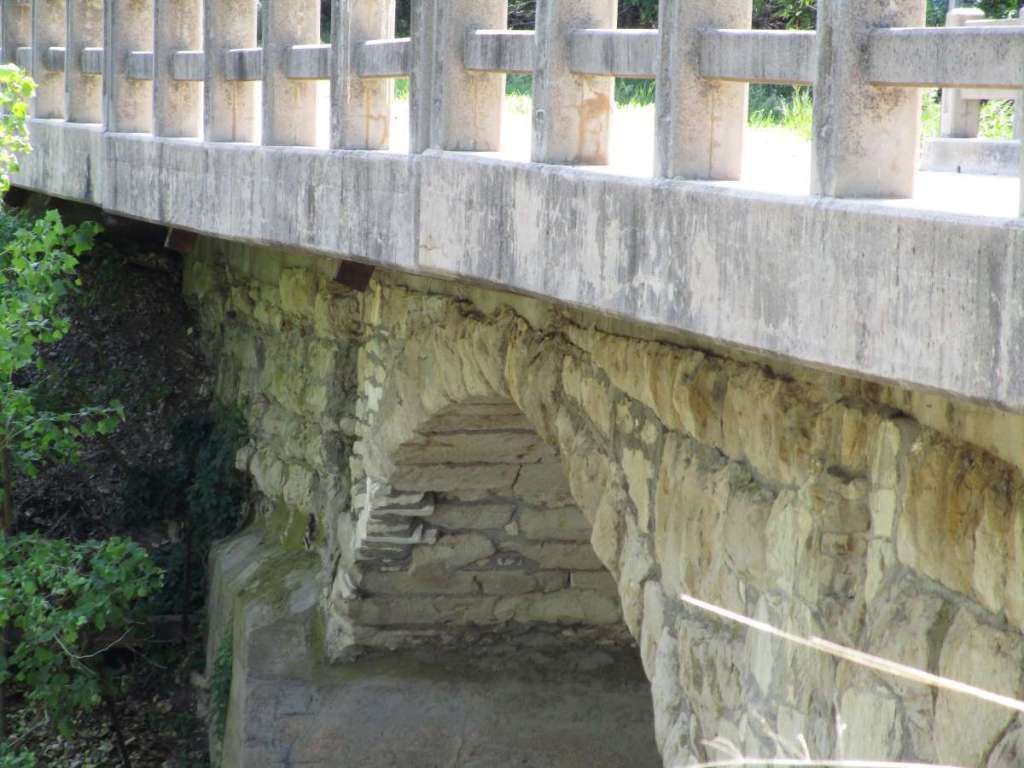
Blending repairs into existing stonework is somewhat of an art, and begins with a thorough examination of the existing masonry, followed by an understanding of how the original was constructed and where the stones were sourced.

Curbs and Guardwalls on Bridges
One specific repair of note is the stone curbs and guardwalls on stone bridges. These merit special mention, as they tend to get damaged regularly from vehicle impacts. While the repair proper is usually quite simple (the stones, being the top course, can usually just be mortared right back on again) extra work may be needed to prevent repeated damage. Maintaining the mortar is important, of course, and if the alteration can be done without causing a glaring change in appearance, the use of larger stones is recommended. Pinning the stones to courses below with metal bars is an option to make it harder for individual stones to be dislodged, but be aware that a particularly hard impact can cause large sections to fail. For this reason, curbings and walls should never pinned to the arch proper, less serious arch damage occur during a collision. For busy bridges with guardwalls made of many small stones, it may be necessary to cast a reinforced concrete guardwall, then mount a stone facade to it to achieve a match in appearance with a substantial increase in durability.

