Making the curve of the arch is often the biggest challenge when building a stone arch bridge. True, stones are rarely truly flat, but the fact is, most stones are more flat than wedge shaped!
Simplifying the Curve
As we have pointed out before, the use of thinner stones makes rounding the curve easier; the angle needed for each individual stone is much less. Furthermore, shims of stone can be successfully used to create a durable arch with minimal stonecutting. However, there is another aspect of laying the arch: choosing the correct angles.
The Radial Joint Problem
Laying radial joints is often more of a challenge than one would think. Radial joints are joints that track with an imaginary line drawn from the radius of the arc of the arch. So, taking a Roman arch for an example, if a string were tied to the center point of the span, it should pass perfectly parallel to the joints between the arch stones.

This sounds simple, but, even if you actually are checking each joint with a string, laying stones radially isn’t as easy to do as you would think. As mentioned above, while stones have natural angles, they are rarely as steep as is required for the correct curve. Furthermore, shimming only goes so far. The result is that it is easy to lay a few stones with a shallower angle than is strictly required. When you lay enough stones with too shallow of an angle, when you reach the top of the arch form, you will find that you need a triangular piece of stone to close the arch. This is why, incidentally, there are arch bridges that were undoubtedly designed as Roman arches and yet ended up as Gothic arches!


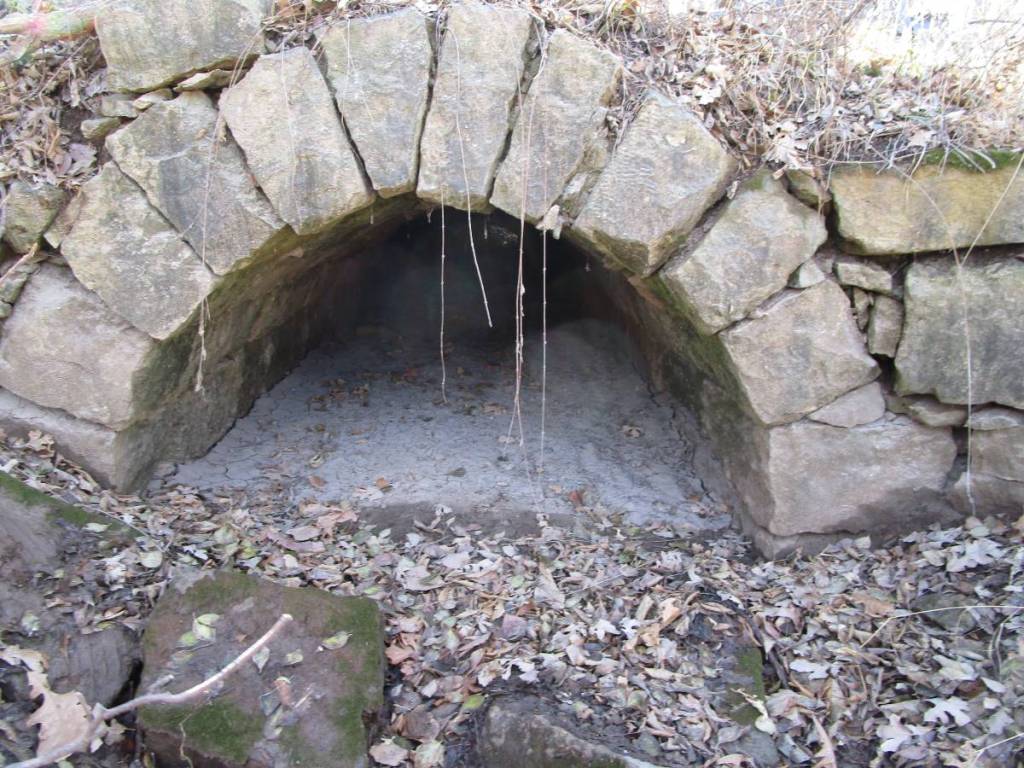
Partially Corbelled Arches
Another error in layout that is sometimes found in stone bridges is partially corbelled arches. Normally, an arch clearly follows the rounded curve of the arc being described. In a partially corbelled arch, however, the first few stones are corbelled out into the opening, gradually tilting as the arch is built up, until the curve is roughly reached. This error is easy to do, as laying the first courses in order to get a good start to the arch can pose a bit of a challenge until practiced. Partially corbelled arches are a mixed bag; while they can provide years of service, but tend to be rather weaker than true radial arches, sometimes unexpectedly so.

But How Much Error is Acceptable?
Obviously, in all the examples above, the stone bridges pictured all are standing and being used. So some error clearly is allowable. Furthermore, the different types of construction are historically valid; for instance, pointed arch bridges are far from uncommon, sometimes they were deliberately built Gothic style, sometimes not. In Ireland, the most ancient stone bridges almost always feature partially corbelled arches, and have been giving almost a millennium of service. That said, while some error is quite acceptable, just be aware that the more true the curve is, the stronger the arch. Practice is helpful here; keep building small arches until rounder the curve becomes easy. Each stone being laid perfect is not what is required so much as the curve as a whole being true.

