The fill in a stone arch bridge can be the cause of various structural problems, such as freeze-thaw damage when waterlogged, or perhaps overloading of the spandrel walls as evidenced by bulging and sliding. Other times, it is necessary to remove the fill in order to repair the top side of the arch or to rebuild the spandrel walls. Hence, the fill is often removed from a stone bridge as part of a rehab. However, there are some practical considerations to keep in mind to ensure the job is done well.
Structural Fill
The first thing that absolutely must be considered when removing the fill in a stone bridge is whether or not the fill is structural. For instance, spandrel walls may lean into the fill for stability; is this lean enough that the stability of the walls will be compromised if the fill is removed?
Much worse is the case of an arch that uses the loading of the fill for its own stability. Some arches, especially Roman arches and basket-handle arches are stabilized by the fill. The weight of the fill realigns the thrust of the arch to stay within the arch ring. Hence, the fill is critical for stability. In these cases, the arch must absolutely be braced with a form like that used for construction purposes; otherwise, collapse can very easily occur. The arch will need to be analyzed prior to the fill removal to verify it is stable without the fill. When there is any doubt on this point, brace the arch.
Removing Fill
Yes, excavators can be (cautiously!) used to dig the fill out of a bridge. At some point, however, hand tools are preferable to avoid taking a chunk of the arch out by mistake. Unfortunately, for some repairs, merely digging out loose fill is insufficient, no matter what tools are used. For instance, say the top of the arch needs to be unburied to replace a damaged section. To ensure good mortar bonding, the stones in the area will need to be clean. In these cases, compressed air can be used to blow out the excess dirt. One method successfully used on a multi-span arch bridge was to blow the dirt off the arch into tarps laid on the piers at the base of the arch. This dirt could then be removed by removing the whole tarp.
Putting the Fill Back
Adding the fill back to a bridge is best done cautiously and gradually, possibly in layers. The reason for this is to avoid overloading the walls. If the fill is dirt, it will need to be tamped down in layers to avoid undue settlement.
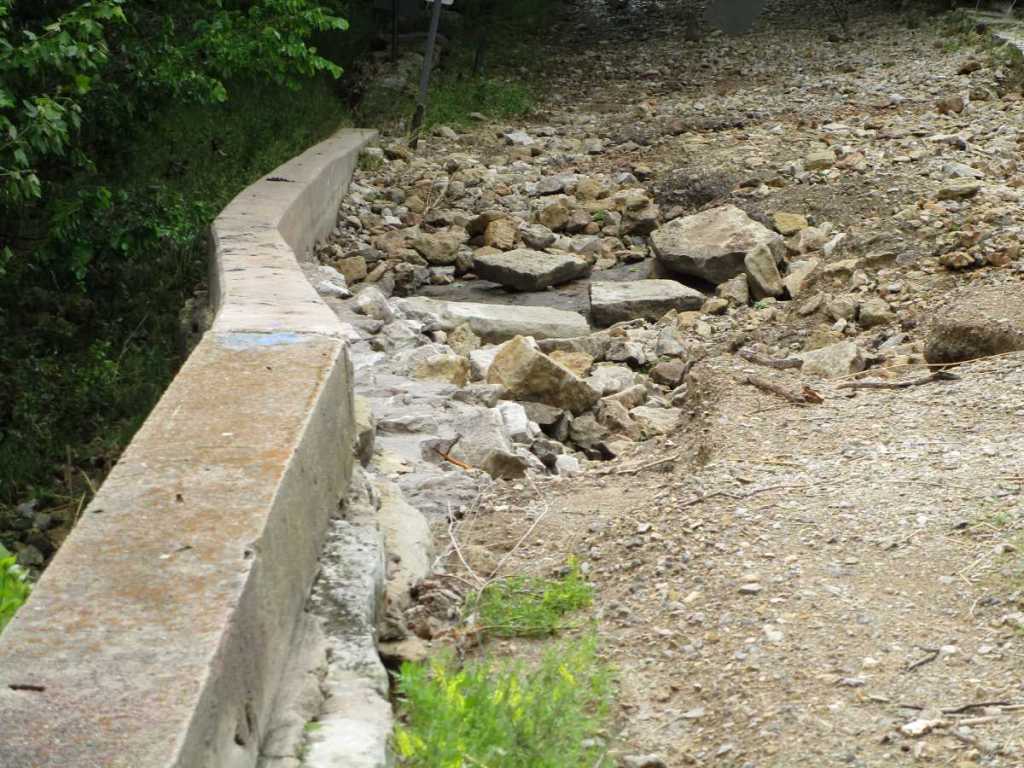
If lightweight concrete is used to replace the fill, caution is needed to ensure the liquid concrete does not collapse the spandrels. In general, loose dirt is almost never used in a major bridge rehab; at the very least dirt reinforced with geotextiles is used to reduce the load on the spandrels.
 Stone Arch Bridges