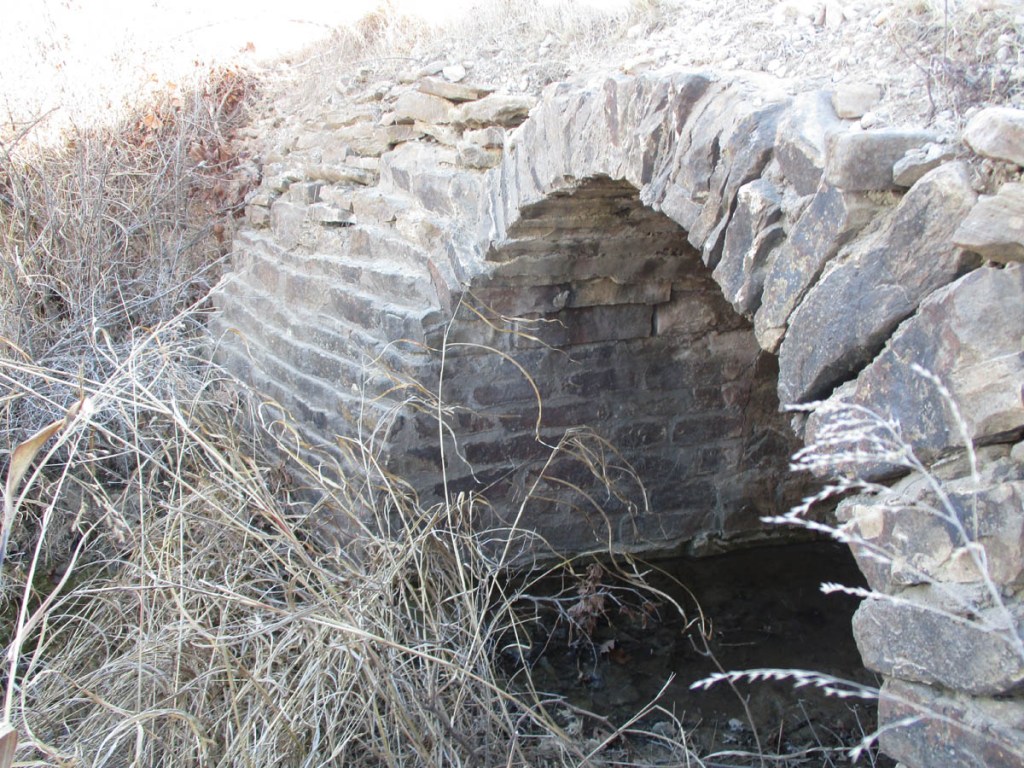
The arch distributes loads throughout its width. When you place a single point load on the top of the arch, the resultant forces are not routed down to the ground via a narrow section of the arch’s total width; rather, the forces are gradually spread out within the masonry of the arch. The reason is that the interlocking stones tend to distribute some of the stress over larger areas. So if you have a single point load on the very top of the arch, as the force travels to the abutments, it is gradually stepped out over a wider and wider area as it works down the arch.
Spandrel Walls
Since an arch tends to distribute the load within its width, this is why the spandrel walls are so structurally important. Even with a soft dirt fill, the walls will still provide a degree of stiffness to the entire arch. Though placed on the ends of the arch, these walls still will have an effect on how the arch handles loads; at least some of the load will be spread to the ends of the arch, and the spandrels will then in turn help carry some of the resultant forces.
Longitudinal Cracking
The fact that an arch gradually spreads the load within itself is the main structural consideration of longitudinal cracking. Most longitudinal cracks are relatively harmless from a structural standpoint; they rarely signal a major failure in the arch (though the root cause of the cracking should, of course, be determined). However, a longitudinal crack means that the load cannot be distributed past the crack into the rest of the arch. Front circle cracks, which are longitudinal cracks placed such that the spandrel walls rest on their own isolated section of the arch, have the biggest implications in how the arch carries loads, since the spandrel walls can now no longer aid in weight carrying, the crack cutting off the way for the forces to be distributed to the end of the arch.
 Stone Arch Bridges