The 1912 Hill Bridge located near Augusta, in Butler County, Kansas, has been closed due to damage sustained by flooding; according to some people in the area, this historic stone bridge was closed in 2025. This stone arch bridge spans Dry Creek on SW Diamond Road.
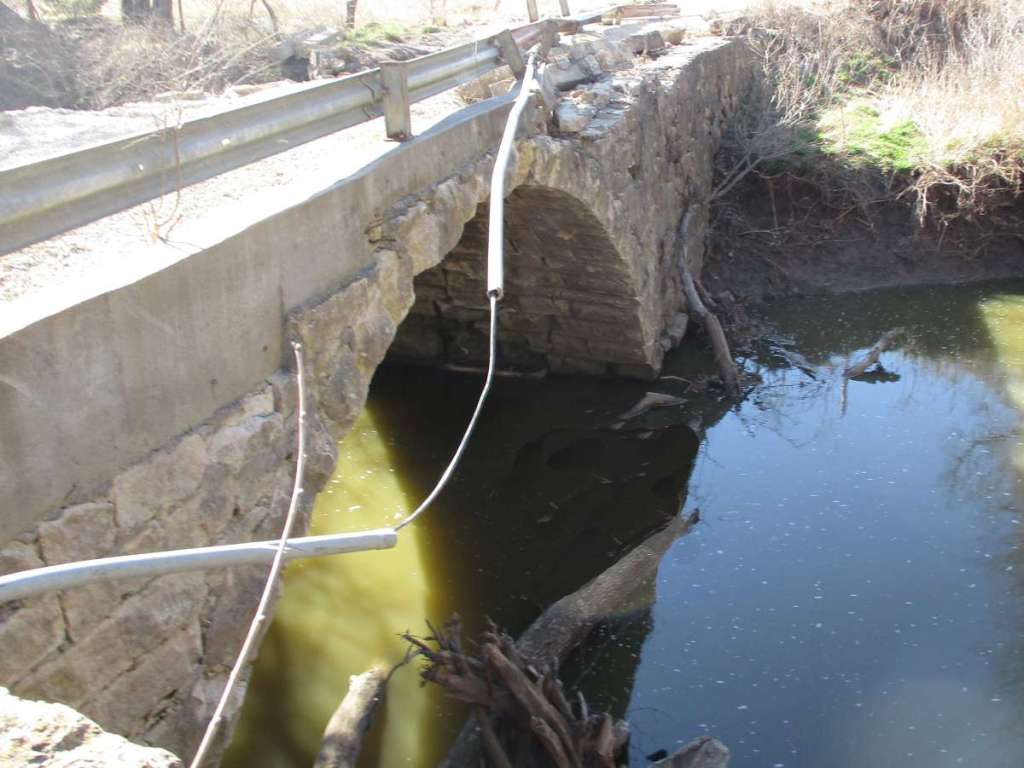
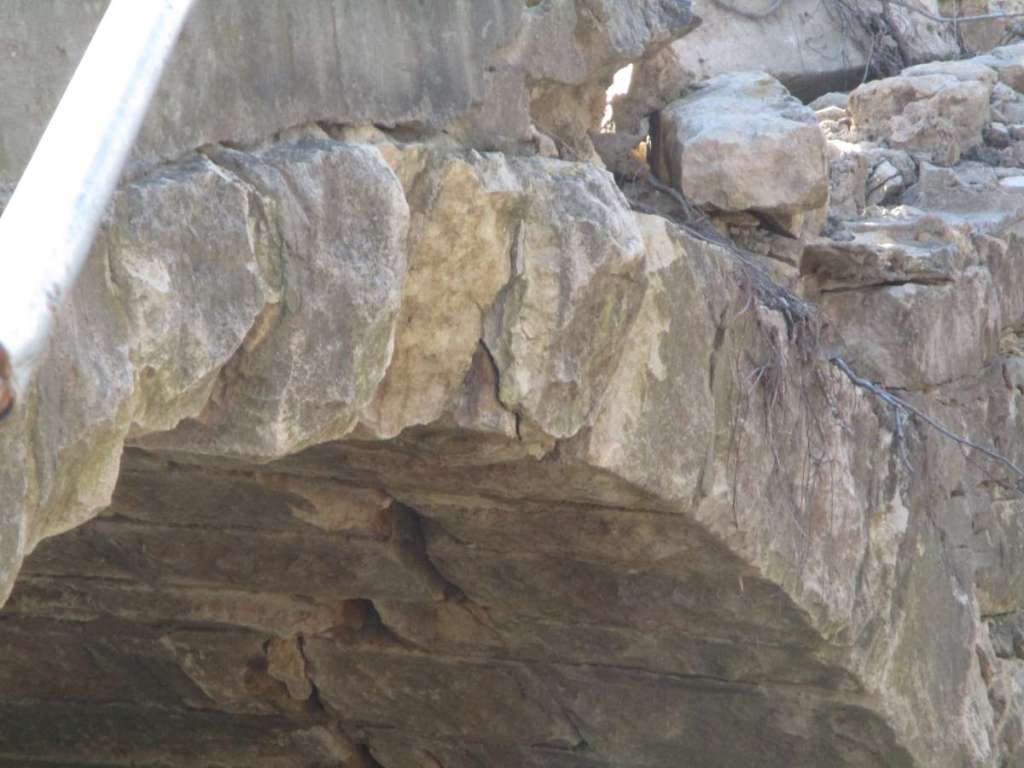
The 1912 Hill Bridge is a 40′-span single-arch bridge built by O. Markley of Augusta. This historic bridge was scheduled for reconstruction some years ago, but still remains, and was in use until battered by flooding. A visit to the site reveals that water had overtopped the bridge, carrying all manner of logs and floating debris, more or less thoroughly toppling the top layer of curbing and guard rails, as well as washing out some of the fill. Worse, the already battered upstream face of the arch has sustained more stone damage. While in and of itself the damage is not serious, the missing pieces of the arch stones opens up a possible risk in the future of partial collapse due to debris impacts unless the damage is repaired.
Damage and Repair Options
The single largest problem with the Hill Bridge is stone damage. All kinds of cracks and spalling dot the structure. At the waterline, substantial sections of the arch stones have crumbled away (this is just visible in the first photo in this post). This leads to the necessity for a large-scale rehab if the old stone bridge is to continue in long-term service. However, the good news is that the broad bulk of the structure remains intact. If all the joints and meaningful cracks were thoroughly pointed up, this single action alone would go a long ways towards stabilizing the structure. Also, stones could be fitted in to replace missing and damaged ones, rather like some of the work Butler County has performed on the historic Ellis Bridge over the Walnut River near Cassoday.
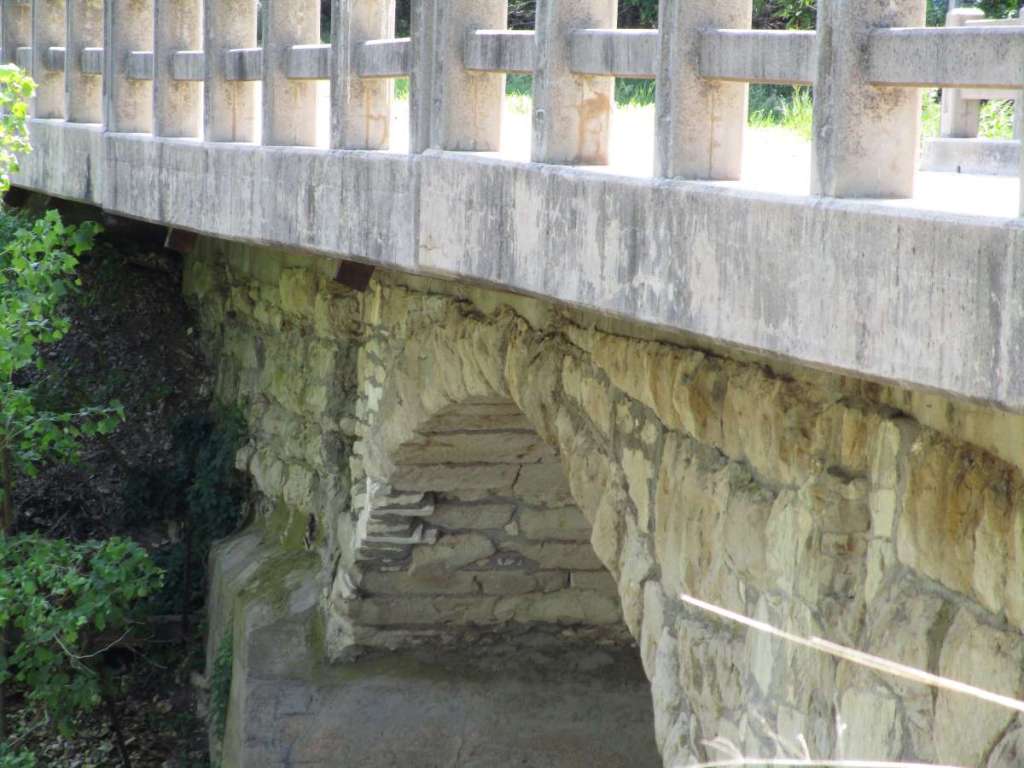
If concrete aprons were built around base of the arch, tall enough to thoroughly protect the weakened sections of the arch (possibly after fitting in pieces of stone to replace missing sections), the threat of the waterline damage to the structure would be more or less eliminated. A new curbing and guardwall would be a good idea, of course, although this damage is more cosmetic than structural. If a deeper, properly drained roadbed were built on the Hill Bridge such as that Butler County built on the nearby Wilson Bridge, this historic 1912 bridge would become vastly more durable and less prone to stone damage from freeze-thaw cycles. All in all, the Hill Bridge looks like it would be entirely practical to restore.
Conclusion
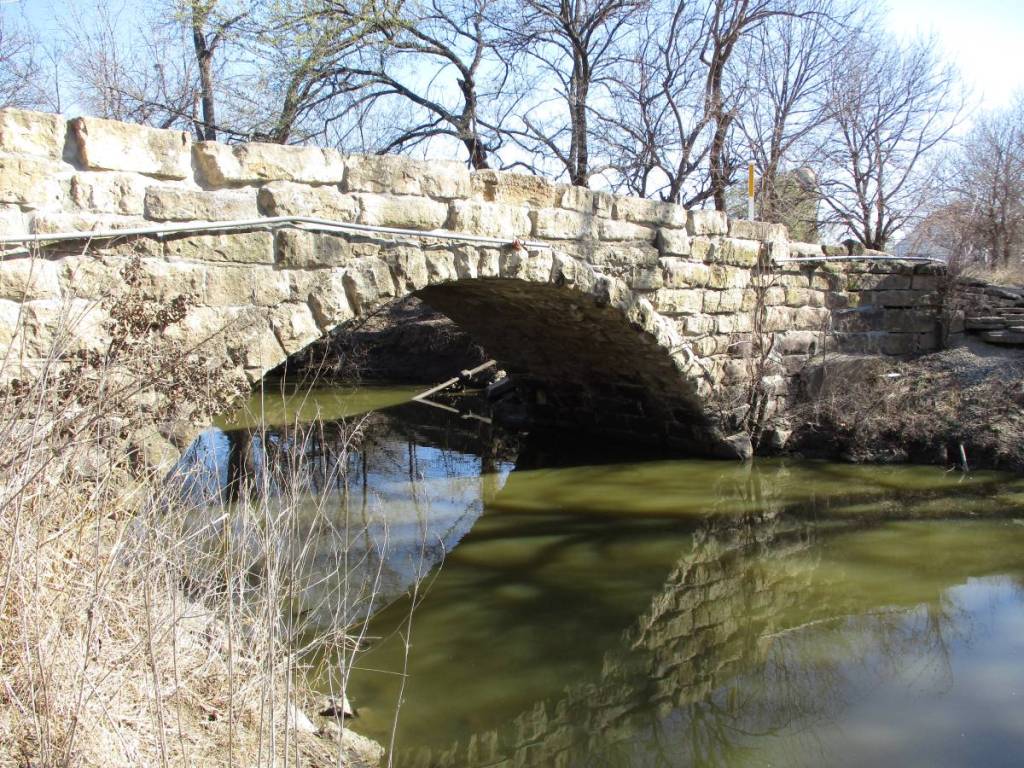
With the Hill Bridge now closed to traffic, the future of the structure is unclear. It is our hope that Butler County will carry out a rehabilitation scheme along the lines of some of the excellent work they have done on other stone bridges across the county. The Hill Bridge is among Butler County’s largest stone bridges. It is in a picturesque setting, and if restored could become a scenic landmark in the area.
 Stone Arch Bridges