Cutting and moving large, stubborn stones can be a bit of a trick when cutting large blocks out of a hillside quarry. However, there are a few things that can be done to make the job easier.
When Feathers and Wedges Won’t Cut It
Feathers and wedges are highly useful tools, but every once in a while, a stone will be encountered that defies smooth cutting with the normal tools. However, there is an ancient but effective tool that can be used to split even the most stubborn rocks: wooden rods.
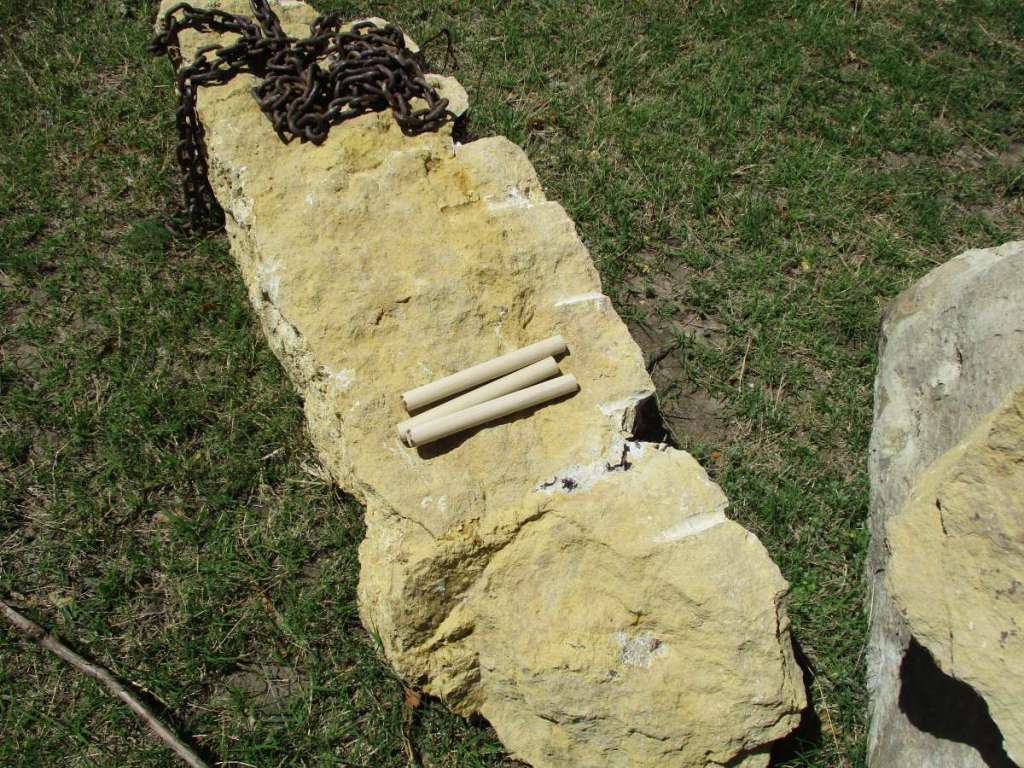
Wooden rods seem such an improbable means to cut a stone, yet can be used with entire success. To use a wooden rod to split a stone, a row of holes is drilled into the rock exactly like those for feathers and wedges. Then, dry wooden dowel rods are pounded into the holes; they should fit very tightly. Undersizing the hole is recommended, so, for instance, use a 7/8-inch hole for 1-inch wooden dowels. Once the rods are inserted into the holes, the rods are soaked with water and kept saturated. The water swells the wood which will eventually split the stone. To aid in removal of the rock, extra holes can be drilled during the preparation stage. Once the stone is split with the wood, feathers and wedges can be inserted into these extra holes to aid in further spreading of the stone.
Incidentally, in cold climates, freezing water can be used in exactly the same way to split a stone. Simply fill the drill holes with water. The best results are had if the tops of the holes are plugged in some way, such as pounding in a short but tight-fitting piece of a dowel rod.
Moving the Stone
Of course, a skidsteer is an excellent tool for moving a large rock. Where practical, the stone can be easily scooped up with a bucket or, even better, a durable set of forks. But when lifting a stone up off a hillside, a chain is usually needed. Wrapping a chain around a stone is a tried-and-true method for maneuvering a large block, but can be a bit awkward at times. And, as it happens, there is another way. If holes are drilled into the ends of the stone in question, metal spikes can be inserted into these holes.
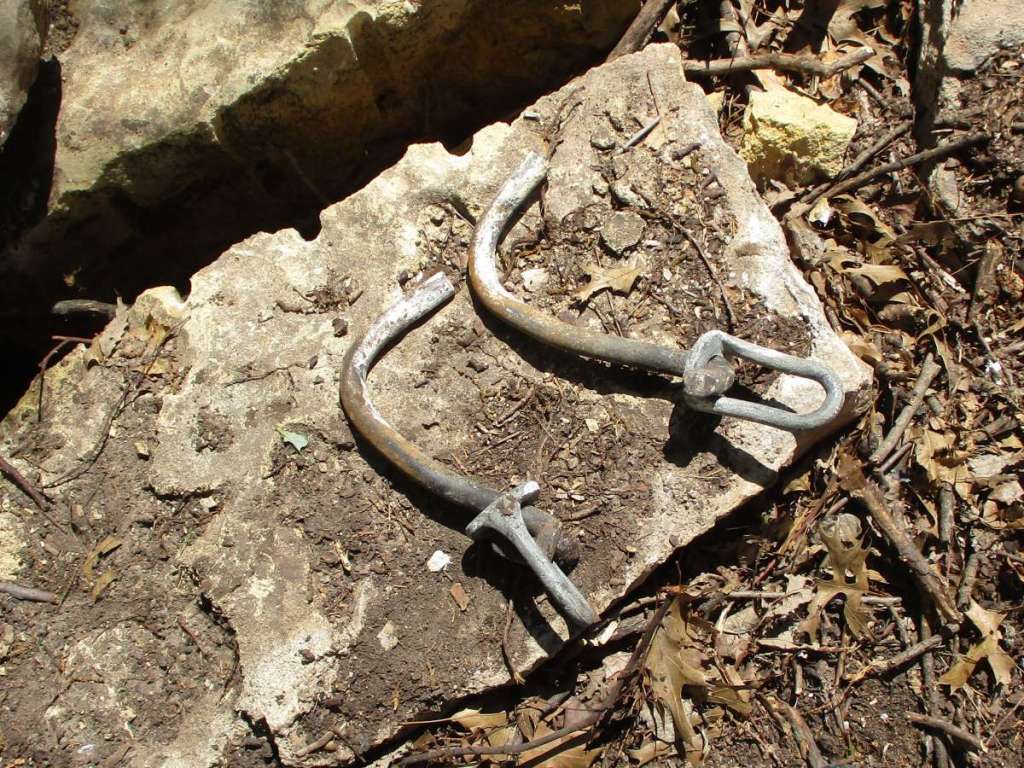
Then a chain can be hooked to the spikes, and the whole lot lifted. The secret to success here is to leave the chain long enough that it effectively scissors against the stone, helping to push the metal rods into their respective holes.
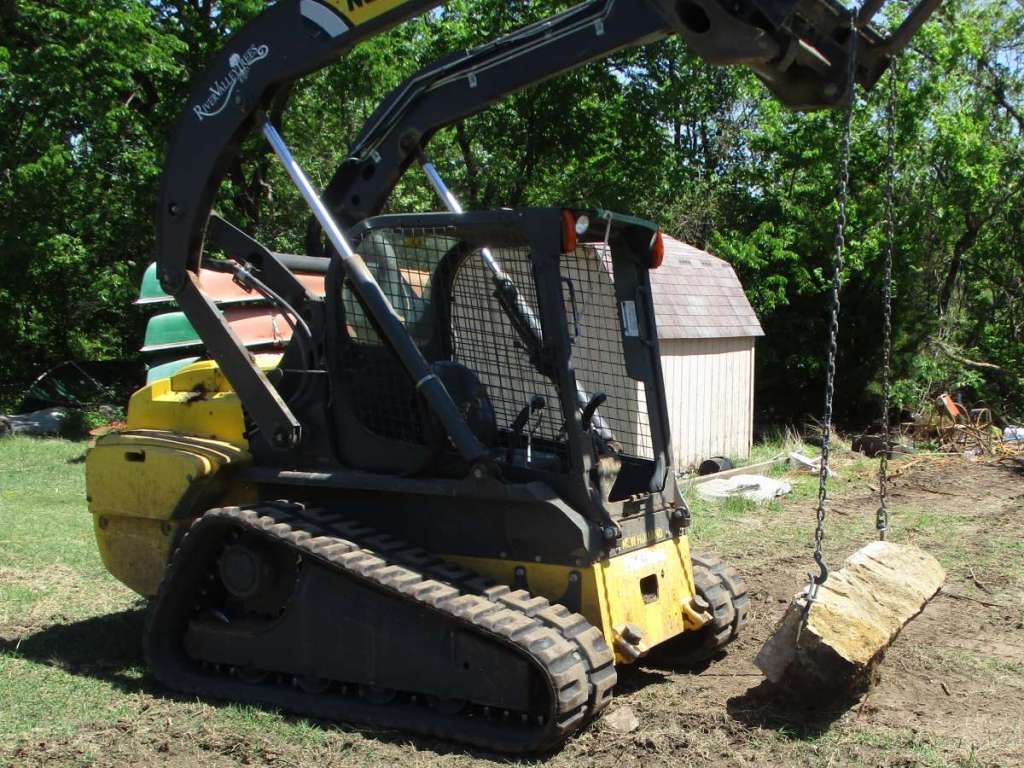
Not only can this method be used to raise massive stones, it can be usefull for laying stones. It is also possible, if the spikes are long enough, to drill two holes at a sharp angle into the top of the stone, allowing for the stones to be neatly laid.
Be aware that with the loader of a skidsteer up high, the machine tends to become somewhat top-heavy and vulnerable to tipping, so keep the stone as low to the ground as possible. Finally, note that a stone on a long leash can and will swing, making a formidable battering ram, which can even threaten the skidsteer itself if the operator isn’t careful. So be careful, go slowly, and keep people well away from the suspended stone in case something goes wrong!

