Category: Construction
-

The Camp Quaker Haven Bridge: A New Cowley Stone Bridge Built the Old Way (Part 4)
We recently built a stone arch bridge at Camp Quaker Haven, a Christian retreat in Cowley County, Kansas. In this final post on this bridge, we describe how it was completed.
-

The Camp Quaker Haven Bridge: A New Cowley Stone Bridge Built the Old Way (Part 3)
We recently built a stone arch bridge for Camp Quaker Haven in Cowley County, Kansas. In this third article describing the building of this bridge, we tell of how the arch was built.
-

The Camp Quaker Haven Bridge: A New Cowley Stone Bridge Built the Old Way (Part 2)
In this second post of the series we wrote about a stone arch bridge we built at Camp Quaker Haven, in Cowley County, Kansas, we describe how the abutments for the arch were built.
-
The Camp Quaker Haven Bridge: A New Cowley Stone Bridge Built the Old Way
We recently built a stone arch bridge for Camp Quaker Haven in Cowley County, Kansas. In this post, the first of a four-part series, we describe the stone tradition of the camp and the beginning of the new bridge.
-
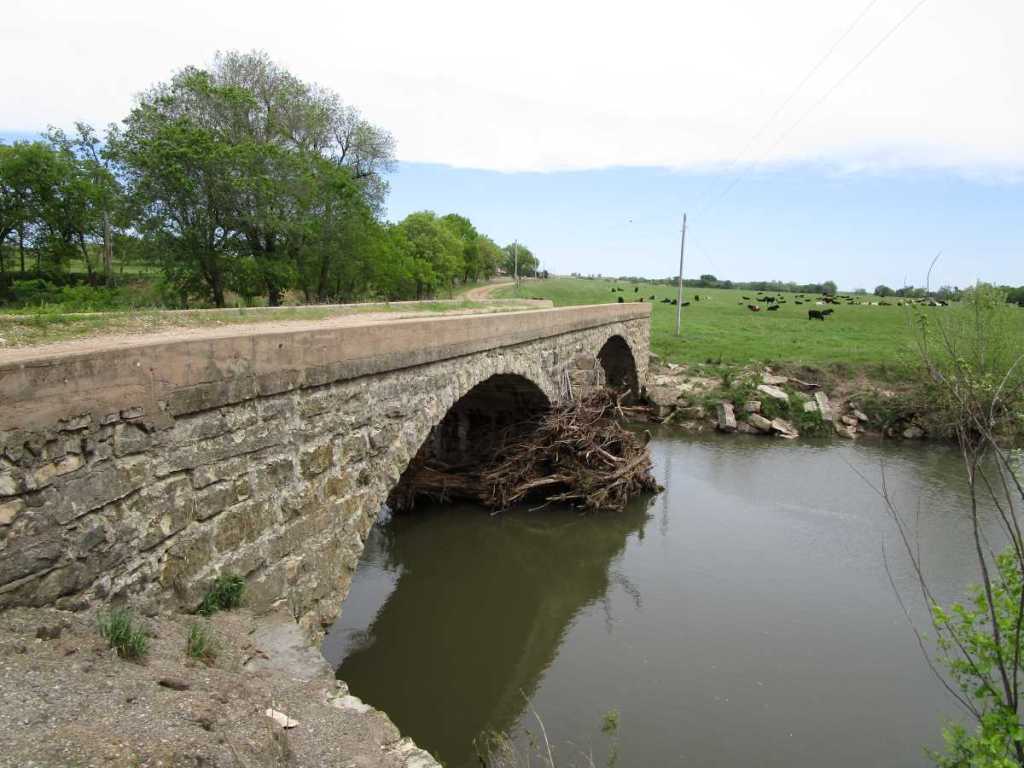
The Problem With Piers
Piers are a weak point in any bridge, but are often quite vulnerable in a stone bridge. In this post we investigate what makes stone bridge piers a weak point and how to better design the bridges.
-

Placing the Keystones
Preparing and inserting the keystone into an arch composed of rubble masonry works best with some planning. In this post we investigate some tips on how to place the final stones of the arch.
-

Laying Rubble Masonry
Rubble masonry can be built for longevity. The key is how the stones are laid. Understanding the role of mortar and the importance of contact between stones is the key to success.
-

Stone Bridge Railings
Adding a traffic or pedestrian barrier to a stone bridge is probably a good idea for any bridge that is reasonably sizable. In this post, we explore several options and how to apply them.
-

Cleaning the Stones
Cleaning stones either for maintenance reasons or construction should be done carefully so as not to damage the stones. Stones have a natural weather-resistant coating that should be respected.

